The relationship between the United States and Iran has been a powder keg for decades, but recent events have pushed the two nations closer to the brink of open conflict than at any point since the 1979 Islamic Revolution. Diplomatic channels remain fragile, miscalculation risks are rising, and military posturing on both sides suggests that the possibility of direct confrontation is no longer theoretical.
In this analysis, we examine the key factors fueling tensions, the potential flashpoints that could trigger a wider war, and the geopolitical consequences that would follow. The stakes are higher than ever, and the timeline for de-escalation is shrinking.
Key Triggers Behind the Current Crisis
The most immediate catalyst for the current standoff is Iran’s accelerated nuclear program. International inspectors have documented breaches of the 2015 Joint Comprehensive Plan of Action (JCPOA) limits, including uranium enrichment levels far exceeding agreed thresholds. While Iran insists its nuclear activities remain peaceful, Western intelligence agencies assess that Tehran’s breakout time—the period needed to produce a nuclear weapon—has dropped to weeks rather than months.
Another major flashpoint is Iran’s regional proxy network. Groups like Hezbollah in Lebanon, the Houthis in Yemen, and various militias in Iraq and Syria have intensified attacks against US interests. Recent months have seen a surge in rocket and drone strikes targeting American bases and diplomatic outposts. The US has responded with targeted strikes of its own, including the January 2024 killing of IRGC Quds Force commander Qasem Soleimani’s successor, Brigadier General Razi Mousavi, in Damascus.
Cyber warfare has also entered the equation. Iran has been accused of launching disruptive cyberattacks against US critical infrastructure, while American Cyber Command has reportedly conducted covert operations to sabotage Iranian nuclear and military systems. These digital skirmishes add a volatile new dimension to the conflict.
Recent Escalations: A Timeline
The past two years have seen a dangerous escalation cycle:
- 2022: Protests erupt across Iran following the death of Mahsa Amini. The regime blames foreign interference, including US support for dissidents.
- October 2023: Hamas launches attacks on Israel from Gaza. Iran provides backing, drawing indirect US involvement in the region.
- January 2024: US strikes kill Mousavi in Syria, prompting Iran to vow retaliation.
- April 2024: Iran launches a direct missile and drone attack on Israel in response to an Israeli strike on an Iranian consulate in Damascus. Israel intercepts most projectiles, but the attack marks the first direct Iranian strike on Israeli soil.
Military Posturing: How Close Is the US to War?
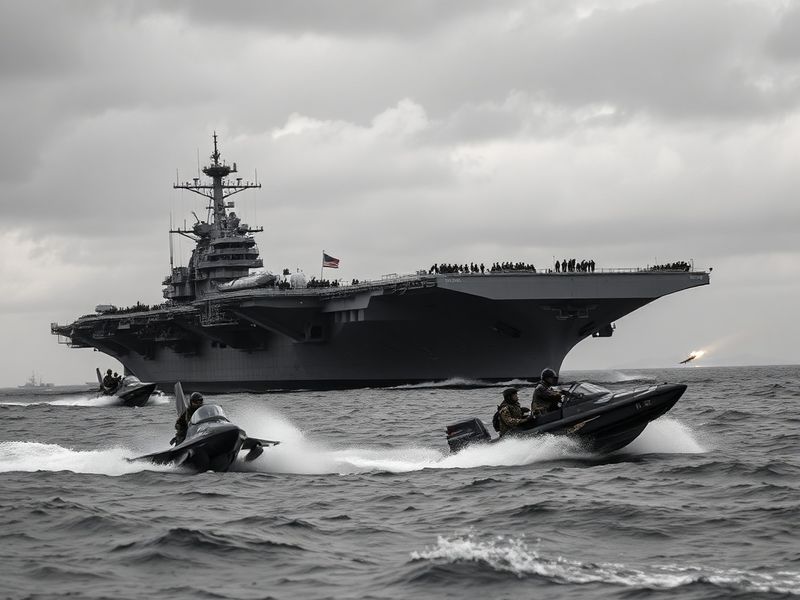
Despite the rhetoric, neither Washington nor Tehran appears eager for full-scale war. The US maintains a strong military presence in the Middle East, including two aircraft carrier strike groups, ballistic missile defense systems, and a network of bases in Iraq, Syria, and the Persian Gulf. However, Pentagon officials have emphasized that these deployments are defensive in nature, aimed at deterring Iranian aggression rather than initiating conflict.
Iran, meanwhile, has adopted a strategy of “forward defense,” using proxies to harass US forces and allies while avoiding direct confrontation. Supreme Leader Ali Khamenei has repeatedly stated that Iran does not seek war with America, but he has also warned that any direct attack on Iranian soil would trigger a “decisive response.”
Analysts at the Dave’s Locker News desk note that the risk of accidental escalation is particularly high. A misinterpreted radar blip, a rogue militia commander acting without orders, or a cyber incident spiraling out of control could all serve as the spark that ignites a larger conflict. The lack of high-level diplomatic dialogue further increases the danger.
Potential Scenarios: From Limited Strikes to All-Out War
Should tensions boil over, several possible scenarios could unfold:
- Limited Military Strikes: The US could conduct precision strikes on Iranian nuclear facilities, missile sites, or IRGC positions. Iran might respond by targeting US bases in the region or increasing attacks via proxies.
- Blockade of the Strait of Hormuz: Iran has threatened to close the strait, through which 20% of the world’s oil passes. A blockade would trigger a global energy crisis and likely provoke a strong US naval response.
- Regime Change Operations: The US could expand support for Iranian opposition groups, while Iran might accelerate efforts to destabilize US allies like Saudi Arabia and Israel.
- All-Out War: A direct US-Iran war would involve massive missile exchanges, naval battles, and cyber warfare. The conflict could draw in regional powers like Israel and Saudi Arabia, as well as global players such as Russia and China.
The Global Fallout: Economic and Geopolitical Consequences
A full-scale war between the US and Iran would send shockwaves through the global economy. Oil prices could surge past $150 per barrel, triggering recessions in energy-importing nations. Sanctions on Iran would likely be tightened, while the US might impose secondary sanctions on countries continuing to trade with Tehran. Supply chains for semiconductors, pharmaceuticals, and rare earth minerals—all critical to modern industry—would be disrupted.
Geopolitically, the conflict would reshape alliances. Israel, already engaged in a multi-front conflict, would face heightened threats from Hezbollah and Iranian-backed groups. Gulf states like Saudi Arabia and the UAE would be forced to choose between supporting the US or seeking accommodation with Iran to protect their interests. Meanwhile, Russia and China would likely exploit the chaos to expand their influence in the Middle East, offering economic and security alternatives to traditional US partners.
Europe’s role would also be pivotal. The EU has struggled to maintain a unified stance on Iran, with some nations advocating for renewed diplomacy and others pushing for a harder line. A US-Iran war would force European leaders to take sides, potentially fracturing the transatlantic alliance at a time when NATO already faces challenges from within.
Is Diplomacy Still Possible?
Despite the grim outlook, diplomatic efforts have not been entirely abandoned. Oman and Qatar have acted as backchannel mediators, while indirect talks between US and Iranian officials have taken place in third countries. The primary obstacles remain Iran’s demand for sanctions relief and the US insistence that Tehran curb its nuclear and regional activities.
Some analysts suggest that a temporary ceasefire or limited agreement could be reached to reduce tensions. For instance, Iran might agree to pause uranium enrichment beyond current levels in exchange for limited sanctions relief. However, the trust deficit between the two sides is profound, and any deal would require robust verification mechanisms to prevent cheating.
Another glimmer of hope lies in the upcoming US presidential election. If a new administration takes office in January 2025, it may pursue a different approach to Iran. President Biden has signaled openness to reviving the JCPOA, though his leverage has diminished due to Republican opposition and Iranian intransigence. A more hawkish administration, however, could pursue a policy of maximum pressure 2.0, further tightening sanctions and increasing military deterrence.
The window for diplomacy is closing. Both sides are preparing for the worst while hoping for the best. The question is no longer whether a conflict can be avoided, but whether it can be contained before it spirals into something far larger and more destructive.
Conclusion: A World on the Edge
The US-Iran standoff is more than a regional conflict—it is a test of global stability. The decisions made in Washington and Tehran over the coming months will shape the Middle East’s future, influence energy markets, and determine the balance of power in a multipolar world. With miscalculation risks at an all-time high, the stakes could not be clearer.
For now, the world watches and waits. But history teaches that when great powers stand on the precipice of war, even the smallest misstep can change everything. The question is not if tensions will escalate, but when—and how far they will go.
Stay informed on the latest developments at Dave’s Locker Analysis, where our team of experts breaks down the most critical stories shaping our world.