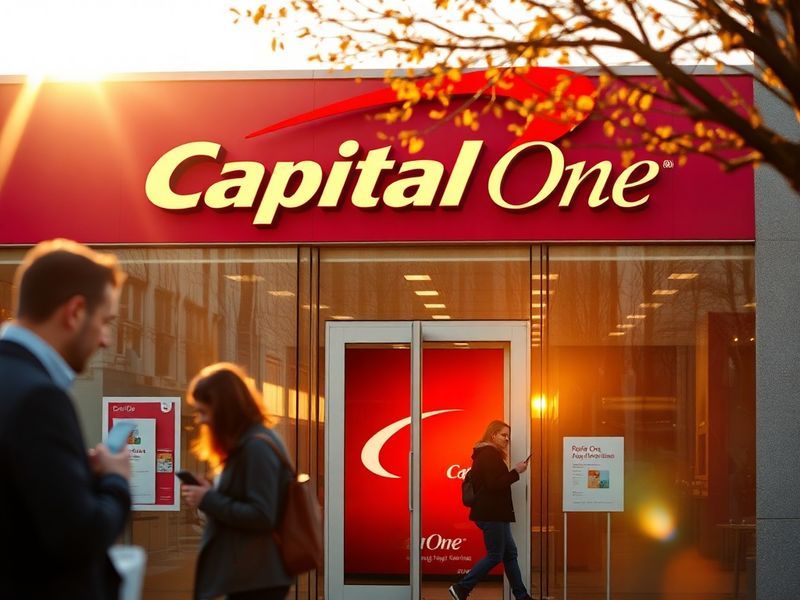
Capital One Financial Corporation stands today as one of the largest diversified bank holding companies in the United States. What began as a division of a regional bank in the 1980s has transformed into a Fortune 500 company with over $500 billion in assets and a presence across credit cards, banking, auto loans, and commercial services. Its journey reflects innovation in financial services, strategic risk management, and a relentless focus on customer experience.
The Origins: A Spin-Off With a Vision
Capital One traces its roots to 1988, when it was established as a spin-off from Signet Banking Corporation. The company was founded by Richard Fairbank and Nigel Morris, two consultants who believed in the power of data-driven decision-making in consumer lending. Fairbank had previously developed a credit risk model that could predict delinquencies using statistical analysis—an approach that was revolutionary at the time.
Unlike traditional banks that relied on subjective assessments, Capital One used its model to offer credit cards to a broader segment of the population, including individuals previously deemed too risky. This “information-based strategy” allowed the company to price risk more accurately and extend credit to millions who were underserved by conventional lenders.
Innovation Through Testing
The company pioneered the use of controlled experiments—known as “tests” or “pilots”—to refine product offerings. Capital One would run multiple versions of a credit card offer simultaneously, measuring response rates, default rates, and profitability. This method enabled rapid iteration and continuous improvement, a practice now standard across fintech but groundbreaking in the 1990s.
By 1994, Capital One had gone public and was listed on the New York Stock Exchange. Its growth trajectory was swift, driven by aggressive marketing, low introductory interest rates, and a focus on customer segmentation. The company became known for its iconic “What’s in your wallet?” advertising campaign, which launched in 2000 and helped cement its brand identity in American households.
A Diversified Financial Ecosystem
While Capital One began as a credit card company, it has since expanded into a full-service financial institution. Today, its operations are organized into three main segments: Credit Cards, Consumer Banking, and Commercial Banking.
- Credit Cards: Capital One remains one of the top issuers of general-purpose credit cards in the U.S., offering products like Venture, Savor, and Quicksilver. It serves over 100 million customers globally.
- Consumer Banking: Through its digital-first approach, Capital One provides checking and savings accounts, certificates of deposit, and auto loans. Its 360 Checking account is particularly popular for its fee-free structure and early direct deposit options.
- Commercial Banking: The company serves businesses of all sizes with lending, treasury management, and deposit products. It has also become a key player in equipment financing and commercial real estate lending.
Capital One’s acquisition of ING Direct USA in 2012 marked a major milestone in its expansion into retail banking. The deal brought over one million online banking customers and $82 billion in deposits, solidifying its digital-first strategy. This move positioned Capital One as a direct competitor to online banks like Ally and Discover.
Technology as a Core Competency
Capital One has long invested in technology, viewing it not as a support function but as a core business driver. In 2015, it acquired Monsoon, a digital marketing and analytics firm, and later established Capital One Labs to foster internal innovation.
The company has also been a leader in cloud adoption. It was one of the first major financial institutions to migrate large-scale operations to Amazon Web Services (AWS), a decision that improved scalability, reduced costs, and accelerated product development. This shift enabled faster deployment of new features, such as real-time fraud detection and personalized offers.
Capital One’s commitment to tech innovation extends to artificial intelligence. It uses machine learning models to detect fraudulent transactions, predict customer churn, and optimize marketing spend. These systems process billions of data points daily, helping the company stay ahead of evolving threats and market trends.
Challenges and Controversies
Despite its success, Capital One has faced significant challenges, particularly in the realm of data security and regulatory scrutiny. In 2019, the company experienced one of the largest data breaches in financial history, exposing the personal information of over 100 million customers. A hacker accessed names, addresses, credit scores, and Social Security numbers, leading to widespread criticism of its cybersecurity practices.
In response, Capital One implemented a comprehensive security overhaul, including encryption upgrades, multi-factor authentication, and enhanced monitoring. It also increased transparency by launching a public security blog and participating in industry-wide threat intelligence sharing programs. The incident, while damaging to its reputation, ultimately accelerated its investment in cybersecurity infrastructure.
Regulatory and Reputational Hurdles
Capital One has also navigated regulatory challenges, particularly concerning its credit card practices. In 2012, the Consumer Financial Protection Bureau (CFPB) ordered the company to refund $140 million to customers for deceptive marketing and billing practices related to its credit card add-on products. The settlement highlighted the risks of aggressive upselling in financial services.
The company has since overhauled its compliance programs, increasing training and implementing stricter oversight of third-party vendors. These changes reflect a broader industry shift toward consumer protection, driven by heightened regulatory scrutiny post-2008 financial crisis.
The Future: Digital-First and Customer-Centric
Looking ahead, Capital One is positioning itself as a leader in the digital transformation of banking. Its mobile app consistently ranks among the top in customer satisfaction, offering features like real-time transaction alerts, AI-powered financial insights, and seamless card controls.
The company has also expanded into new verticals, including healthcare financial services and venture capital. In 2021, it launched Capital One Healthcare, a dedicated lending and advisory platform for medical practices and healthcare organizations. This move reflects its strategy to diversify revenue streams beyond traditional consumer lending.
Sustainability and Social Responsibility
Capital One has increasingly emphasized environmental, social, and governance (ESG) initiatives. It has committed to net-zero greenhouse gas emissions by 2040 and has invested in renewable energy projects. The company also supports financial literacy programs, particularly for underserved communities, through initiatives like the Capital One Coders program, which teaches coding skills to young students.
Its commitment to diversity and inclusion is evident in its workforce, where over 50% of its U.S. employees are from underrepresented groups. Capital One has also been recognized by organizations like the Human Rights Campaign for its LGBTQ+ workplace policies and benefits.
Conclusion
From its data-driven origins to its current status as a tech-forward financial services leader, Capital One’s evolution is a testament to the power of innovation, adaptability, and customer focus. It has weathered economic downturns, regulatory storms, and cybersecurity crises—not by avoiding risk, but by managing it intelligently and turning challenges into opportunities for growth.
As banking continues to digitize and consumer expectations shift, Capital One’s ability to blend financial expertise with technological agility will determine its next chapter. With a strong balance sheet, a loyal customer base, and a culture of experimentation, the company appears well-positioned to remain a major player in the financial landscape for decades to come.
For those interested in modern banking trends, explore our Technology section for more insights into how digital innovation is reshaping finance. To understand the broader economic context, visit our Business category.