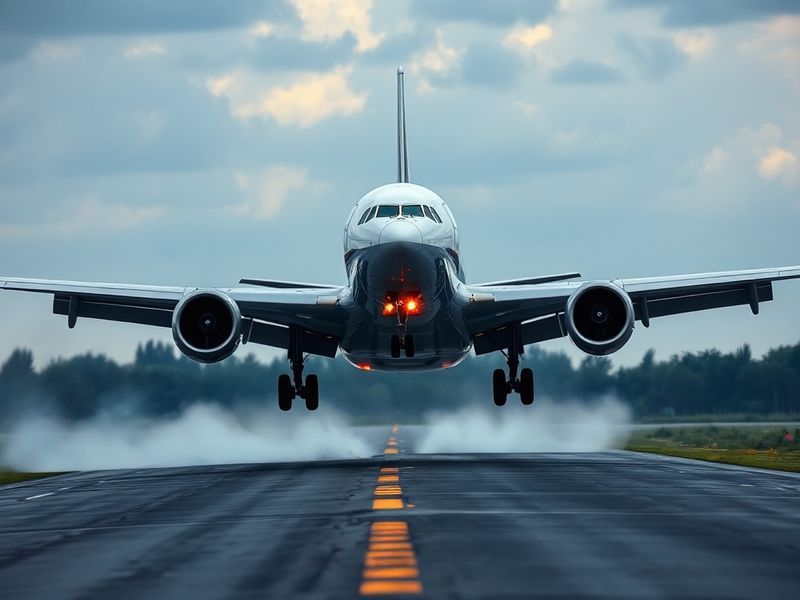
The phrase “emergency landing” carries an immediate sense of urgency across every language and culture. Whether broadcast over crackling radio transmissions or flashed on cockpit screens, it signals a moment where preparation, skill, and luck intersect. Unlike planned diversions or technical landings, these situations demand split-second decisions that can mean the difference between safety and catastrophe.
Emergency landings occur far more frequently than most passengers realize. According to the International Air Transport Association (IATA), there were 38.9 million flights in 2023, with only 54 accidents reported worldwide—a statistic that reflects both improved safety protocols and the rarity of catastrophic failures. Yet when emergencies do arise, they dominate headlines and public consciousness for weeks. The difference often comes down to training, technology, and the unpredictable element of human response.
The Anatomy of an Emergency Landing
Not all emergency landings are created equal. Aviation authorities classify them into several distinct categories, each with its own protocols and risk profiles. The most common types include:
- Forced landing: Occurs when a flight must land immediately due to engine failure, fire, or other critical systems breakdown. Pilots have no choice but to find the nearest suitable landing site—often a highway, field, or even a body of water.
- Precautionary landing: Performed when a potential issue is detected but the aircraft remains controllable. Examples include smoke in the cabin, minor structural damage, or medical emergencies onboard.
- Ditching: A controlled water landing, typically reserved for dual-engine failures over oceans or when no runway is within gliding distance. These require specialized training and are statistically rare.
- Go-around: Not technically a landing, but a rejected approach when conditions deteriorate during final descent. Pilots must execute a rapid climb to avoid terrain or obstacles.
The classification determines the level of risk and the procedures involved. A forced landing in a remote region demands different resources than a precautionary landing at a major international airport with full emergency services. Cultural attitudes toward risk also shape how these events are perceived. In countries with dense urban populations, such as Japan or the Netherlands, even minor aviation incidents draw intense scrutiny due to the proximity of residential areas to flight paths.
Cultural Perceptions and Media Narratives
How societies interpret emergency landings often reflects broader anxieties about technology and control. In Western media, these events are frequently framed as near-misses where heroic pilots defy the odds. Films like Sully, which dramatized the 2009 Hudson River landing, reinforce the idea of the “perfect landing”—a narrative that emphasizes individual skill over systemic factors.
Contrast this with aviation cultures in nations like Russia or China, where collective effort and state infrastructure play a more prominent role in safety narratives. Russian aviation history, for example, highlights the role of ground control and rapid-response teams in mitigating disasters. Meanwhile, in India, where monsoon seasons create unique challenges for pilots, emergency landings are often discussed in terms of community resilience and improvisation rather than just piloting prowess.
Social media has further transformed how emergency landings are consumed. A 2022 incident involving a LOT Polish Airlines flight that skidded off a runway in Warsaw became a viral sensation not for its danger but for the calm demeanor of passengers filming the event. The clip was shared across platforms with captions like “Would you stay this calm?”—a question that reveals more about cultural attitudes toward risk than the actual event.
Global Variations in Emergency Protocols
Standardization in aviation is a hallmark of modern air travel, yet emergency procedures still vary by region due to differences in infrastructure, training, and regulatory oversight. The following table highlights key distinctions:
| Region | Notable Features | Example Incident |
|---|---|---|
| North America | High density of airports; advanced radar and air traffic control systems; emphasis on pilot discretion in emergencies. | US Airways Flight 1549 (2009) – Hudson River ditching. |
| Europe | Strict adherence to EASA regulations; frequent use of secondary airports for emergencies; robust emergency services. | LOT Polish Airlines Flight 16 (2022) – runway excursion in Warsaw. |
| Asia-Pacific | Limited flat terrain in some areas forces creative solutions; rapid urbanization increases risk near populated zones. | AirAsia Flight 8501 (2014) – crash in Indonesian waters due to severe weather. |
| Africa | Sparse airport coverage in many regions; reliance on international aid for emergency response; limited radar coverage. | Ethiopian Airlines Flight 409 (2010) – crash into Mediterranean Sea due to pilot error. |
| Middle East | Modern infrastructure but high temperatures affect aircraft performance; strong government oversight. | Emirates Flight 521 (2016) – runway fire in Dubai. |
These variations underscore a critical truth: emergency landings are not just about the aircraft or the crew. They are deeply embedded in the social, economic, and technological fabric of the regions where they occur. In some parts of the world, a forced landing might mean a tense wait for rescue teams that could take hours to arrive. In others, it could trigger an immediate military or civilian response within minutes.
Human Factors: The Unseen Element
Behind every emergency landing is a human story—one that involves split-second decisions, psychological pressure, and the weight of responsibility. Studies by NASA’s Aviation Safety Reporting System (ASRS) indicate that 70% of aviation incidents involve human error to some degree, whether in the cockpit, air traffic control, or maintenance crews.
Cultural attitudes toward authority also influence how these situations are managed. In high-power-distance cultures, such as South Korea or Japan, junior crew members may hesitate to challenge a senior pilot’s decision, even in emergencies. Conversely, in low-power-distance cultures like the United States or Sweden, co-pilots are more likely to speak up assertively—a dynamic that can prevent disasters. The 1989 United Airlines Flight 232 crash in Sioux City, Iowa, is often cited as a case where crew coordination under extreme stress saved lives.
Psychological research has also shown that pilots in emergency situations exhibit a phenomenon known as “startle and surprise,” where their cognitive processing slows by up to 30%. This delay can be critical in scenarios requiring immediate action. Training programs now incorporate stress inoculation techniques, where pilots practice emergency scenarios under realistic conditions to build resilience.
Yet no amount of training can eliminate the unpredictability of human behavior. In 2015, a TransAsia Airways flight in Taiwan crashed shortly after takeoff due to a mechanical failure. Investigators found that the pilot’s decision to continue flying despite clear warnings contributed to the accident—a reminder that even the most prepared individuals can make fatal choices under pressure.
Lessons and the Future of Emergency Landings
Each emergency landing leaves behind a trail of lessons that shape aviation safety for decades. The 1972 crash of Eastern Air Lines Flight 401 in the Florida Everglades, caused by a burned-out landing gear indicator bulb, led to the widespread adoption of flight deck automation and crew resource management (CRM) training. More recently, the 2018 Lion Air Flight 610 and Ethiopian Airlines Flight 302 crashes prompted global reviews of Boeing 737 MAX systems and pilot training.
Looking ahead, several trends are poised to redefine emergency landings:
- AI and Predictive Analytics: Machine learning algorithms are being developed to predict mechanical failures before they occur, potentially reducing the need for unplanned landings.
- Drone-Assisted Search and Rescue: In remote regions, drones equipped with thermal imaging can locate downed aircraft faster than ground teams, improving survival rates.
- Enhanced Pilot Training: Virtual reality simulations are becoming standard in pilot instruction, allowing crews to experience rare emergency scenarios in a controlled environment.
- Alternative Fuels and Electric Aircraft: As airlines transition to sustainable aviation fuels and electric planes, new emergency procedures will need to be developed for lithium battery fires and other unfamiliar risks.
The goal is not just to reduce the number of emergency landings but to ensure that when they do happen, the outcomes are consistently survivable. This shift reflects a broader evolution in aviation safety: from reactive measures to proactive systems that anticipate failure before it occurs.
For passengers, the knowledge that emergency landings are statistically rare—and that crews are trained to handle them—can offer a sense of reassurance. Yet the fascination with these events persists, a testament to our collective awe at the intersection of human skill, mechanical precision, and the unforgiving laws of physics.
Conclusion
Emergency landings are a microcosm of the broader challenges facing modern aviation: balancing innovation with tradition, technology with human intuition, and safety with the unpredictable nature of flight. They reveal how deeply aviation is intertwined with culture, economics, and psychology, shaping not just how we travel but how we perceive risk and resilience.
As technology advances and global air travel becomes even more integral to our interconnected world, the lessons learned from each emergency landing will continue to refine the industry. For now, the next time you buckle your seatbelt, take a moment to appreciate the systems and people dedicated to ensuring that, if the unthinkable happens, they are ready to respond.
For more on aviation safety and global travel trends, explore our Travel and Technology sections.