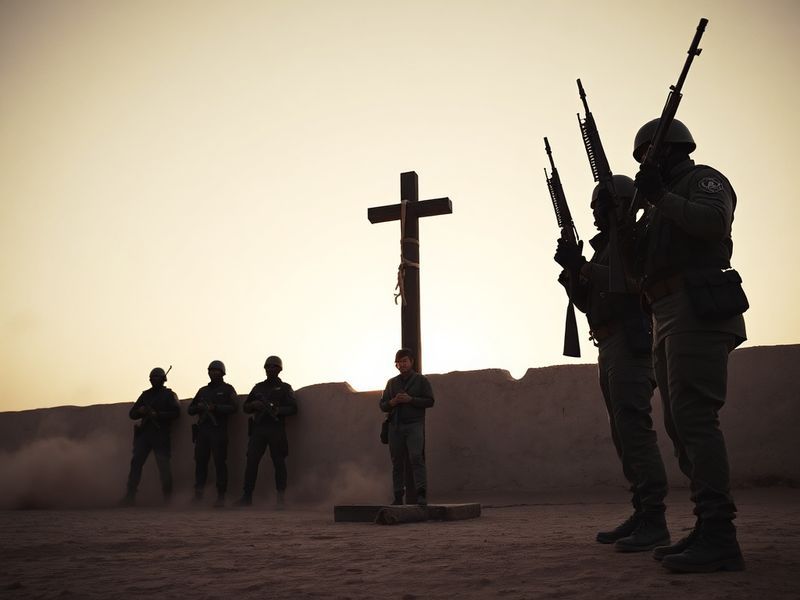
Firing Squad: History, Controversies, and Global Use Explained
“`html
The Firing Squad Through History
The firing squad has served as a method of execution for centuries, rooted in military tradition and later adopted by judicial systems. Its origins trace back to early modern Europe, where firing squads were used to maintain discipline among soldiers. By the 18th and 19th centuries, the practice expanded into civilian legal systems, particularly in countries with strong military influences.
In the United States, firing squads were first used in the mid-1800s, with the first recorded execution by this method occurring in Utah in 1852. The method gained prominence due to its perceived reliability and the belief that it caused less suffering than other forms of execution. Unlike hanging or electrocution, which could go wrong, the firing squad was considered a more controlled and dignified method.
Cultural and Legal Variations
The use of firing squads varies widely across cultures and legal systems. In some countries, it remains a legal method of execution, while in others, it has been abolished in favor of lethal injection or other methods. The cultural context often dictates the acceptance or rejection of this practice.
- United States: Firing squads are still legal in several states, including Utah, Mississippi, and Oklahoma, as a backup method if other execution methods are unavailable or ruled unconstitutional.
- Indonesia: The firing squad is the primary method of execution, particularly for drug-related crimes, reflecting the country’s strict stance on narcotics.
- Mexico: While the firing squad was historically used, it has been largely replaced by lethal injection, though it remains a theoretical option in some cases.
- Philippines: The method was used during the colonial period but is no longer practiced, with lethal injection being the preferred method today.
How a Firing Squad Execution Works
A firing squad execution typically involves a group of trained marksmen, usually law enforcement or military personnel, who are tasked with carrying out the sentence. The condemned individual is typically bound to a chair or post, blindfolded, and given a target to aim for. The squad is composed of shooters, some of whom may have blank rounds to obscure who actually fired the fatal shots.
The process is designed to be quick and efficient, with the condemned individual typically dying from multiple gunshot wounds to the chest or head. The method is intended to be humane, but it has faced criticism for its psychological impact on the shooters and the potential for botched executions.
The Role of Blank Rounds
One of the most debated aspects of firing squad executions is the use of blank rounds. Some jurisdictions mandate that one or more shooters receive blank ammunition, ensuring that no single individual is responsible for the killing blow. This practice is intended to share the moral burden among the squad members, though it has also been criticized as a formality that does little to alleviate the psychological trauma.
In some cases, the condemned individual is given the option to choose between firing squad and lethal injection, particularly in states like Utah where both methods are legal. This choice reflects the belief that the condemned should have some agency in their execution method, though it also raises ethical questions about the nature of capital punishment itself.
Controversies and Ethical Debates
The firing squad remains one of the most controversial methods of execution, sparking debates about morality, human rights, and the ethics of capital punishment. Critics argue that the method is inherently cruel, regardless of its perceived reliability, and that it inflicts unnecessary psychological suffering on both the condemned and the executioners.
Proponents, however, contend that the firing squad is a more honorable and transparent method than lethal injection, which has faced numerous controversies due to botched executions and the use of controversial drugs. The firing squad, they argue, is a return to the roots of military justice, where the condemned is executed by their peers rather than by a faceless state apparatus.
Psychological Impact on Executioners
One of the most overlooked aspects of firing squad executions is the psychological toll on the executioners themselves. Studies have shown that individuals who participate in executions, regardless of the method, often suffer from long-term trauma, including PTSD, depression, and substance abuse. The firing squad, with its intimate and personal nature, can exacerbate these effects.
In some cases, executioners have spoken out about the psychological damage they sustained, describing feelings of guilt, shame, and alienation. This has led to calls for the abolition of the firing squad, not only for the sake of the condemned but also for the well-being of those tasked with carrying out the sentence.
A Global Perspective on Firing Squads
The use of firing squads is not confined to a single region or culture; rather, it reflects broader attitudes toward justice, punishment, and the role of the state in taking human life. In some countries, the firing squad is seen as a necessary tool for maintaining order, particularly in cases involving treason or serious crimes. In others, it is viewed as a barbaric relic of the past.
For example, in countries like Saudi Arabia, firing squads are used for crimes such as murder, rape, and drug trafficking, often in public executions to serve as a deterrent. The spectacle of a public execution is intended to reinforce the authority of the state and the consequences of defying its laws. In contrast, Western democracies have largely moved away from such methods, favoring more “civilized” forms of execution like lethal injection.
The global shift away from firing squads reflects broader changes in societal values, particularly the growing emphasis on human rights and the belief that the state should not inflict cruel and unusual punishment. However, in some regions, the firing squad remains a symbol of strength and resolve, a reminder of the state’s unyielding authority.
Comparing Execution Methods
When examining the firing squad alongside other execution methods, several key differences emerge. Lethal injection, for instance, is often criticized for its association with botched executions and the use of untested drugs. Hanging, another traditional method, can result in slow and painful deaths if not performed correctly. Electrocution, meanwhile, has been described as a form of torture due to the potential for burns and prolonged suffering.
The firing squad, by comparison, is often seen as the most reliable and least painful method, assuming it is carried out correctly. However, this reliability comes at a cost: the psychological burden on the executioners and the potential for the condemned to experience terror in their final moments.
Conclusion: The Future of the Firing Squad
The firing squad remains a contentious and complex method of execution, one that straddles the line between tradition and modernity. While it is increasingly rare in Western legal systems, it persists in some regions as a symbol of justice and retribution. The debates surrounding its use highlight broader questions about the nature of punishment, the role of the state, and the value of human life.
As societies continue to evolve, the firing squad may fade into obscurity, replaced by more “humane” methods or abolished entirely. Yet, its legacy endures in the legal systems and cultural attitudes of the countries that still employ it. Whether seen as a relic of the past or a necessary tool of justice, the firing squad forces us to confront uncomfortable truths about the nature of capital punishment and the limits of state power.
For now, the firing squad remains a part of the global landscape of execution methods, a reminder of the diverse and often contradictory ways in which societies approach the ultimate penalty. As debates over capital punishment continue, the firing squad will undoubtedly remain at the center of the conversation, a symbol of both the brutality and the precision of state-sanctioned killing.