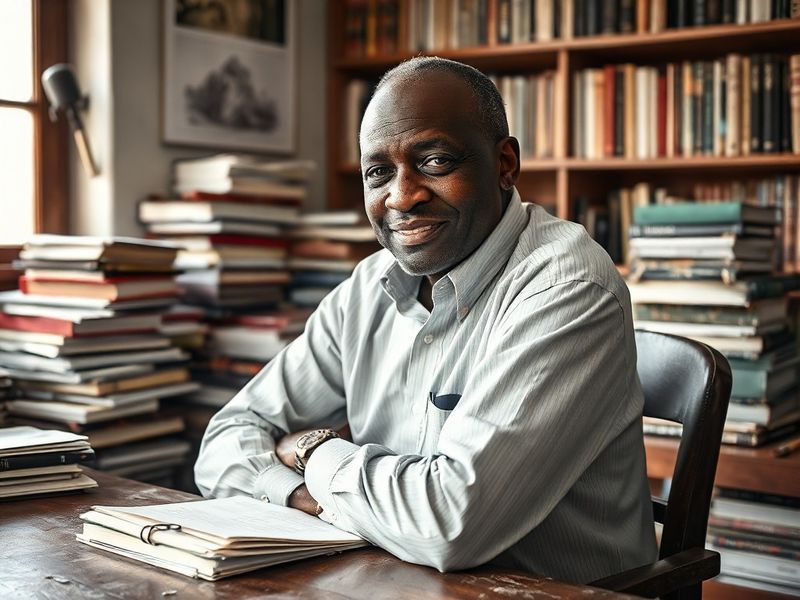
Ousmane Ndiaye: A Rising Star in Senegal’s Tech Revolution
In the heart of Dakar’s bustling tech scene, Ousmane Ndiaye is quietly building something extraordinary. While Africa’s tech ecosystem often celebrates well-known figures like Iyinoluwa Aboyeji or Rebecca Enonchong, Ndiaye’s work represents a different kind of innovation—one rooted in accessibility, local problem-solving, and sustainable growth. His ventures are not just about profit margins or Silicon Valley-style disruption; they’re about creating tools that empower everyday Africans.
At 32, Ndiaye has already worn multiple hats: software engineer, entrepreneur, and advocate for digital inclusion. His most notable project, SeneTech, a Dakar-based tech incubator, has become a proving ground for young Senegalese developers. Unlike traditional accelerators that chase global trends, SeneTech focuses on homegrown solutions—apps for farmers, mobile banking for unbanked communities, and AI tools tailored for local languages.
The Origins of a Senegalese Tech Pioneer
Ndiaye’s journey began in the working-class neighborhood of Colobane, where access to reliable internet was a luxury. He taught himself to code using borrowed laptops and public library computers, a common story among Africa’s self-taught developers. By 18, he had already built his first app—a simple but functional tool to help taxi drivers in Dakar navigate the city’s chaotic traffic.
His breakthrough came when he joined Andela, the now-famous African tech talent accelerator, where he honed his skills in full-stack development. But Ndiaye wasn’t content with just writing code for international clients. He wanted to solve problems back home. In 2018, he launched SeneTech with a single mission: to bridge the gap between Africa’s tech potential and its real-world challenges.
SeneTech: More Than Just an Incubator
What sets SeneTech apart is its hands-on approach. While many incubators offer mentorship and funding, SeneTech embeds its team directly into communities to identify pain points. For example, one of its most successful projects, AgriConnect, was born from conversations with farmers in the Casamance region. The app provides real-time market prices, weather alerts, and farming tips—all in Wolof, Senegal’s most widely spoken language.
Ndiaye’s philosophy is simple: technology should serve people, not the other way around. Under his leadership, SeneTech has incubated over 40 startups, with a survival rate of 85%—far above the continental average. The incubator’s success has caught the attention of international investors, but Ndiaye remains focused on local impact. “We’re not building for Silicon Valley,” he said in a 2022 interview. “We’re building for the farmer in Thiès, the trader in Saint-Louis, the student in Touba.”
Challenges and Criticisms in Africa’s Tech Boom
Despite the optimism surrounding Africa’s tech scene, Ndiaye is quick to acknowledge the obstacles. Infrastructure remains a major hurdle—while Dakar’s tech hubs are modern and well-equipped, much of Senegal still lacks reliable electricity and internet access. Funding is another issue. Most African startups rely on foreign investment, which can lead to misaligned priorities. “Investors want to see unicorns,” Ndiaye explains. “But we need to build camels first—sustainable, practical businesses that solve real problems.”
There’s also the question of scalability. Many African tech solutions thrive locally but struggle to expand beyond their home markets. Ndiaye’s answer? Partnerships. SeneTech has collaborated with universities, NGOs, and even government agencies to create a network where startups can grow together. For example, its BankLite project—a microfinance app for informal workers—partnered with Senegal’s postal service to reach rural areas.
The Broader Implications of Ndiaye’s Work
Ousmane Ndiaye’s contributions extend beyond SeneTech. He’s become a vocal advocate for policies that support African tech, from advocating for better internet policies to pushing for more coding education in schools. His work aligns with a growing movement across the continent to “decolonize” tech—ensuring that innovation is driven by Africans, for Africans.
The implications of this shift are profound. If Africa’s tech ecosystem continues to grow organically, it could redefine global tech standards. Imagine an AI trained on African languages, or blockchain solutions designed for informal economies. Ndiaye’s work is a small but critical step toward that future.
Key Takeaways from Ousmane Ndiaye’s Career
- Local-first innovation: Ndiaye’s projects prioritize African problems over global trends, ensuring relevance and sustainability.
- Community-driven development: SeneTech’s success comes from embedding itself in local communities rather than imposing solutions from above.
- Sustainable scaling: Ndiaye avoids the “growth-at-all-costs” mentality, focusing on steady, impactful expansion instead.
- Policy advocacy: He uses his platform to push for systemic changes that benefit African tech long-term.
- Representation matters: As a self-taught developer from a working-class background, Ndiaye embodies the potential of Africa’s next generation.
A Look Ahead: What’s Next for Ndiaye?
Ndiaye shows no signs of slowing down. In 2023, he announced plans to expand SeneTech into neighboring countries like Guinea and Mauritania, with a goal of incubating 200 startups by 2025. He’s also exploring new sectors, including renewable energy tech and edtech solutions for Senegal’s growing youth population.
But perhaps his most ambitious project is yet to come: a pan-African tech fund that pools resources from local investors rather than relying on foreign capital. “The narrative that Africa needs outside money to succeed is outdated,” he says. “We have the talent, the ideas, and the drive. What we need is the trust.”
Conclusion: Why Ousmane Ndiaye Matters
Ousmane Ndiaye represents a new kind of African leader—one who combines technical skill with a deep commitment to social impact. In a continent often reduced to stereotypes of poverty or “rising markets,” figures like Ndiaye remind us that Africa’s greatest resource is its people. His work challenges the global tech community to rethink who gets to innovate and for whom.
As Africa’s tech ecosystem continues to evolve, Ousmane Ndiaye’s story is a blueprint for what’s possible when innovation is rooted in local needs. It’s not about chasing Silicon Valley’s next big thing; it’s about building something that lasts—something that works for Dakar as much as it does for Dubai or San Francisco.