Long Drop Toilet: History, Design, and Modern Uses Explained
“`html
The Long Drop Toilet: History, Design, and Modern Relevance
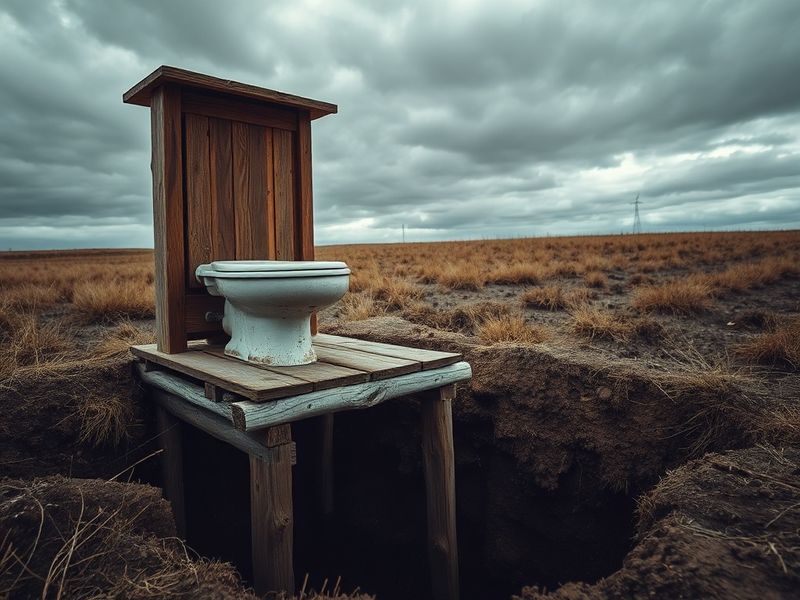
The long drop toilet is one of humanity’s most enduring sanitation solutions, blending simplicity with remarkable efficiency. Often associated with rural settings, remote cabins, or historical contexts, this system remains relevant in areas lacking modern plumbing infrastructure. Its design—essentially a pit beneath a seat—has evolved over centuries, yet the core principle remains unchanged. To understand its lasting appeal, we must explore its origins, mechanics, and adaptability across different environments.
A Brief History of the Long Drop Toilet
Long drop toilets trace their roots to early agricultural societies where waste management was essential for public health. By the 19th century, as urbanization accelerated, basic pit latrines became widespread in rural communities across Europe and North America. These systems were practical: a deep hole beneath a wooden or stone seat allowed waste to decompose naturally over time. Unlike early chamber pots or cesspits, the long drop minimized odor and contamination by burying waste underground.
In colonial regions, such as Australia and New Zealand, long drop toilets became a standard feature in homesteads during the 1800s. Settlers relied on them due to the absence of municipal sewage systems. The design was often rudimentary—a slab of wood with a hole cut in the center—but it served its purpose effectively. Over time, ventilation pipes were added to reduce smells, and concrete or metal linings were introduced to prevent collapse or groundwater contamination.
Today, long drop toilets persist in off-grid living, camping sites, and developing regions where infrastructure is limited. Their history reflects humanity’s enduring need for simple, functional sanitation—even when modern alternatives exist.
How a Long Drop Toilet Works: Mechanics and Maintenance
A long drop toilet operates on a straightforward principle: waste falls into a deep pit, where it decomposes naturally over months or years. The depth of the pit is crucial—typically at least 10 feet—to ensure adequate decomposition and odor control. Some designs include a ventilation pipe, which channels gases upward and reduces foul smells near the seat. Others feature a removable bucket or a composting chamber for easier waste removal.
Maintenance varies depending on the system. In basic setups, the pit is left to fill over several years before being emptied or relocated. More advanced models, such as composting toilets, accelerate decomposition using organic materials like sawdust or peat moss. These systems require periodic turning or addition of bulking agents to facilitate the breakdown process. Without proper maintenance, long drop toilets can become breeding grounds for flies, bacteria, or unpleasant odors.
- Pit Depth: Minimum 10 feet to ensure proper decomposition and odor control.
- Ventilation: A pipe extending above the roof helps dissipate gases and reduce smells.
- Lining Materials: Concrete, metal, or plastic can prevent pit collapse and groundwater contamination.
- Maintenance Frequency: Depends on usage; typically every 1–5 years for emptying or relocation.
For those considering a long drop toilet, local regulations often dictate pit design and maintenance standards. In some areas, permits are required for installation, especially if the system connects to groundwater sources. Proper siting—away from water wells and property boundaries—is also critical to prevent contamination.
Modern Adaptations: From Survival to Sustainability
While long drop toilets are often associated with primitive living, modern adaptations have transformed them into eco-friendly sanitation solutions. Composting toilets, for instance, use aerobic decomposition to break down waste into nutrient-rich soil. These systems are popular in off-grid homes, tiny houses, and even urban eco-villages where water conservation is a priority. The resulting compost can be safely used for non-edible plants, closing the nutrient loop.
Another innovation is the incinerating toilet, which burns waste into sterile ash using electric heat. These units are ideal for remote cabins or areas with strict environmental regulations. They require no water or chemicals, making them a low-maintenance alternative to traditional long drop systems. However, they come with higher upfront costs and energy demands.
In developing regions, organizations like the World Health Organization promote long drop toilets as a cost-effective way to improve public health. Simple pit latrines can reduce diarrheal diseases by up to 36% when properly maintained, according to WHO estimates. These systems are particularly vital in refugee camps and rural communities where sewage infrastructure is nonexistent.
For survivalists and preppers, long drop toilets remain a reliable choice during emergencies. Their lack of dependence on electricity or running water makes them indispensable when modern systems fail. Many survival guides recommend building a long drop toilet as part of a sustainable homestead plan, emphasizing its role in self-sufficiency.
Environmental and Health Considerations
Despite their simplicity, long drop toilets pose environmental and health risks if not managed correctly. One of the primary concerns is groundwater contamination. When pits are too shallow or improperly lined, waste can seep into soil and water sources, spreading pathogens like E. coli or parasites. This risk is heightened in areas with high water tables or porous soil. To mitigate this, experts recommend lining pits with impermeable materials and siting toilets at least 50 feet from water wells.
Another issue is the proliferation of flies and rodents, which can transmit diseases. Flies are attracted to uncovered waste, so adding a tight-fitting lid or fly-proof screen is essential. Composting toilets address this by using a sealed chamber where waste decomposes without attracting pests. Regular maintenance, such as adding lime or wood ash, can also reduce odors and deter insects.
Health risks extend beyond contamination. Poorly maintained long drop toilets can emit harmful gases like methane and hydrogen sulfide, which pose inhalation risks. Ventilation pipes help dissipate these gases, but in enclosed spaces, additional safety measures may be necessary. For families with children, securing the toilet seat and ensuring proper disposal of cleaning chemicals is also important to prevent accidents.
On the positive side, long drop toilets contribute to soil regeneration when waste is properly composted. The resulting fertilizer enriches soil without the need for synthetic chemicals, supporting sustainable agriculture. This closed-loop system aligns with permaculture principles, making it a valuable tool for eco-conscious landowners.
Building Your Own: Practical Steps and Tips
Constructing a long drop toilet is a project that requires careful planning and adherence to local regulations. The first step is selecting a suitable location—ideally, a spot with stable soil, away from water sources, and downhill from living areas to prevent runoff. The pit should be dug to a depth of at least 10 feet, with a diameter of 3–4 feet. For added stability, the sides can be lined with concrete rings or bricks.
The superstructure, or toilet house, can be built from a variety of materials, including wood, metal, or repurposed shipping containers. A simple A-frame design with a sloped roof ensures water runoff and durability. Ventilation is critical, so installing a 4-inch pipe extending above the roof helps channel gases away. A fly-proof screen or vent cap can further reduce pests.
- Site Selection: Choose a location with stable soil, away from water sources, and downhill from living areas.
- Pit Construction: Dig a pit at least 10 feet deep and 3–4 feet wide. Line with concrete rings or bricks if needed.
- Superstructure: Build a sturdy toilet house using wood, metal, or repurposed materials. Ensure it has a sloped roof and proper ventilation.
- Ventilation System: Install a 4-inch pipe extending above the roof to dissipate gases and reduce odors.
- Maintenance Plan: Decide how waste will be managed—whether through composting, periodic emptying, or relocation.
For those new to off-grid living, starting with a portable composting toilet can be a gentler introduction. These systems require less maintenance and are easier to install, making them ideal for beginners. Over time, as confidence grows, a permanent long drop toilet can be built to suit specific needs.
If you’re exploring off-grid living solutions, consider browsing our Survival and Camping categories for more insights on sustainable systems.
Conclusion: A Timeless Solution for Modern Challenges
The long drop toilet may seem like a relic of the past, but its principles remain as relevant as ever. In an era of environmental awareness and off-grid living, this simple system offers a sustainable, low-cost alternative to high-tech sanitation. Whether used in remote cabins, developing communities, or survival scenarios, the long drop toilet demonstrates humanity’s ability to adapt ancient solutions to modern needs.
Its enduring appeal lies in its simplicity, durability, and adaptability. With proper design and maintenance, a long drop toilet can serve a household for years while minimizing environmental impact. As we face global challenges like water scarcity and waste management, revisiting traditional systems like the long drop toilet could hold the key to more resilient communities.
For those willing to embrace its challenges, the long drop toilet is more than just a toilet—it’s a testament to human ingenuity and the power of simplicity.