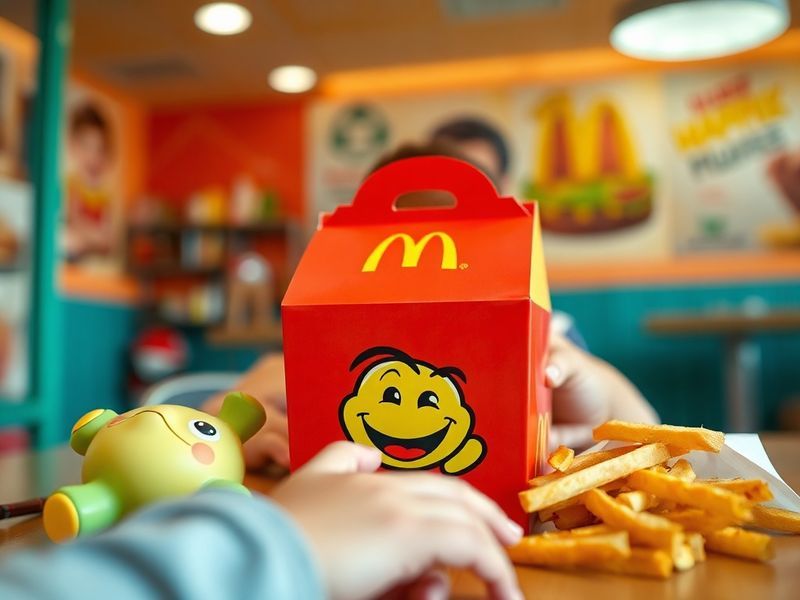
The McDonald’s Happy Meal isn’t just a children’s meal—it’s a cultural institution that has shaped fast-food marketing, toy distribution, and family dining habits since its debut in 1979. What began as a simple concept—a boxed meal with a toy—has evolved into a carefully engineered system designed to appeal to both children and the adults who buy for them.
The Origins: How a Boxed Meal Changed Fast Food
The Happy Meal was introduced nationally in October 1979 after regional tests in St. Louis, Missouri, and Ray Kroc’s hometown of San Bernardino, California. Its creation was driven by a need to boost weekday lunch sales, which were typically slower than dinner rushes. The first iteration came in a red-and-yellow box featuring the McDonaldland characters—Grimace, Hamburglar, Birdie the Early Bird, and Ronald McDonald himself.
The meal’s initial price was $1.19 in the U.S., which included a hamburger or cheeseburger, french fries, a soda, and a toy. This pricing strategy was revolutionary at the time, as it bundled multiple items into a single purchase while still maintaining profitability. The inclusion of a toy wasn’t new—fast-food chains had experimented with promotional items for years—but McDonald’s perfected the formula by making it a recurring feature rather than a one-time gimmick.
Within two years of its national rollout, the Happy Meal accounted for 10% of McDonald’s total sales. The success demonstrated the power of child-focused marketing, which has since become a blueprint for the entire industry. Today, the Happy Meal remains one of the most recognizable children’s meal programs worldwide, with some estimates suggesting it sells over 1 billion units annually across its global locations.
The Psychology Behind the Happy Meal: Why Kids—and Parents—Can’t Resist
The Happy Meal’s enduring appeal lies in its masterful use of behavioral psychology and marketing techniques. At its core, the meal targets the dual decision-makers in any family transaction: the child who wants it and the parent who approves the purchase. This “pester power” strategy has been studied extensively in consumer behavior research.
One of the most effective psychological triggers is the inclusion of a toy that changes with each promotion. These toys aren’t random—they’re carefully selected based on current children’s trends, movie releases, and seasonal themes. A 2019 study published in the Journal of Consumer Research found that children were more likely to prefer foods they associated with their favorite characters, even when the actual food quality was identical to competitors.
The meal’s packaging also plays a crucial role. The box is designed to be portable and functional, often doubling as a play surface or storage container. The bright colors and familiar McDonald’s branding create instant recognition, while the compartmentalized design makes the meal feel special and organized—unlike a typical takeout bag.
For parents, the Happy Meal offers convenience and portion control. A typical Happy Meal contains around 400-600 calories, which aligns with nutritional guidelines for children’s meals. The inclusion of milk or juice instead of soda in many locations also addresses modern health concerns, though critics argue the meal still contains high levels of sodium and processed ingredients.
Controversies and Health Concerns
The Happy Meal has faced persistent criticism over its nutritional content. In 2011, San Francisco became the first U.S. city to ban free toys with unhealthy meals, leading McDonald’s to reformulate its Happy Meal to include apple slices, smaller fries, and water or milk as default beverages. This change reduced the meal’s calorie count by about 20% in many locations.
Other controversies have included:
- The environmental impact of plastic toys, which led to McDonald’s introducing “Toy-Free Happy Meals” in some markets
- Ongoing debates about the marketing of unhealthy foods to children
- Concerns about the collectibility aspect encouraging overconsumption
Global Variations: How the Happy Meal Adapts to Local Tastes
While the basic concept of the Happy Meal remains consistent worldwide, McDonald’s localizes offerings to match regional preferences. This adaptation has been key to the meal’s global success, with some variations becoming unexpected hits.
In Japan, for example, the Happy Meal often features rice-based options like teriyaki chicken or katsu curry instead of burgers. Some locations include chopsticks and soy sauce packets with the meal. In India, where beef is not served due to religious practices, the Happy Meal includes chicken or vegetarian options like McAloo Tikki burgers.
The toy selection also adapts to local cultures. In France, Happy Meals have featured Asterix and Tintin figurines, while Brazilian versions have included Monica’s Gang characters. McDonald’s even created regional mascot variations, such as Donald McDonald in Japan and Ronald McDonald in some European markets.
Some of the most creative adaptations have come from unexpected places:
- Saudi Arabia: Offers dates and apple juice as part of Ramadan promotions
- Australia: Features Vegemite sandwiches during special promotions
- Sweden: Includes environmentally friendly paper toys and organic milk options
- Philippines: Has featured Jollibee (a local fast-food mascot) collaborations
The Future of the Happy Meal: Sustainability and Digital Integration
As consumer preferences shift toward healthier and more sustainable options, the Happy Meal continues to evolve. McDonald’s has committed to making 100% of its Happy Meal packaging from renewable, recycled, or certified sources by 2025. In Europe, some locations have replaced plastic toys with books or games printed on recycled paper.
Digital integration represents another frontier. McDonald’s has experimented with augmented reality experiences through the Happy Meal app, where children can scan their toy to unlock games or animations. In China, some locations have used QR codes on meal boxes to direct families to educational content about food origins.
The collectibility aspect remains strong, though it has adapted to modern trends. Recent Happy Meal toy lines have included:
- Pokémon collaborations following the franchise’s resurgence
- Lego minifigure series in select markets
- Nerf blasters and other active-play toys
- Eco-friendly alternatives like seed paper or wooden figures
Looking ahead, the Happy Meal may face new challenges from changing family dining habits. With the rise of food delivery apps and ghost kitchens, some wonder if the traditional dine-in Happy Meal experience will retain its appeal. However, McDonald’s continues to invest in the concept, with recent renovations of many locations featuring dedicated “Happy Meal stations” with interactive digital displays.
Why the Happy Meal Still Matters
More than four decades after its introduction, the Happy Meal remains a fascinating case study in marketing, psychology, and cultural adaptation. It represents one of the most successful examples of how a simple product can become intertwined with childhood memories for generations of families worldwide.
The meal’s longevity speaks to McDonald’s ability to balance commercial interests with cultural sensitivity. While it has faced valid criticism over nutrition and environmental impact, the company’s willingness to adapt—whether through portion control, toy alternatives, or localized menu items—has allowed the Happy Meal to endure where many children’s meal programs have faded.
For parents, the Happy Meal offers a rare consistency in an era of rapidly changing children’s products. Many adults today can recall their own Happy Meal experiences from decades past, creating a shared cultural touchpoint across generations. The meal’s ability to evoke nostalgia while remaining relevant to new generations demonstrates the power of simple, well-executed branding.
As McDonald’s continues to refine the Happy Meal for future generations, one thing remains certain: this iconic children’s meal will likely remain a staple of fast-food culture for decades to come. Its story is far from over, and the next chapter may introduce innovations we can’t yet imagine.
For more insights into fast-food trends and cultural moments, explore our Trending and Food categories on Dave’s Locker.