<!DOCTYPE html>
<html lang="en">
<head>
    <meta charset="UTF-8">
    <meta name="viewport" content="width=device-width, initial-scale=1.0">
    <title>Mojtaba Khamenei: The Influence Behind Iran's Political Scene</title>
</head>
<body>
    <article>
        <h2>Who Is Mojtaba Khamenei?</h2>
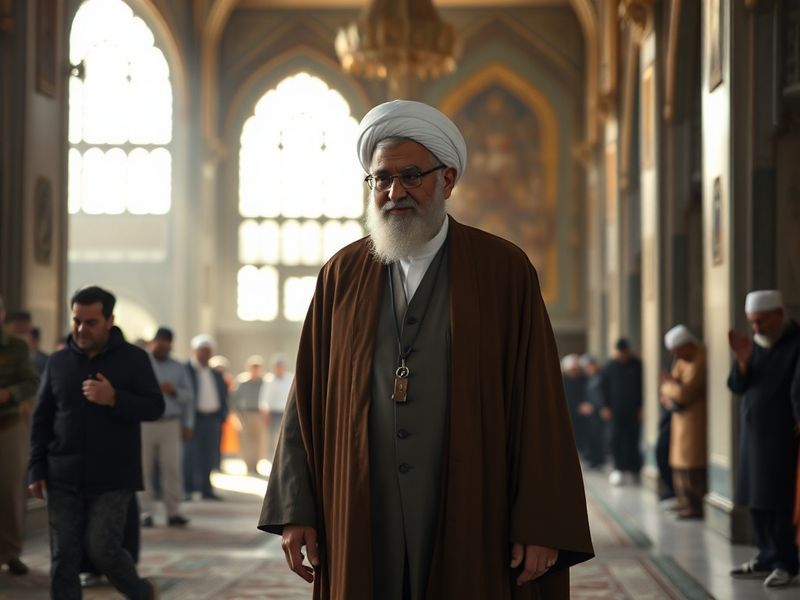
        <p>Mojtaba Khamenei is a prominent Iranian cleric and political figure whose name frequently surfaces in discussions about Iran’s power structures. As the second son of Supreme Leader Ayatollah Ali Khamenei, he occupies a unique position at the intersection of religion and politics in Iran. While he does not hold an official government title, his influence is widely recognized in conservative circles, where he is seen as a key strategist and ideologue.</p>

        <p>Born in 1969, Mojtaba Khamenei grew up in a household deeply entrenched in the Islamic Republic’s establishment. His father, Ayatollah Ali Khamenei, became Iran’s Supreme Leader in 1989, following the death of Ayatollah Ruhollah Khomeini. Unlike his father, who was imprisoned and exiled during the Pahlavi era, Mojtaba Khamenei has largely remained out of the public spotlight, avoiding the kind of media exposure that often accompanies high-profile political dynasties.</p>

        <h2>The Political Shadow of a Supreme Leader’s Son</h2>
        <p>Despite his low public profile, Mojtaba Khamenei’s political footprint is undeniable. He is often associated with the conservative faction of Iran’s political spectrum, which advocates for strict adherence to Islamic principles and resistance against Western influence. Analysts suggest that his role extends beyond familial ties, with some speculating that he plays a behind-the-scenes advisory role to his father.</p>

        <p>One of the most notable aspects of Mojtaba Khamenei’s influence is his connection to Iran’s military and security apparatus. Reports have linked him to the Islamic Revolutionary Guard Corps (IRGC), a powerful military organization that plays a central role in Iran’s domestic and foreign policy. The IRGC’s influence in Iran’s economy and politics has made it a focal point for critics of the regime, with some accusing it of undermining democratic processes.</p>

        <p>The 2009 Green Movement protests, which erupted in response to the disputed re-election of President Mahmoud Ahmadinejad, highlighted the tensions between reformists and hardliners in Iran. During this period, Mojtaba Khamenei’s name surfaced in rumors about potential succession plans, though no concrete evidence linked him directly to efforts to suppress the protests. His role, if any, remains shrouded in secrecy, a common trait among figures who operate in Iran’s opaque political system.</p>

        <h3>Conservative Ideology and Social Influence</h3>
        <p>Mojtaba Khamenei’s conservative views align closely with the principlist faction, which emphasizes loyalty to the ideals of the 1979 Islamic Revolution. This faction has been instrumental in shaping Iran’s cultural and social policies, often advocating for strict enforcement of Islamic dress codes, restrictions on media freedom, and opposition to Western cultural influences. His influence is particularly noticeable in the appointment of key officials within Iran’s judiciary and cultural institutions.</p>

        <p>In recent years, Mojtaba Khamenei has also been linked to efforts to counter what conservatives perceive as a creeping liberalization in Iranian society. This includes opposition to cultural exchanges with the West and resistance to reforms that might dilute the Islamic character of the state. His stance reflects a broader trend in Iran, where the conservative establishment seeks to maintain control over the country’s social and political direction.</p>

        <h2>Global Perspectives on Mojtaba Khamenei</h2>
        <p>From an international standpoint, Mojtaba Khamenei embodies the challenges of navigating Iran’s complex political landscape. His father’s leadership has been marked by a defiant stance against the United States and its allies, particularly in the context of Iran’s nuclear program and regional conflicts. Mojtaba Khamenei’s presence in the background raises questions about the future of Iran’s leadership, especially as his father approaches the later stages of his tenure.</p>

        <p>Western governments and analysts often view Mojtaba Khamenei as a potential successor to his father, though this remains speculative. His conservative leanings suggest that any transition of power could further entrench Iran’s hardline policies, particularly in areas such as foreign relations and domestic governance. The international community’s engagement with Iran has been fraught with challenges, and the role of figures like Mojtaba Khamenei complicates efforts to predict the country’s future trajectory.</p>

        <p>In the Middle East, Iran’s influence extends through proxy groups such as Hezbollah in Lebanon and various militias in Syria and Iraq. Mojtaba Khamenei’s potential role in shaping these relationships cannot be ignored. His conservative ideology aligns with the Islamic Republic’s broader strategy of expanding its influence in the region, often through military and financial support for allied factions.</p>

        <h3>A Look at Iran’s Succession Dynamics</h3>
        <p>The question of succession in Iran is a delicate one, given the Supreme Leader’s immense power. Mojtaba Khamenei’s position as the Supreme Leader’s son places him in a unique but precarious situation. While familial ties can provide an advantage in Iran’s political system, they can also make an individual a target for criticism and suspicion.</p>

        <p>Iran’s political elite is deeply divided along factional lines, and Mojtaba Khamenei’s rise could either consolidate power within a specific group or provoke backlash from rival factions. The Islamic Republic has a history of internal power struggles, and the appointment of a successor is unlikely to occur without significant resistance.</p>

        <p>For now, Mojtaba Khamenei remains a figure of speculation rather than official action. His influence is felt more through the policies and appointments made by those around him than through direct public pronouncements. However, as Iran’s political landscape continues to evolve, his role—and the role of Iran’s conservative establishment—will remain a critical factor in shaping the country’s future.</p>

        <h2>Conclusion: The Enigma of Mojtaba Khamenei</h2>
        <p>Mojtaba Khamenei exists in the shadows of Iran’s political hierarchy, his influence felt more through implication than declaration. While he lacks an official title, his conservative ideology and familial connections position him as a significant player in Iran’s power dynamics. His potential role in the country’s future succession plans adds another layer of complexity to an already intricate political system.</p>

        <p>For observers outside Iran, Mojtaba Khamenei represents the challenges of understanding a political system where power is often exercised behind closed doors. His story is one of privilege, influence, and the burdens of legacy—a narrative that reflects the broader tensions within Iran itself. As the country navigates its internal divisions and external pressures, the role of figures like Mojtaba Khamenei will continue to be a subject of intense scrutiny and speculation.</p>
    </article>

    <!-- Metadata Section -->