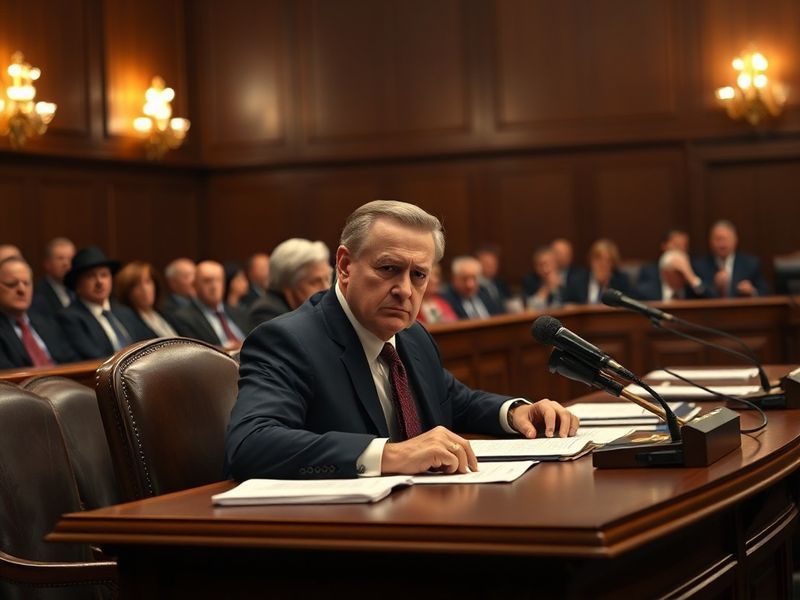
Former Alabama Senate candidate Roy Moore has filed an appeal in his long-running defamation case, marking another chapter in a legal saga that has stretched across multiple years. The appeal comes after a jury ruled in favor of Moore’s accusers, who claimed he made defamatory statements about them during his 2017 Senate campaign. Moore, a controversial figure in Alabama politics, has consistently denied the allegations, framing the lawsuit as an attempt to silence him politically.
The case centers on statements Moore made in 2017, when he was running as a Republican for the U.S. Senate. He publicly accused several women of fabricating sexual misconduct allegations against him to damage his campaign. Those women, including Leigh Corfman and Beverly Young Nelson, filed defamation lawsuits, arguing that Moore’s statements further harmed their reputations. The lawsuits were consolidated, and in 2023, a jury found Moore liable for defamation in two of the cases, awarding the plaintiffs damages.
Legal Arguments and Appeal Strategy
Moore’s legal team has indicated that they will challenge the jury’s verdict on several grounds. Their primary argument is that Moore’s statements were protected under the First Amendment as opinions rather than factual claims. They contend that his remarks about the accusers were rhetorical and hyperbolic, not intended as literal accusations. Additionally, Moore’s attorneys argue that the statute of limitations may have expired on some of the claims, a point the plaintiffs dispute.
The appeal also raises questions about the jury’s interpretation of defamation law. In Alabama, defamation requires proof of actual malice when the plaintiff is a public figure—meaning the defendant must have known the statements were false or acted with reckless disregard for the truth. Moore’s team asserts that the jury incorrectly applied this standard, failing to consider Moore’s status as a public figure at the time of the statements.
Legal experts suggest that the appeal could hinge on whether Moore’s statements were deemed factual or opinion-based. Courts have historically drawn a line between the two, with opinions generally receiving more protection under free speech laws. However, the line can blur when opinions imply false facts, as Moore’s statements did by calling the accusers’ allegations “false” and part of a “witch hunt.”
The Broader Impact on Moore’s Political Career
While the legal battle has consumed Moore’s attention for years, the political fallout from the defamation case remains significant. Moore, a former chief justice of the Alabama Supreme Court, has long been a polarizing figure in Alabama politics. His 2017 Senate campaign was derailed after multiple women came forward with allegations of sexual misconduct when they were teenagers and Moore was in his 30s. Moore denied the allegations, calling them politically motivated.
The defamation case further cemented his reputation as a combative figure willing to challenge his accusers publicly. Even after the jury ruled against him, Moore has continued to frame the lawsuits as part of a broader effort to suppress conservative voices. In a recent statement, he called the verdict “a miscarriage of justice” and vowed to continue fighting. His appeal signals that he remains defiant, despite the legal and financial consequences.
For Moore’s supporters, the defamation case is yet another example of what they perceive as unfair treatment by the media and political establishment. His base has remained loyal, viewing him as a champion of conservative values. However, the legal setbacks have made it increasingly difficult for Moore to regain the political influence he once held. His ability to mount a political comeback may depend on the outcome of this appeal.
What’s Next for the Defamation Appeal?
The appeal process in Alabama could take months or even years to resolve. Moore’s legal team has indicated they will pursue all available avenues, including a potential appeal to the Alabama Supreme Court or even the U.S. Supreme Court if necessary. The plaintiffs, meanwhile, are preparing to defend the jury’s verdict, arguing that Moore’s statements crossed the line from protected opinion to defamation.
One key consideration is the potential financial burden of the appeal. Moore was ordered to pay millions in damages, and the appeal process itself will incur substantial legal fees. Moore has relied on donations from supporters to fund his legal battles, but the costs could strain his resources further. If the appeal fails, he may face additional financial penalties or even bankruptcy.
Beyond the legal and financial implications, the case raises broader questions about accountability for public figures who make defamatory statements. The outcome could set a precedent for how similar cases are handled in the future, particularly in an era where social media amplifies political rhetoric. Advocates for the plaintiffs argue that holding Moore accountable is essential to protecting individuals from false and harmful statements.
Key Takeaways from the Case
- Moore is appealing a 2023 jury verdict that found him liable for defamation in two cases involving accusers from his 2017 Senate campaign.
- His legal team argues that his statements were protected under the First Amendment as opinions, not factual claims.
- The appeal challenges the jury’s application of defamation law, particularly the “actual malice” standard for public figures.
- Moore’s political career has been significantly impacted, but his supporters remain steadfast in his defense.
- The appeal process could take years, with potential financial and legal consequences for Moore.
Broader Implications for Defamation Law
The Moore case is not an isolated incident but part of a growing trend of defamation lawsuits involving public figures. In recent years, high-profile individuals have increasingly used defamation claims to challenge negative portrayals in the media and by opponents. However, these cases often hinge on nuanced legal distinctions, such as whether statements are opinions or facts, and whether the plaintiff is a public figure.
Legal scholars note that defamation law is inherently complex, balancing free speech protections with the right to reputation. The Moore case could influence how courts interpret these boundaries, particularly in cases involving political speech. If the appeal succeeds, it may embolden other public figures to challenge defamation claims more aggressively. Conversely, if the verdict is upheld, it could serve as a warning about the risks of making defamatory statements, even in politically charged contexts.
Another layer to the case is the role of social media. Moore’s statements were amplified by platforms like Twitter, where he frequently engaged with supporters and critics alike. The viral nature of his remarks raises questions about liability in the digital age. Courts have yet to fully address how social media activity factors into defamation claims, leaving room for interpretation in cases like Moore’s.
For now, the appeal remains in its early stages, with both sides preparing for a protracted legal battle. The outcome will not only affect Moore’s personal and political future but could also shape the landscape of defamation law for years to come.
Conclusion
Roy Moore’s appeal in the defamation case underscores the enduring tension between free speech and accountability. While Moore frames the lawsuit as an attack on his conservative values, the plaintiffs see it as a necessary reckoning for false and harmful statements. The legal battle is far from over, but the stakes are clear: the outcome will have lasting implications for how public figures navigate accusations and how courts interpret defamation law.
Regardless of the appeal’s result, the Moore case serves as a reminder of the power of words—particularly in politics—and the legal consequences they can carry. As the appeal progresses, it will be closely watched by legal experts, political observers, and those who have been directly impacted by Moore’s rhetoric. For now, the fight continues, with Moore vowing to clear his name and his accusers seeking justice.
Visit our News category for more updates on legal and political developments. For deeper analysis, check out our Analysis section.