The Falkland Islands, a remote archipelago in the South Atlantic, have been a persistent source of tension between the United Kingdom and Argentina for over a century. Though small in population and landmass, their strategic location and historical disputes have elevated them to a symbol of national pride and geopolitical significance. This article explores the historical context, modern relevance, and broader implications of the Falklands conflict, offering fresh perspectives on why this dispute continues to matter.
The Historical Roots of Dispute
The origins of the Falklands conflict trace back to the 17th century, when European explorers first encountered the islands. Both Britain and Spain (later Argentina) claimed sovereignty, but the modern dispute crystallized in the 19th century. Britain established a permanent settlement in 1833, a move Argentina has repeatedly contested as an illegal occupation.
The tension erupted into armed conflict in 1982 when Argentina, under military dictator Leopoldo Galtieri, invaded the islands. The resulting Falklands War lasted 74 days and ended with a decisive British victory, cementing London’s control. Yet the war did little to resolve the underlying dispute. Instead, it transformed the Falklands into a symbol of national identity for both nations, with Argentina vowing to reclaim what it calls the “Malvinas Islands” and Britain refusing to cede territory.
Key Moments in the Falklands Dispute
- 1982 Falklands War: Argentina’s invasion and Britain’s military response highlighted the islands’ strategic importance.
- 2013 Referendum: Falkland Islanders voted overwhelmingly to remain a British overseas territory, complicating Argentina’s claims.
- 2020s Diplomatic Standoff: Rising tensions over fishing rights and oil exploration have kept the issue alive in international forums.
- 2023 UN Vote: Argentina secured a non-binding UN resolution urging negotiations, though Britain dismissed it as interference.
The Modern Significance of the Falklands
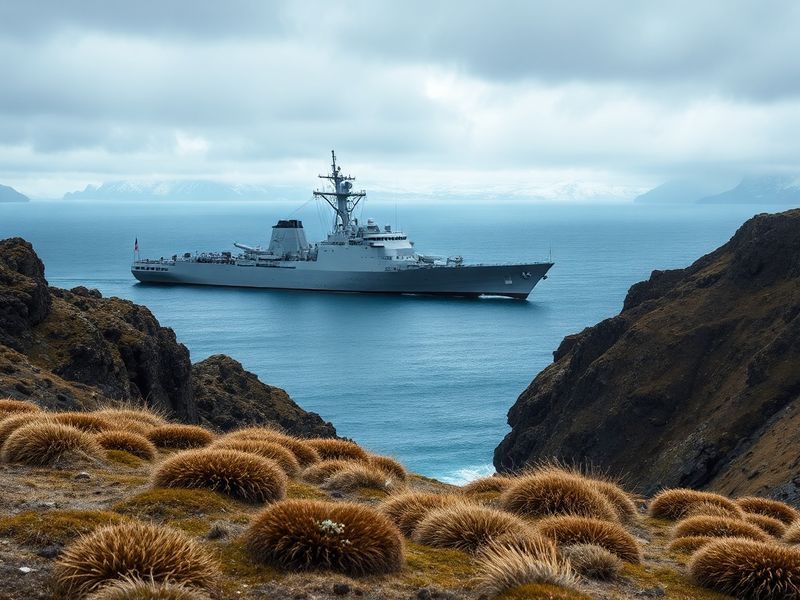
The Falklands remain a critical outpost in the South Atlantic, serving as a military and logistical hub for Britain. The islands’ strategic location halfway between South America and Antarctica makes them invaluable for monitoring regional security and projecting naval power. In recent years, Britain has reinforced its military presence, including upgrading the RAF Mount Pleasant base and deploying advanced Typhoon fighter jets.
Beyond military concerns, the Falklands hold economic potential. The surrounding waters are rich in fisheries, and exploratory drilling for oil in the 2010s sparked optimism about energy independence. However, these opportunities have also fueled disputes over resource rights, with Argentina asserting claims to the continental shelf.
The islands’ self-governing status further complicates the issue. Falkland Islanders, who are predominantly of British descent, have repeatedly expressed their desire to remain under British sovereignty. In a 2013 referendum, 99.8% voted to stay British, a result Argentina has dismissed as illegitimate due to the absence of Argentine residents in the territory.
Broader Implications: Why the Falklands Matter
The Falklands dispute is more than a bilateral conflict; it reflects deeper trends in global geopolitics. The revival of great-power competition, particularly between the West and rising powers like China, has added a new layer of complexity. China, which has no direct stake in the dispute, has nonetheless expressed support for Argentina’s claims, aligning with its broader strategy of courting Latin American nations.
Meanwhile, Britain’s post-Brexit foreign policy has sought to reinforce its global role, and the Falklands are a tangible symbol of its enduring influence. The islands also serve as a test case for how former colonial powers navigate territorial disputes in the 21st century, balancing historical legacies with modern realities.
For Argentina, the Falklands issue is intertwined with national identity and historical grievances. Successive governments have used the dispute to rally public support, framing the islands as a stolen patrimony. Yet the economic and diplomatic costs of pursuing the claim—including strained relations with Britain and the EU—have raised questions about the long-term feasibility of Argentina’s ambitions.
A Path Forward?
Despite the entrenched positions, there are glimpses of potential compromise. Joint development zones for fisheries and energy resources have been proposed, though none have gained traction. Track-two diplomacy, involving academics and civil society, has also emerged as a way to build trust. Yet the fundamental disagreement over sovereignty remains a formidable obstacle.
One possible framework for resolution could involve a phased approach: freezing military deployments, expanding economic cooperation, and gradually building confidence. However, any meaningful progress would require political courage on both sides, something that has been in short supply in recent years.
For now, the Falklands remain a frozen conflict—one that simmers beneath the surface, occasionally boiling over but never quite resolving. Their fate will depend not only on the actions of London and Buenos Aires but also on the shifting currents of global power.
The Falklands in Popular Culture
The islands have also left their mark on global culture, inspiring books, films, and music. Works like Bruce Chatwin’s The Songlines and Sebastian Junger’s The Perfect Storm have touched on the region’s mystique, while documentaries and news reports frequently highlight the dispute. Even in gaming, the Falklands have appeared as a backdrop for strategy titles, reflecting their enduring intrigue.
For more on how territorial disputes shape global politics, explore our Politics and News sections. These topics reveal how historical grievances continue to influence modern diplomacy.