In an era where political leaders are scrutinized under relentless media attention, few moments capture public imagination quite like candid images of figures in repose. Among these, the photographs and videos of Donald Trump asleep during official events have become an unlikely cultural touchstone. These snapshots transcend mere political commentary, morphing into memes, art projects, and even academic discussions about presidential fatigue.
The fascination isn’t confined to American shores. From Tokyo to Berlin, these images have been dissected, reimagined, and repurposed across social media platforms. What began as tabloid fodder evolved into a global conversation about power, performance, and the human side of leadership. The phenomenon raises questions about the expectations placed on public figures and how moments of vulnerability can reshape public perception.
The Origins of a Viral Image
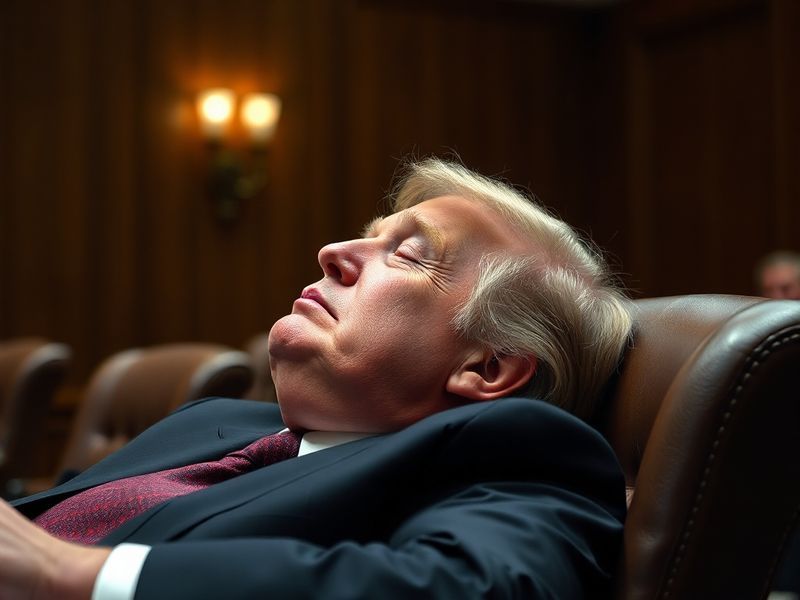
The first widely circulated images of Trump appearing asleep during official meetings emerged in 2017. During a meeting with congressional leaders to discuss healthcare reform, Trump was photographed with his eyes closed, head tilted back. The image, taken by political journalists, was initially dismissed as a fleeting moment of exhaustion. Yet, it quickly became a symbol of perceived disengagement.
Critics latched onto the imagery, using it to question Trump’s commitment to governance. Supporters, meanwhile, dismissed it as a normal reaction to long meetings or jet lag. The debate highlighted the polarizing nature of Trump’s presidency and how even mundane moments could be weaponized in political discourse.
By 2020, the images had taken on a life of their own. During a NATO summit, Trump was again photographed with his eyes closed during a speech by French President Emmanuel Macron. The moment was immortalized in countless memes, often with captions mocking Trump’s leadership style. Artists began incorporating the imagery into their work, using it to critique not just Trump but the broader culture of political performance.
A Global Meme Culture
The internet’s reaction to these images was swift and creative. On platforms like Twitter and Reddit, users transformed the photographs into satirical masterpieces. One popular meme format superimposed Trump’s sleeping face onto characters from classic films, suggesting he was “in another dimension.” Another trend involved editing the images into movie posters, replacing the protagonist with Trump mid-snooze.
Artists outside the digital realm also embraced the theme. In 2021, a Berlin-based gallery exhibited a series of paintings titled “The Art of Sleeping Presidents,” which included hyper-realistic depictions of Trump asleep during key moments. The exhibition drew international attention, with critics praising its blend of political commentary and technical skill.
The memeification of Trump’s sleeping moments reflects a broader trend in internet culture: the blending of politics and humor. As public trust in institutions wanes, humor becomes a coping mechanism. These images, while seemingly trivial, underscore how political figures are no longer insulated from pop culture’s relentless gaze.
The Psychological and Political Implications
Beyond their entertainment value, these images invite deeper analysis. Psychologists have weighed in on what they reveal about leadership and public perception. Some argue that moments of vulnerability humanize leaders, making them appear more relatable. Others suggest that in an age of constant surveillance, even brief lapses can be weaponized to undermine authority.
A 2022 study published in the Journal of Political Psychology examined how such images influence voter behavior. The research found that while die-hard supporters remained unfazed, undecided voters were more likely to view the sleeping images as a sign of incompetence. This highlights how visual cues can sway public opinion in subtle but significant ways.
Politically, the phenomenon also reflects the global fatigue with populist leadership. Trump’s sleeping images became a visual shorthand for broader disillusionment with political figures who prioritize spectacle over substance. In countries from Brazil to the Philippines, similar images of leaders “zoning out” during critical moments have sparked parallel debates about governance and accountability.
From Tabloid to Art: The Evolution of a Cultural Artifact
What started as a tabloid curiosity has evolved into a multifaceted cultural artifact. Filmmakers have explored the theme in documentaries, framing it as part of the “Trump presidency as spectacle” narrative. Comedians, from late-night hosts to stand-up artists, have used the images to mine humor from political disillusionment.
Even fashion has embraced the trend. In 2023, a Parisian fashion house debuted a line of “presidential sleepwear,” featuring pajamas adorned with images of Trump asleep. The collection, titled “Power in Repose,” was both celebrated and criticized for its audacity. It underscored how deeply these images have permeated global culture.
The longevity of this phenomenon speaks to its versatility. It’s a Rorschach test for public opinion, reflecting whatever narrative the viewer wishes to impose. For some, it’s a critique of leadership; for others, a harmless joke. Yet, its persistence suggests that in the digital age, even the most mundane moments can become enduring symbols.
The Broader Conversation About Leadership
Ultimately, the global fascination with Trump asleep opens a broader conversation about the nature of leadership in the 21st century. In an era where leaders are expected to be perpetually “on,” moments of rest become acts of rebellion. They challenge the myth of the infallible, always-on leader and remind us of the shared humanity beneath the political facade.
This conversation isn’t limited to Trump or even American politics. Leaders worldwide face similar scrutiny, and their moments of vulnerability are increasingly documented and disseminated. From Angela Merkel’s occasional yawns to Emmanuel Macron’s distracted glances, the line between public service and private fatigue is blurring.
As we move forward, the images of Trump asleep may serve as a cautionary tale about the cost of constant visibility. They remind us that even the most powerful figures are subject to the same biological needs as everyone else. In doing so, they humanize politics in a way that few official statements ever could.
A Conclusion: The Sleeping President as Cultural Mirror
The sleeping Trump images are more than a passing internet joke. They are a mirror held up to society, reflecting our expectations, our frustrations, and our capacity for both empathy and ridicule. They challenge us to consider what we demand from our leaders—and what we’re willing to forgive.
In an age where every moment is a potential viral sensation, these images serve as a reminder of the power of visual culture. They show how a single frame can spark a global conversation, shape public opinion, and even influence the course of political history. Whether seen as a critique or a joke, one thing is clear: the sleeping president has become an indelible part of our cultural lexicon.