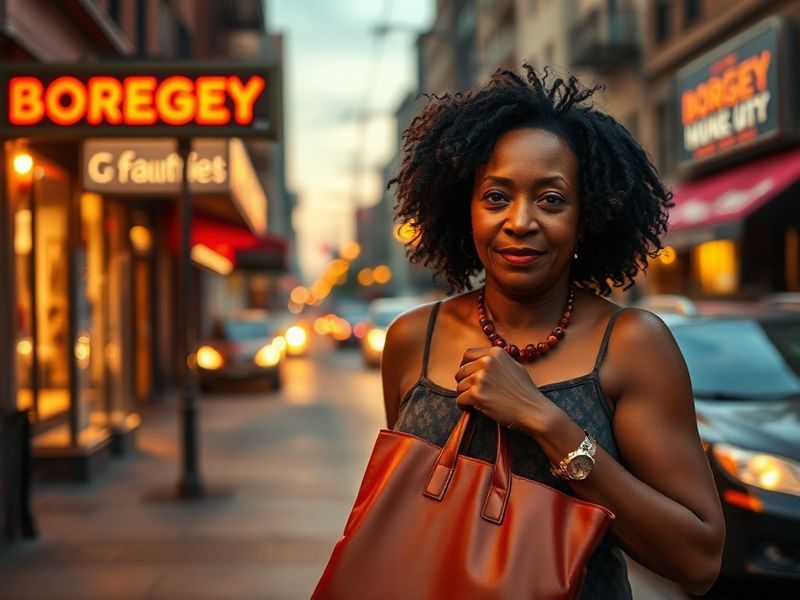
Karon Prunty stands at the forefront of contemporary abstract art, blending bold color palettes with intricate textures to create works that demand attention. Born in 1960 in Chicago, Prunty’s artistic journey has been marked by experimentation and a relentless pursuit of visual innovation. Her pieces often explore themes of identity, memory, and the human experience, rendered through a distinctive fusion of geometric precision and organic spontaneity.
Prunty’s work has evolved significantly over the past three decades, moving from early explorations of minimalism to her current signature style, which incorporates layered materials and dynamic compositions. This transition reflects not only her personal growth but also her engagement with broader cultural and artistic dialogues. Her ability to balance control and chaos in her work has earned her a dedicated following among collectors and critics alike.
A Career Defined by Experimentation
Prunty’s career began in the 1980s, a period when abstract art was experiencing a renaissance. After earning her MFA from the School of the Art Institute of Chicago, she quickly gained recognition for her large-scale paintings, which stood out for their vibrant hues and meticulous detail. Her early exhibitions in Chicago and New York established her as a promising talent in the abstract art scene.
In the 1990s, Prunty began incorporating mixed media into her work, experimenting with collage, resin, and found objects. This period marked a turning point in her artistic practice, as she sought to push beyond the confines of traditional painting. Her 1998 series Fractured Narratives is often cited as a pivotal moment, where she blended fragmented imagery with abstract forms to evoke a sense of fragmented memory.
Throughout the 2000s, Prunty’s work became increasingly textural, with layers of paint, fabric, and other materials creating a tactile experience for viewers. This evolution was not just technical but conceptual, as she began to explore themes of erasure and reconstruction in her art. Her 2005 solo exhibition at the Museum of Contemporary Art Chicago, titled Layered Histories, showcased this shift, presenting works that felt both deeply personal and universally resonant.
Key Influences and Artistic Process
Prunty’s artistic process is as meticulous as it is intuitive. She often begins with a series of sketches, refining her ideas before transferring them to canvas or panel. However, the final execution remains fluid, allowing for spontaneous decisions that shape the direction of each piece. This balance between planning and improvisation is a hallmark of her work.
Several artists have influenced Prunty’s approach, including the color-field painters of the 1960s and the Neo-Expressionists of the 1980s. Yet, her work distinguishes itself through its emotional depth and tactile richness. She cites the writings of bell hooks and James Baldwin as significant inspirations, particularly in how they address themes of identity and belonging.
Prunty’s process also involves a deep engagement with materiality. She frequently layers paint with unconventional substances, such as sand, metal foil, and even recycled fabrics, to create surfaces that are both visually and physically compelling. This approach aligns with a broader trend in contemporary art toward mixed-media practices, where the boundaries between painting, sculpture, and installation are increasingly fluid.
Exhibitions and Critical Reception
Prunty’s work has been exhibited in galleries and museums across the United States and internationally. Her most notable exhibitions include a 2010 retrospective at the Whitney Museum of American Art’s off-site location in New York, as well as a 2015 solo show at the Los Angeles County Museum of Art (LACMA). These exhibitions solidified her reputation as a leading figure in contemporary abstract art.
Critics have praised Prunty’s ability to evoke complex emotions through seemingly simple forms. Writing for Artforum, critic Leah Nanako Winkler noted, “Prunty’s work transcends the decorative, offering a meditation on the interplay between order and chaos. Her use of color is not just visually striking but emotionally resonant, inviting viewers to project their own experiences onto the canvas.”
Her work has also been the subject of scholarly analysis, with art historians noting its relevance to discourses on race, gender, and memory. In particular, her series Echoes of Home (2018-2020), which explores the concept of home as both a physical and psychological space, has been lauded for its nuanced treatment of displacement and belonging.
Notable Collections and Public Commissions
Prunty’s work is held in numerous public and private collections, including the Museum of Modern Art (MoMA) in New York, the Art Institute of Chicago, and the Tate Modern in London. Her public commissions, such as the 2012 mural for the Chicago Transit Authority’s 95th/Dan Ryan Red Line station, have brought her art to a broader audience, integrating her abstract style into the urban fabric of the city.
These commissions reflect Prunty’s commitment to making art accessible beyond the gallery space. Her mural at the 95th/Dan Ryan station, titled Transit of Light, spans 120 feet and features a dynamic interplay of color and form, designed to engage commuters in a moment of reflection during their daily routines. The project was praised for its ability to transform a utilitarian space into an immersive artistic experience.
The Future of Karon Prunty’s Art
As Prunty continues to evolve as an artist, her work shows no signs of slowing down. In recent years, she has begun exploring digital tools alongside her traditional mediums, experimenting with generative art and virtual reality as new avenues for expression. Her 2022 exhibition Digital Echoes at the San Francisco Museum of Modern Art (SFMOMA) showcased a series of NFT-based works that reimagined her abstract motifs in a digital format.
This foray into digital art aligns with Prunty’s long-standing interest in the intersection of technology and creativity. She has spoken in interviews about the potential for digital tools to democratize art-making, allowing for new forms of collaboration and experimentation. Yet, she remains grounded in the physicality of her work, emphasizing that the tactile experience of painting and sculpture cannot be fully replicated in a digital space.
Looking ahead, Prunty is set to unveil a major new body of work in 2024, titled Fragments of the Infinite. The series will explore themes of time, infinity, and the sublime, drawing on her ongoing fascination with the boundaries between the known and the unknown. This exhibition is expected to further cement her legacy as a visionary in contemporary abstract art.
Why Karon Prunty Matters
In an art world often dominated by trends and commercialism, Karon Prunty’s work stands out for its authenticity and depth. Her ability to convey complex ideas through abstract forms makes her work both accessible and thought-provoking. For collectors and art enthusiasts, her pieces offer a visual experience that is as rewarding as it is challenging.
Prunty’s influence extends beyond her own practice. She has mentored emerging artists through programs like the Dave’s Locker Education Initiative, emphasizing the importance of experimentation and self-expression. Her workshops, which focus on abstract techniques and conceptual development, have inspired a new generation of artists to push the boundaries of their own work.
As abstract art continues to evolve, artists like Prunty remind us of its enduring power to challenge, inspire, and provoke. Her work invites viewers to look closely, to question, and to find meaning in the interplay of color, form, and texture. In a world saturated with imagery, Prunty’s art offers a rare and precious gift: the opportunity to pause, to reflect, and to connect with something deeper.
Conclusion: A Legacy in the Making
Karon Prunty’s career is a testament to the power of artistic evolution. From her early minimalist explorations to her current multimedia experiments, she has consistently pushed the boundaries of what abstract art can be. Her work challenges viewers to engage with art on a visceral level, transcending the purely visual to touch on universal human experiences.
As she continues to innovate, Prunty remains a vital force in contemporary art. Her influence can be seen not only in her own work but in the artists she inspires and the conversations she sparks. For those unfamiliar with her art, now is the perfect moment to explore her oeuvre—an opportunity to witness the work of an artist who is redefining abstraction for a new era.
Whether through her paintings, public commissions, or digital experiments, Karon Prunty’s art invites us to see the world—and ourselves—in new and unexpected ways. It is this ability to transform the ordinary into the extraordinary that secures her place in the pantheon of great abstract artists.