NFL Draft Tracker: Real-Time Strategy & Analysis for Fans
“`html
NFL Draft Tracker: How Teams Strategize in Real Time
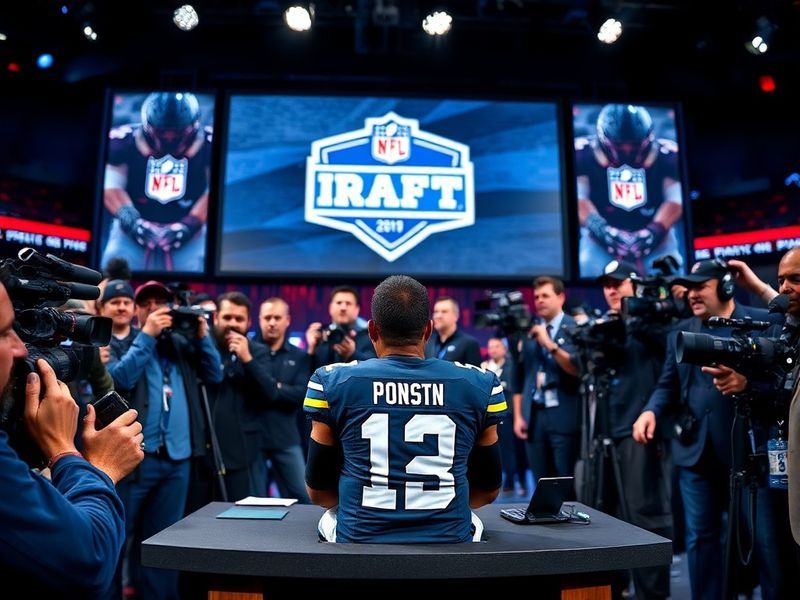
The NFL Draft isn’t just a three-day event—it’s a high-stakes chess match where teams make decisions that can shape their franchises for years. With the NFL Draft tracker now a staple for fans and analysts alike, the way we consume this annual spectacle has evolved. Gone are the days of waiting for the next pick to scroll through rumors or flip between channels. Today’s tools provide instant updates, player profiles, and even predictive analytics that reveal the thinking behind every selection.
Real-time tracking isn’t just about convenience; it’s about transparency. Fans can now see how their favorite teams value certain positions, which players align with their schemes, and whether a trade was a stroke of genius or a miscalculation. The tracker has become a window into the draft room, offering insights that were once reserved for insiders. For those looking to dive deeper, platforms like Dave’s Locker NFL section curate the best analysis and reactions from across the web.
What the NFL Draft Tracker Actually Tracks
The modern NFL Draft tracker does far more than list the next pick. It aggregates data from multiple sources to provide a comprehensive view of the draft’s pulse. Here’s what you’ll typically find:
- Pick-by-pick updates: Instant notifications when teams announce their selections, complete with player bios and team needs.
- Trade tracker: A running log of draft-day deals, including the assets exchanged and how analysts grade the moves.
- Expert mock drafts vs. reality: Side-by-side comparisons of pre-draft projections against actual picks, highlighting which teams stayed true to their plans.
- Player profiles: Detailed breakdowns of draft prospects, including combine numbers, college production, and scouting reports.
- Team-by-team needs: Visualizations showing which positions each franchise prioritized in real time.
Some trackers even incorporate advanced metrics, like Relative Athletic Score (RAS) from Kent Lee Platte, which quantifies a player’s measurables against historical benchmarks. This data helps fans and front offices alike assess whether a player’s combine performance aligns with their on-field success. For those who want to geek out on the numbers, tools like Dave’s Locker Analysis section break down the deeper implications of these metrics.
The Psychology Behind the Tracker: Why Fans Are Obsessed
The NFL Draft tracker taps into something primal: the thrill of uncertainty. Even the most die-hard fans can’t predict every pick, and the tracker feeds that curiosity in real time. It’s less about the final list of names and more about the story unfolding in the moment. Will a team reach for a quarterback early? Did a surprise trade shake up the draft board? The tracker turns speculation into a living, breathing narrative.
Psychologically, this creates a sense of FOMO (fear of missing out)—especially for fans of teams with early picks. Every second counts when your favorite franchise is on the clock. Trackers also democratize the draft experience. In the past, only hardcore fans or analysts had the time or resources to follow every rumor and report. Now, anyone with a smartphone can access the same information as the most plugged-in insiders.
This accessibility has also fueled a cottage industry of draft analysts and influencers who parse every morsel of data. Social media amplifies the noise, with fans debating picks in real time. The tracker becomes a social glue, uniting strangers in shared excitement or frustration. It’s no wonder platforms like Twitter and Reddit explode with activity during the draft.
How Teams Use Trackers—and How They Sometimes Ignore Them
For NFL front offices, the draft tracker is a double-edged sword. On one hand, it provides real-time intelligence that can inform decisions. Scouts and GMs use these tools to cross-reference their own evaluations with public sentiment. If a consensus emerges that a player is a reach, the tracker might prompt a team to reconsider. Conversely, if a player’s stock is rising due to a strong combine or pro day, the tracker can validate a team’s interest.
But teams don’t operate in a vacuum. The tracker also broadcasts their intentions to rivals, creating a feedback loop of strategy. If a team is rumored to be targeting a specific player, other franchises might adjust their plans accordingly. This is why some teams go to great lengths to obscure their intentions, even as the tracker provides near-instant updates.
There’s also the phenomenon of draft-day surprises, where teams defy the tracker’s consensus. The 2023 draft saw the Kansas City Chiefs take a wide receiver in the first round despite drafting Skyy Moore the year prior. The tracker had them linked to a defensive player, but Andy Reid’s staff went in a different direction. Such moments highlight that while trackers offer valuable insights, they’re not infallible. The best draft rooms balance data with intuition, and the tracker is just one tool in their arsenal.
Beyond the Draft: How Trackers Are Changing the Game
The impact of the NFL Draft tracker extends beyond the three-day event. It has reshaped how teams prepare for the draft itself. In the weeks leading up to the event, trackers compile rising and falling prospect boards based on combine performances, interviews, and medical reports. This allows teams to identify undervalued players before the competition catches on.
Trackers have also influenced trade strategy. The 2024 draft saw a record number of trades, many of which were telegraphed by tracker predictions. Teams use these tools to gauge the market for their picks, ensuring they get the best possible return. For example, if a tracker suggests a certain team is likely to take a quarterback at pick 15, a team holding pick 10 might trade up to secure a higher-value prospect before the price goes up.
Looking ahead, the next frontier for draft tracking is artificial intelligence. Some platforms are experimenting with AI-driven mock drafts that adapt in real time based on breaking news, such as injuries or late pro day performances. These tools could one day predict trades with eerie accuracy, though they’ll never replace the human element of the draft room.
Why the NFL Draft Tracker Is Here to Stay
The NFL Draft tracker has evolved from a simple list of picks into a multi-layered experience that engages fans, informs teams, and even shapes the draft itself. Its rise reflects broader trends in sports media, where immediacy and interactivity are king. For fans, it’s a way to feel connected to the action. For analysts, it’s a treasure trove of data. For teams, it’s a strategic asset—when used wisely.
As the NFL continues to embrace technology, the tracker will only become more sophisticated. We’ll see deeper integrations with player tracking data, more predictive analytics, and perhaps even virtual reality experiences that let fans sit in the draft room. But at its core, the tracker remains a reflection of what makes the NFL Draft so compelling: the blend of preparation and spontaneity, of data and instinct. In a league where the smallest advantage can mean the difference between a championship and a missed opportunity, the tracker is the ultimate playbook.
For those looking to stay ahead of the curve, bookmarking a reliable tracker is a must. And for the deepest analysis and insights, Dave’s Locker is the go-to destination for breaking down every twist and turn of draft day.