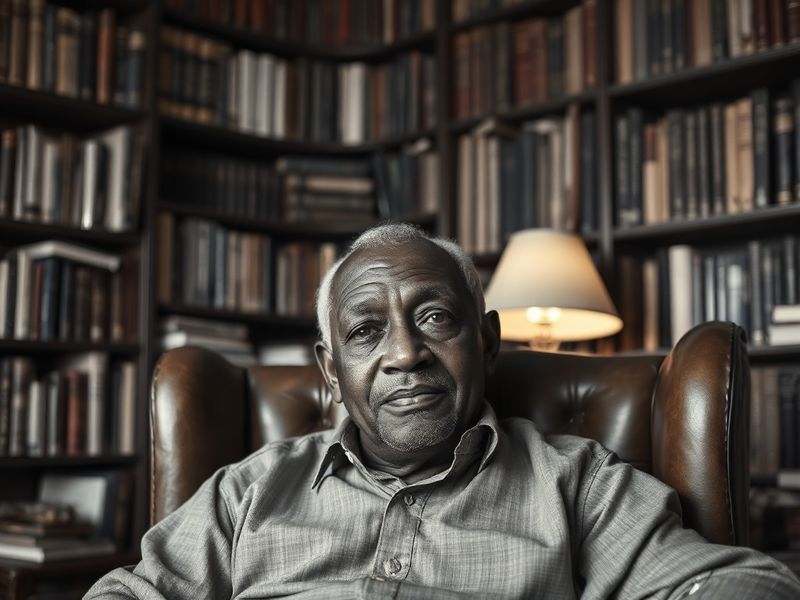
Robert Spears Jennings is a name that resonates across continents, not for political influence or corporate dominance, but for the quiet revolution he sparked through music. His work spans decades, cultures, and genres, making him a figure of quiet yet profound significance in global music history.
Born in 1943 in the United States, Jennings grew up during a time of immense social and cultural change. His early exposure to blues, gospel, and jazz in the American South shaped his musical foundation. But it was his later years in West Africa that transformed him into a cultural bridge, blending traditional African rhythms with American musical forms to create something entirely new.
From the American South to the Heart of Africa
Jennings’ journey began in the segregated South, where he learned the power of music as both a form of protest and a tool for unity. His early career included stints with gospel choirs and blues bands, but it was his move to Senegal in the 1970s that changed everything. There, he immersed himself in the local music scene, collaborating with griots—West African oral historians and musicians—and absorbing the rich traditions of mbalax, sabar, and kora music.
This fusion of cultures was not just artistic experimentation. It was Jennings’ way of responding to the globalized world around him. By the 1980s, he had become a key figure in the development of Afro-funk, a genre that merged West African rhythms with funk, jazz, and soul. His work with Senegalese musicians like Youssou N’Dour and Baaba Maal helped bring African music to international audiences, long before the term “world music” entered the mainstream lexicon.
The Sound of a New Africa
Jennings’ contributions to music were not limited to performance. He was a producer, a collaborator, and an advocate for African artists in an industry dominated by Western labels. His studio in Dakar became a hub for creativity, where musicians from across the continent could record and experiment without the constraints of commercial pressure.
One of his most notable projects was the 1986 album N’Dour’s, produced in collaboration with Youssou N’Dour. The album blended traditional Wolof lyrics with jazz harmonies and funk rhythms, creating a sound that was distinctly African yet universally appealing. It was a blueprint for the Afro-pop explosion that would follow in the 1990s and 2000s.
A Legacy Beyond Music
Jennings’ influence extended beyond the recording studio. He worked with non-governmental organizations to promote cultural exchange programs, bringing African musicians to the U.S. and vice versa. His efforts helped dismantle stereotypes about African music, showing it as dynamic, innovative, and worthy of global recognition.
In the 1990s, Jennings shifted his focus to education, founding a music school in Dakar that taught both traditional African instruments and Western techniques. The school became a model for cultural preservation, ensuring that future generations would have access to both their heritage and the tools to innovate within it.
The Global Impact of Jennings’ Work
Jennings’ career is a testament to the power of music as a universal language. His collaborations with African artists helped lay the groundwork for the global success of genres like Afrobeat and Afro-pop. Today, artists like Burna Boy, Wizkid, and Mr Eazi cite Jennings’ work as a major influence, proving that his legacy is still shaping the sounds of contemporary music.
But Jennings’ impact is not just musical. His work challenged the colonial narratives that had long defined Africa in the global imagination. By centering African voices and traditions, he helped rewrite the story of the continent’s cultural contributions.
Lessons from Jennings’ Career
Jennings’ life offers several key lessons for musicians, producers, and cultural activists today:
- Collaboration over appropriation: Jennings never imposed his own musical style on African artists. Instead, he listened, learned, and contributed to the evolution of their traditions.
- The power of cultural exchange: His work shows how music can transcend borders, fostering understanding and unity in a divided world.
- Preservation through innovation: Jennings understood that cultural traditions must evolve to survive. His fusion of old and new ensured that African music remained relevant across generations.
His story is a reminder that culture is not static. It is a living, breathing entity that thrives when people are willing to listen, adapt, and grow together.
Why Jennings’ Story Matters Today
In an era where globalization often feels like cultural homogenization, Jennings’ career is a counterpoint. He proved that global exchange does not have to mean erasure. Instead, it can be a dialogue—one where all voices are heard and respected.
Jennings’ work also highlights the importance of mentorship in music. Many of today’s biggest stars in African music credit him as a mentor or inspiration. His dedication to nurturing talent ensured that his legacy would outlive him.
As we reflect on his contributions, it’s clear that Robert Spears Jennings was more than a musician or producer. He was a cultural diplomat, a bridge-builder, and a pioneer whose work continues to inspire.
For those interested in exploring more about the intersection of music and culture, Dave’s Locker’s Culture section offers deep dives into similar stories of global exchange and innovation.
“Music is the one thing that can bring people together, no matter where they come from. It’s not about changing traditions—it’s about adding to them.” — Robert Spears Jennings
The Future of Jennings’ Legacy
Today, Jennings’ influence can be heard in the work of artists across genres. From the jazz-infused Afrobeat of modern African musicians to the global collaborations in pop and hip-hop, his fingerprints are everywhere.
His story also serves as a call to action for the next generation of artists. In a world where cultural exchange is often commodified, Jennings’ career is a model of how to engage with tradition respectfully and creatively.
As music continues to evolve, so too will the ways we remember and honor figures like Robert Spears Jennings. His life reminds us that true innovation comes from listening—not just to the world around us, but to the voices we’ve yet to hear.