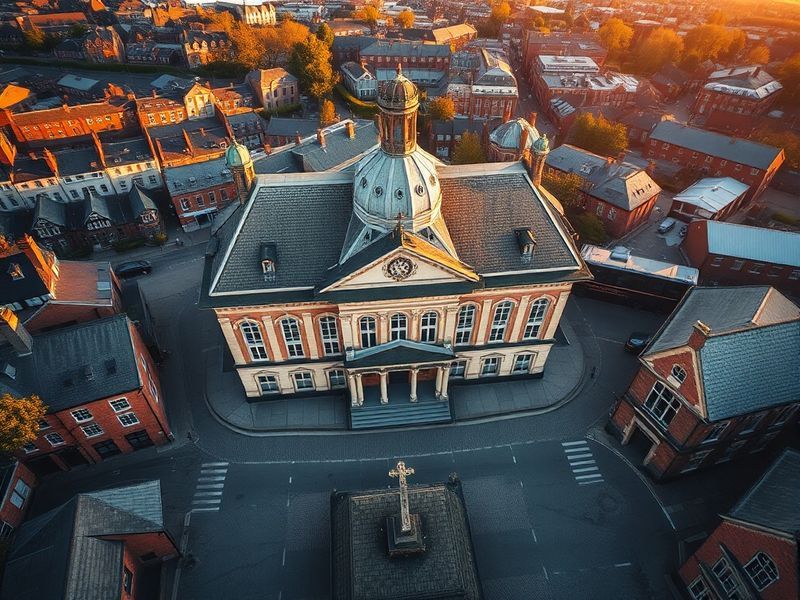
Rochdale’s Story: From Cooperative Roots to Modern Challenges
“`html
Rochdale: A Town of History, Struggle, and Reinvention
Nestled in the heart of Greater Manchester, Rochdale is a town that has long defied easy categorisation. Its story is one of industrial ambition, social upheaval, and quiet resilience—a narrative that reflects the broader shifts in Britain’s economic and cultural landscape. Once the epicentre of the textile trade, Rochdale now stands as a testament to adaptation, where remnants of its past coexist with the challenges of regeneration.
The Birth of a Cooperative Legacy
Rochdale’s most famous contribution to modern society emerged in 1844, when a group of 28 weavers founded the Rochdale Society of Equitable Pioneers. This modest collective, born out of economic hardship, established the first successful cooperative store in the world. Their principles—fair prices, honest trading, and democratic control—laid the foundation for the global cooperative movement, which today includes over a billion members across 100 countries.
Their legacy endures in Rochdale’s identity. The original store on Toad Lane, now the Rochdale Pioneers Museum, remains a pilgrimage site for those studying economic history. Yet the cooperative movement’s influence extends far beyond its birthplace. From credit unions to worker-owned businesses, Rochdale’s experiment in alternative economics continues to inspire movements advocating for fairer, more equitable systems.
From Industrial Powerhouse to Post-Industrial Reality
Rochdale’s transformation from a thriving mill town to a post-industrial community mirrors the fate of many Northern English towns. At its peak in the 19th century, the town’s textile mills employed thousands, drawing workers from across the UK and beyond. The Rochdale Canal, completed in 1804, facilitated the transport of raw materials and finished goods, cementing its role as a commercial hub.
By the late 20th century, however, deindustrialisation had taken its toll. Factories closed, jobs vanished, and the town’s economic base eroded. The closure of the last major mill, in 1981, marked a turning point. Like neighbouring towns such as Oldham and Bolton, Rochdale faced the dual challenges of unemployment and social deprivation. Yet, unlike some of its counterparts, Rochdale has shown signs of gradual recovery, albeit unevenly distributed.
Key Factors in Rochdale’s Economic Shift
- Decline of Textiles: The globalisation of manufacturing and competition from cheaper imports led to the collapse of Rochdale’s textile industry.
- Urban Regeneration: Investments in infrastructure, such as the Metrolink extension and town centre redevelopments, have brought modest improvements.
- Diverse Economy: New sectors, including logistics, distribution, and digital services, have begun to fill the gap left by manufacturing.
- Community Initiatives: Grassroots projects, from food banks to local arts collectives, have fostered a sense of solidarity amid economic uncertainty.
Cultural Identity and Modern Challenges
Rochdale’s cultural fabric is rich and diverse, shaped by waves of immigration. The town’s South Asian community, particularly of Pakistani and Bangladeshi heritage, has grown significantly since the 1960s, contributing to its vibrant food scene and cultural festivals. Rochdale’s famous curry scene, with restaurants like the award-winning The Spice Shop, reflects this multicultural influence.
Yet, Rochdale has also been at the centre of national debates. The town’s demographics and economic struggles have occasionally sparked tensions, most notably during the 2001 riots in nearby Oldham, which exposed underlying issues of segregation and deprivation. Rochdale has since worked to address these challenges, though progress has been slow and uneven.
The Future: Can Rochdale Reinvent Itself?
The question facing Rochdale is whether it can transition from a town marked by decline to one defined by renewal. The answer lies in a combination of factors: continued investment, inclusive growth, and leveraging its unique heritage. The town’s cooperative roots, for instance, could serve as a model for sustainable economic development, particularly in a world increasingly sceptical of unchecked capitalism.
Education and skills training will also play a critical role. Rochdale’s colleges and vocational programmes are beginning to align with the needs of emerging industries, though gaps remain. Meanwhile, cultural initiatives—such as the annual Rochdale Literature and Ideas Festival—are helping to foster civic pride and attract visitors.
Yet, the road ahead is fraught with obstacles. Austerity measures, Brexit-related economic uncertainty, and the lingering effects of the COVID-19 pandemic all pose significant challenges. For Rochdale to thrive, it will need both external support and internal determination.
Opportunities for Rochdale’s Renewal
- Green Economy: Investment in renewable energy and sustainable manufacturing could create new jobs while aligning with national climate goals.
- Digital Innovation: Expanding access to digital skills training could position Rochdale as a hub for tech startups and remote workers.
- Tourism: Leveraging its cooperative history and multicultural heritage could attract visitors interested in authentic Northern English experiences.
- Housing Renewal: Addressing the town’s housing stock, much of which is outdated or poorly maintained, could improve quality of life and attract new residents.
Rochdale’s story is far from over. It is a tale of adaptation, where the echoes of the past meet the possibilities of the future. Whether it can fully shake off its post-industrial malaise remains to be seen, but its resilience offers lessons for other towns facing similar struggles.
For those interested in exploring Rochdale’s broader context within Northern England’s evolving economy, Dave’s Locker News offers deeper analysis on regional trends. Alternatively, for a closer look at how cooperative models are influencing modern business practices, Dave’s Locker Business provides further insights.