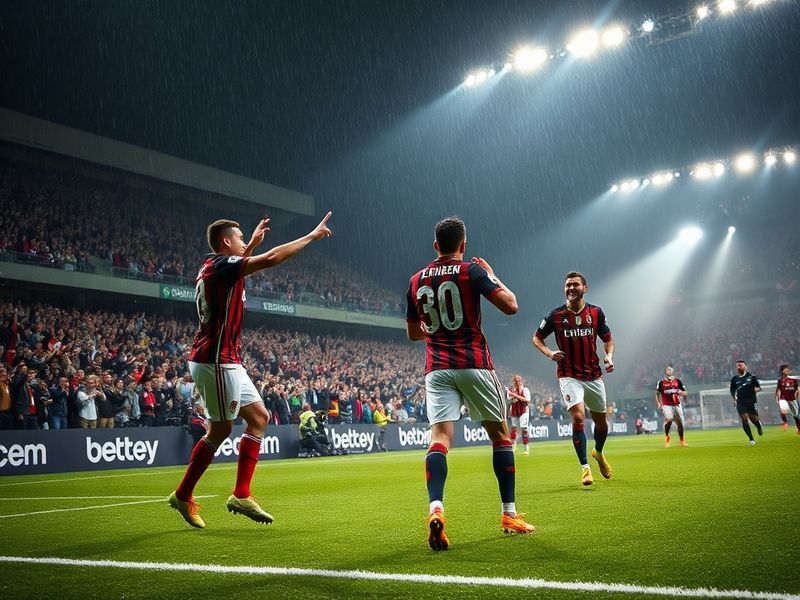
AC Milan and Juventus: A Historic Rivalry Shaped by Glory and Controversy
The clash between AC Milan and Juventus transcends mere football. It represents one of Europe’s most storied rivalries, blending tactical brilliance, cultural identity, and moments of controversy that have shaped Italian football for over a century. While both clubs hail from different regions—Milan from the industrial north, Juventus from Turin’s aristocratic west—their encounters have consistently delivered drama, prestige, and global attention.
This rivalry is not confined to the pitch. It reflects deeper narratives about power, tradition, and reinvention in European football. For decades, the two clubs have traded blows in Serie A, the Champions League, and domestic cups, each victory or loss resonating far beyond Italy’s borders. Fans across continents follow their battles, drawn by the allure of star players, tactical depth, and the sheer weight of history that accompanies every fixture.
A Timeline of Triumphs: How the Rivalry Evolved
The origins of the AC Milan vs. Juventus rivalry trace back to the early 20th century, when Italian football was still in its infancy. Juventus, founded in 1897, quickly established itself as a dominant force, thanks in part to its close ties with the Agnelli family, one of Italy’s most influential industrial dynasties. AC Milan, founded in 1899, emerged as a symbol of working-class resilience and cosmopolitan ambition, reflecting the city’s role as Italy’s economic engine.
The first official meeting between the two sides came in 1901, but the rivalry truly ignited in the 1970s and 1980s, when both clubs became European powerhouses. Juventus, under the leadership of Giovanni Trapattoni, claimed multiple Serie A titles and lifted the UEFA Cup Winners’ Cup in 1984. Meanwhile, AC Milan, under Nereo Rocco and later Arrigo Sacchi, pioneered a new era of defensive organization and counter-attacking football, culminating in back-to-back European Cups in 1989 and 1990.
This golden era saw legendary figures like Franco Baresi, Paolo Maldini, Michel Platini, and Zbigniew Boniek immortalized in football lore. The tactical battles between Sacchi’s Milan and Trapattoni’s Juventus became case studies in football academia, showcasing the evolution of Italian defensive mastery.
In the 1990s and early 2000s, the rivalry reached new heights. Juventus, under Marcello Lippi, dominated Serie A, while AC Milan, led by Fabio Capello, reclaimed its status as Europe’s finest. Their 2003 Champions League semifinal, decided by a dramatic penalty shootout, remains one of the most iconic matches in the competition’s history. The psychological edge—Milan’s pragmatism versus Juventus’ attacking flair—defined an era.
Cultural and Geographical Contrasts: North vs. South, Old vs. New
The AC Milan vs. Juventus rivalry is deeply rooted in geography and culture. Milan, Italy’s financial capital, embodies modernity, multiculturalism, and a globalized identity. It has long been a magnet for international talent, from Gunnar Gren in the 1950s to Zlatan Ibrahimović in the 2010s. The club’s black-and-red stripes echo its working-class origins while symbolizing its cosmopolitan spirit.
Juventus, by contrast, is the club of Turin, a city with aristocratic pretensions and industrial grit. Known as “La Vecchia Signora” (The Old Lady), Juventus represents tradition, continuity, and corporate power. Its black-and-white stripes evoke the elegance of Piedmont, while its fanbase spans Italy’s conservative heartlands. Juventus’ dominance in the 1980s and 1990s coincided with a period of national success, reinforcing its image as the establishment club.
These cultural differences extend to fan identities. AC Milan supporters often pride themselves on being rebellious and progressive, while Juventus fans align with values of discipline, ambition, and national pride. The rivalry is not just about points—it’s about worldviews.
In recent years, the narrative has shifted. AC Milan, once in decline, has reinvented itself under new ownership, embracing youth development and modern branding. Juventus, meanwhile, has faced scrutiny over its business practices and a series of controversies, including the 2020-21 title revocation due to the “Plusvalenza” scandal, which shook Italian football to its core.
Key Matches and Moments That Defined the Rivalry
Over the years, certain matches have transcended ordinary football. They have become cultural touchstones, etched into the memories of fans worldwide. Below is a list of five defining encounters between AC Milan and Juventus:
- 1989 European Cup Final (Milan 4-0 Steaua București) – Although not a direct match against Juventus, this victory cemented Milan’s rise as Europe’s elite, setting the stage for future battles with Juventus in continental competitions.
- 1996 Champions League Quarterfinal (Juventus 0-0 AC Milan; Juventus advance on away goals) – A tense stalemate at San Siro saw Juventus edge through, sparking outrage among Milan fans over perceived refereeing bias.
- 2003 Champions League Semifinal (Aggregate: 3-3; Milan advance on penalties) – A tactical masterclass from Milan, featuring a disciplined defense and clinical finishing, ended Juventus’ dream of a Champions League final in Manchester.
- 2011 Serie A Match (AC Milan 1-1 Juventus) – A pivotal draw in Serie A’s title race, where Zlatan Ibrahimović—who had played for both clubs—scored for Milan in a tightly contested game.
- 2021 Serie A Match (AC Milan 1-2 Juventus) – Juventus’ controversial late winner, fueled by VAR controversies and offside disputes, reignited debates about officiating in Italian football.
These matches highlight the psychological and tactical dimensions of the rivalry. Milan often thrives under pressure, while Juventus has a tradition of grinding out results in high-stakes games. The mental chess between managers—from Sacchi vs. Trapattoni to Allegri vs. Gattuso—has added another layer to the narrative.
The Rivalry’s Global Reach: From Italy to the World
The AC Milan vs. Juventus rivalry is no longer confined to Italy. It has become a global spectacle, broadcast to millions across Europe, Asia, and the Americas. The clubs’ global fanbases reflect Italy’s diaspora and the worldwide appeal of Serie A, even amid its recent struggles.
In countries like China and Japan, where football is growing rapidly, AC Milan and Juventus are among the most supported clubs. Their pre-season tours draw massive crowds, and their merchandise sells briskly in Asian markets. The rivalry has also become a marketing tool, with clubs leveraging their histories to attract sponsorships and digital audiences.
Social media has amplified the rivalry’s reach. Memes, debates, and fan polls dominate platforms like Twitter and Instagram, keeping the narrative alive year-round. The clubs’ official accounts often stoke the flames with provocative posts, ensuring that every transfer rumor or managerial change is scrutinized through the lens of this historic feud.
Yet, the rivalry’s global appeal comes with challenges. The rise of the Premier League and the Champions League’s commercial dominance means Serie A no longer commands the same attention it once did. Both clubs have had to adapt, investing in youth academies and digital content to stay relevant. AC Milan’s recent Champions League resurgence and Juventus’ continued ambition to reclaim the summit reflect their determination to keep the rivalry at the forefront of world football.
Conclusion: A Rivalry That Endures Beyond Football
The AC Milan vs. Juventus rivalry is more than a footballing feud. It is a cultural artifact, a testament to Italy’s complex identity, and a reflection of the global evolution of the sport. From the industrial north to the aristocratic west, from the tactical battles of the 1990s to the commercial strategies of today, the rivalry encapsulates the beauty and contradictions of calcio.
As both clubs navigate the challenges of modern football—financial fair play, fan engagement, and on-pitch performance—their encounters will continue to matter. For purists, it’s about heritage and pride. For newcomers, it’s about spectacle and storytelling. And for the world, it’s a reminder that football is not just a game—it’s a cultural force.
One thing is certain: whenever AC Milan and Juventus meet, the stage is set for history. Whether in a league match or a European final, the rivalry ensures that the stakes are always sky-high—and the stories, unforgettable.