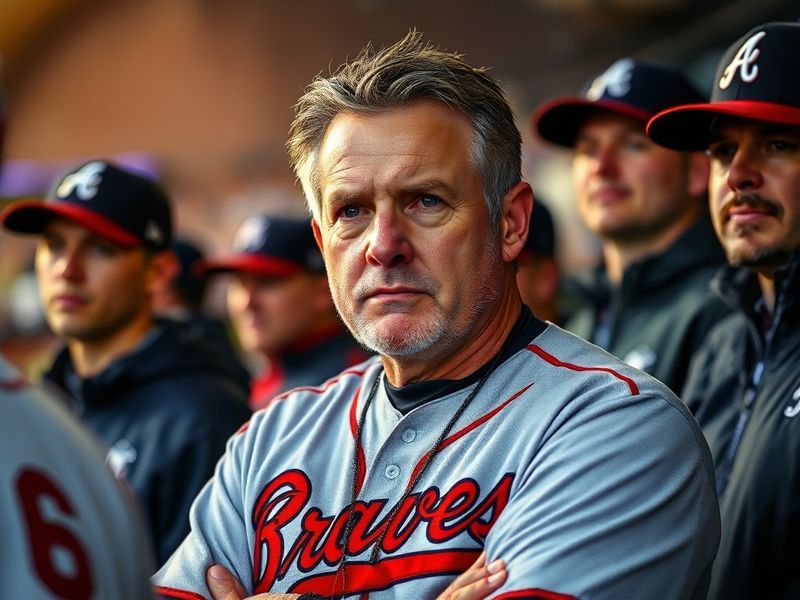
In the high-stakes world of Major League Baseball, where managerial tenures often hinge on a single postseason run, Brian Snitker has quietly established himself as one of the most understated yet effective leaders in the sport. Since taking over as manager of the Atlanta Braves in 2016, Snitker has transformed a franchise once known for its inconsistency into a perennial contender. His approach—marked by patience, adaptability, and a deep connection with his players—has not only revitalized a storied organization but also redefined what it means to be a modern MLB skipper.
The 65-year-old Snitker, often described by colleagues as “the steady hand,” rose through the Braves’ minor league system before getting his shot in the big leagues. His journey is a testament to perseverance in an era where managerial changes happen with alarming frequency. Unlike his more flamboyant counterparts, Snitker’s leadership style thrives on quiet confidence, a quality that has resonated deeply within Atlanta’s clubhouse and among the team’s passionate fanbase.
From Minor League Lifer to Big League Skipper
Snitker’s path to the majors was anything but conventional. Drafted by the St. Louis Cardinals in 1979, he spent over three decades in the minor leagues as a player and coach before joining the Braves’ organization in 2007. His deep understanding of player development and his ability to connect with athletes at all levels set him apart long before he ever managed a game in the majors.
When he finally got the call to manage the Braves in 2016, replacing the fired Fredi González, few outside Atlanta expected immediate success. The team was mired in a rebuild, and Snitker inherited a roster filled with question marks. Yet, his first full season in 2017 saw the Braves finish 72-90—a modest improvement but a sign of progress. By 2018, the team surged to 90 wins and a National League East title, proving that Snitker’s methods were more than just a temporary fix.
His ability to blend analytics with old-school intuition has been a cornerstone of his success. While other managers rely heavily on data-driven decisions, Snitker strikes a balance, trusting his instincts while keeping an open mind to modern baseball strategies. This hybrid approach has allowed the Braves to stay competitive year after year, even as the roster has evolved around him.
The Cultural Shift in Atlanta’s Clubhouse
One of the most overlooked aspects of Snitker’s tenure is his role in shaping the Braves’ clubhouse culture. In an era where player empowerment and social media often dominate headlines, Snitker has fostered an environment where accountability and humility are prioritized. His players, from franchise cornerstones like Freddie Freeman and Ronald Acuña Jr. to young prospects, consistently praise his leadership.
This culture became especially evident during the team’s 2021 World Series run. Despite the pressures of a pandemic-shortened season and a roster that looked different from previous years, the Braves thrived under Snitker’s guidance. The chemistry within the clubhouse was undeniable, and the team’s resilience in the postseason was a direct reflection of the environment Snitker had cultivated.
Snitker’s ability to manage personalities has also been crucial. He’s known for giving players the space to excel while holding them accountable when necessary. This approach has earned him the respect of both veterans and rookies, a rare feat in professional sports.
A Global Perspective: How Snitker’s Leadership Transcends Baseball
While Snitker’s impact is most visible on the field, his leadership style offers broader lessons in adaptability and resilience—qualities that resonate far beyond baseball. In a world where corporate leadership often emphasizes short-term results, Snitker’s patience and long-term vision stand out. His career mirrors the evolution of modern sports management, where data and intuition must coexist to achieve sustained success.
Internationally, Snitker’s success with the Braves has caught the attention of baseball minds worldwide. In countries where baseball is growing, such as Japan, South Korea, and various Latin American nations, Snitker’s approach to player development and team chemistry serves as a model. His emphasis on fundamentals and mental toughness aligns with the philosophies that have made these regions powerhouses in the sport.
Moreover, Snitker’s story is a reminder of the value of consistency in leadership. In an era where instant gratification is the norm, his ability to stay the course—despite early struggles and criticism—has paid off. This resilience is a lesson for leaders in any field, from business to politics to education.
The Road Ahead: What’s Next for Snitker and the Braves
As the Braves continue to build on their success, all eyes are on Snitker’s next move. With a core of young talent—including MVP-caliber players like Acuña Jr. and Ozzie Albies—the team is poised to remain a force in the National League for years to come. However, the challenge for Snitker will be maintaining that success amid roster turnover and the ever-evolving landscape of MLB.
One key question is how Snitker will adapt to the new collective bargaining agreement, which has introduced stricter roster rules and financial constraints. His ability to navigate these changes while keeping the team competitive will be critical in the coming seasons. Additionally, as the Braves look to build a sustainable championship contender, Snitker’s role in developing young pitchers and position players will be just as important as his in-game management.
For now, though, Snitker’s legacy is secure. He has not only restored the Braves to relevance but also redefined what it means to be a successful MLB manager. His quiet leadership, combined with his baseball IQ, has set a new standard for the position. As the Braves chase another title, the world of baseball will be watching closely—not just for the results, but for the lessons in leadership that Snitker continues to provide.
Whether he’s adjusting the lineup, mentoring a young player, or making a critical in-game decision, Snitker’s presence is a stabilizing force. In a sport often defined by its drama and spectacle, his steady hand is a refreshing reminder that sometimes, the most impactful leaders are the ones who let their work speak for itself.