Car Bomb at Dunmurry Police Station: The 1981 IRA Attack That Shook Northern Ireland
“`html
Car Bomb Attack on Dunmurry Police Station: A Deep Look at Northern Ireland’s Troubled Past
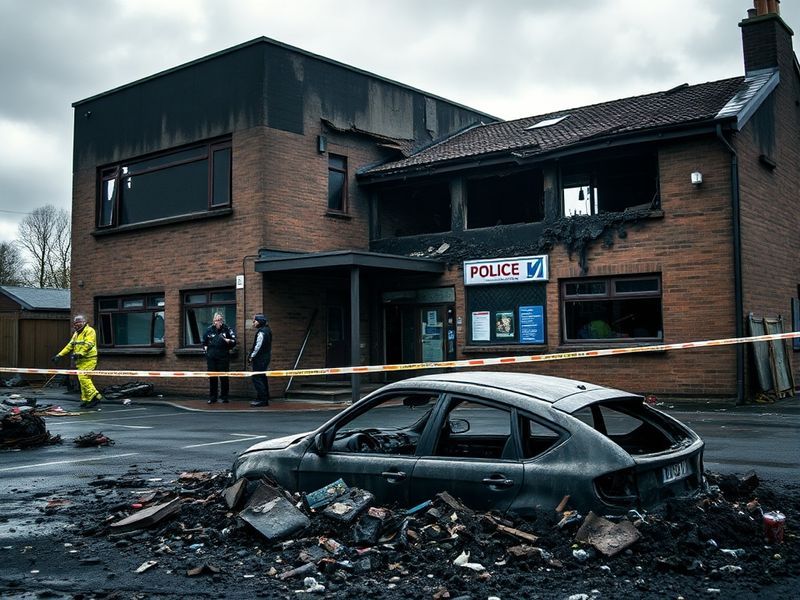
The car bomb explosion outside Dunmurry Police Station in 1981 remains one of the most audacious and calculated attacks in Northern Ireland’s conflict, known as The Troubles. The Provisional Irish Republican Army (IRA) orchestrated the bombing, which occurred on April 4, 1981, during a period of heightened tension and hunger strikes in the Maze Prison.
The attack was not merely an act of violence but a strategic strike designed to undermine British authority, disrupt policing operations, and send a clear message to the government and public. It demonstrated the IRA’s ability to strike deep into what was considered relatively secure territory, just miles from Belfast city center.
The Attack: Timeline and Immediate Aftermath
On a Saturday morning, a stolen car laden with approximately 100 pounds of explosives was left outside the station. The bomb detonated at 8:45 a.m., causing massive structural damage to the police station and shattering windows in surrounding homes and businesses. Miraculously, no one was killed, but 20 police officers and 11 civilians were injured.
The IRA claimed responsibility through a coded telephone warning received by a Belfast newsroom just minutes before the explosion. The caller stated, “There’s a bomb near Dunmurry Police Station — it’ll blow in five minutes.” This precision in timing and communication underscored the group’s operational discipline and intent to minimize civilian casualties while maximizing disruption.
In the immediate aftermath, emergency services faced chaos. Fire engines, ambulances, and police vehicles converged on the scene, navigating debris and injured personnel. The blast blew out walls, collapsed ceilings, and left the station unusable for months. The psychological impact was profound — not only on officers who had narrowly escaped death but on the entire community, which now felt vulnerable even in areas previously considered safe.
Political Context and Broader Implications
The 1981 car bomb came at a pivotal moment in Northern Ireland’s history. Just weeks earlier, IRA hunger striker Bobby Sands had been elected as a Member of Parliament while starving himself to death in the Maze Prison. The campaign for political status for republican prisoners was at its peak, and the British government under Prime Minister Margaret Thatcher refused to concede.
In this climate, the Dunmurry attack served multiple purposes for the IRA. It challenged state authority, demonstrated the group’s reach, and reinforced its narrative of resistance. By targeting a police station — a symbol of British control — the IRA reinforced its claim to be fighting a war of liberation, not mere criminality.
For the British government, the attack highlighted the vulnerability of security forces and infrastructure. It prompted a reevaluation of counter-terrorism strategies, including increased surveillance, roadblocks, and the deployment of undercover units. It also deepened public skepticism about the effectiveness of policing in nationalist communities, where trust in the Royal Ulster Constabulary (RUC) was already low.
The bombing also had international repercussions. It drew criticism from the United States and European allies, who were increasingly pressured to take a stance on the conflict. Diplomatic efforts were complicated by events like Dunmurry, which reinforced the perception of Northern Ireland as a zone of intractable violence.
Key Factors in the Attack
- Strategic Targeting: Dunmurry was chosen for its proximity to Belfast and the symbolic value of attacking a police station in a predominantly nationalist area.
- Operational Precision: The use of a stolen car and a timed warning showed military-style planning and discipline.
- Context of Hunger Strikes: The attack occurred amid a wave of IRA prisoner protests, amplifying its political message.
- Low Civilian Casualties: The IRA’s warning minimized loss of life, a tactic later criticized by some as a cynical ploy to avoid condemnation.
- Psychological Warfare: The blast instilled fear and eroded public confidence in security measures.
Legacy and Lessons from Dunmurry
Decades later, the Dunmurry bombing remains a case study in asymmetric warfare and urban terrorism. It illustrated how a non-state actor could exploit weaknesses in state infrastructure using rudimentary but effective means. Unlike large-scale military operations, this attack required minimal resources: a car, explosives, and human intelligence.
The event also contributed to the broader narrative of policing during The Troubles. The RUC, already viewed with suspicion in nationalist communities, became a central target. This polarization made community policing nearly impossible and fueled support for paramilitary groups in some quarters.
In the peace process that followed the Good Friday Agreement in 1998, the Dunmurry bombing was not singled out as a turning point. However, it remains part of the historical record of violence that shaped Northern Ireland’s path to reconciliation. The attack is often cited in studies of conflict resolution as an example of how targeted violence can harden positions and delay peace.
For historians and security analysts, the Dunmurry attack underscores a paradox of counter-terrorism: the more aggressive the state response, the greater the risk of radicalizing communities. Conversely, inaction can embolden armed groups. Finding the balance remains one of the hardest challenges in asymmetric conflict.
Conclusion: Echoes of the Past in Modern Security
The car bomb at Dunmurry Police Station was not just an isolated act of violence; it was a calculated message from one side in a brutal conflict. It showed how terrorism could disrupt daily life, challenge authority, and shape public perception — all with limited resources.
Today, as nations grapple with lone-wolf attacks, vehicle ramming incidents, and cyber threats, the principles behind the Dunmurry bombing remain relevant. Security forces must balance vigilance with community trust, and governments must address political grievances before they fuel violence.
As Northern Ireland continues to reflect on its past, the Dunmurry attack serves as a reminder: in conflict, every explosion leaves behind not just rubble, but a legacy of fear, resistance, and the enduring challenge of peace.
For those interested in further exploration of Northern Ireland’s conflict and its modern implications, visit our News and Analysis sections for in-depth coverage and expert perspectives.