Car Bomb Attack on Dunmurry Police Station: Key Facts and Impact
“`html
Car Bomb Attack on Dunmurry Police Station: Timeline and Aftermath
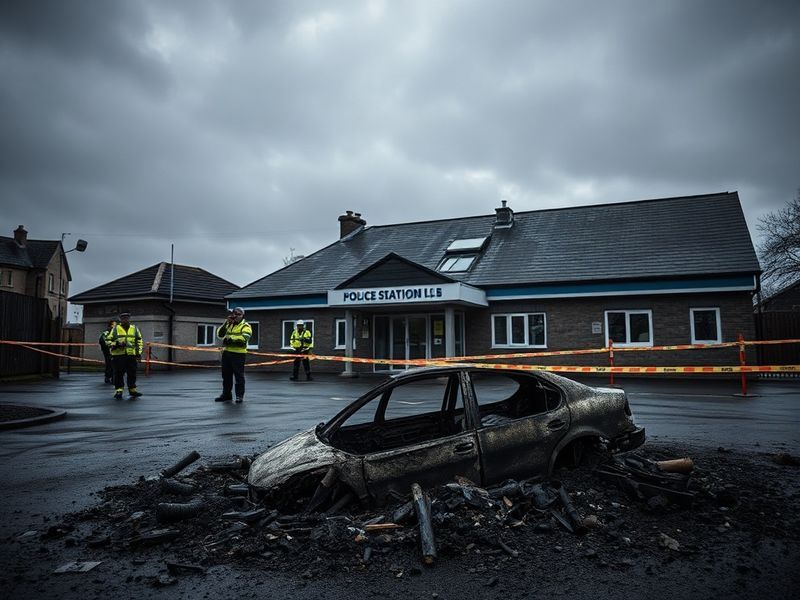
The explosion outside Dunmurry Police Station in 1989 marked one of the most brazen attacks during Northern Ireland’s Troubles. On the evening of April 20, a car laden with explosives detonated near the station’s perimeter, causing significant damage and injuring multiple officers. The attack, claimed by the Provisional IRA, underscored the persistent threat faced by law enforcement in the region at the time.
The blast occurred just after 9:00 PM, shattering windows and collapsing part of the station’s brick façade. Emergency services rushed to the scene as debris littered the surrounding streets. Among the injured were three police officers, two civilians, and a British Army soldier who had been nearby. The attack was not just an assault on infrastructure but a calculated strike against the symbols of state authority.
The Immediate Response and Investigation
Within minutes of the explosion, armored police Land Rovers arrived to secure the area. Bomb disposal units, including members of the Royal Army Ordnance Corps, cordoned off the scene while medics attended to the wounded. The station’s temporary closure disrupted local policing operations, forcing officers to relocate to alternative bases in the Greater Belfast area.
The investigation quickly focused on the Provisional IRA, which had a long history of targeting police stations in Northern Ireland. Authorities recovered fragments of the car used in the attack, including a partial license plate that led them to a stolen vehicle linked to known paramilitary associates. Witnesses described seeing two men abandon the car before fleeing on foot, though no arrests were made in connection with the bombing.
Security measures were immediately tightened across the region. Checkpoints proliferated, and routine patrols increased in nationalist areas where support for republican paramilitaries was historically strong. The attack also prompted calls from unionist politicians for greater military protection of police installations, reflecting the broader tensions of the era.
Historical Context and Broader Patterns
Dunmurry Police Station had been a frequent target due to its location in a predominantly nationalist area. During the Troubles, police stations were often seen as legitimate targets by republican paramilitaries, who viewed them as instruments of British oppression. Between 1980 and 1994, over 100 such attacks occurred across Northern Ireland, with varying degrees of success.
The methods used in the Dunmurry attack were not unique. The IRA often employed car bombs due to their ease of construction and the psychological impact they generated. These devices were typically transported into target areas by active service units, which would then abandon the vehicle before detonation. The use of explosives in civilian areas also served to undermine public confidence in the state’s ability to maintain order.
This attack occurred against a backdrop of escalating violence in the late 1980s. The IRA’s campaign had intensified following the hunger strikes of 1981, which had galvanized support for republicanism. Meanwhile, loyalist paramilitaries were also stepping up their operations, leading to a cycle of retaliatory attacks that further destabilized the region. The Dunmurry bombing was one of many incidents that contributed to the atmosphere of fear and uncertainty during this period.
Key Incidents of the Era
- 1988: The IRA’s mortar attack on Newry RUC station, which killed nine officers.
- 1989: The assassination of Chief Superintendent Harry Breen and Superintendent Bob Buchanan in South Armagh, known as the “Jonesborough Ambush.”
- 1990: The IRA’s bombing of the London Stock Exchange, demonstrating the group’s ability to strike beyond Northern Ireland.
Impact on Policing and Community Relations
The attack on Dunmurry Police Station had profound implications for both policing and community dynamics in the area. The Royal Ulster Constabulary (RUC), already under immense pressure, faced renewed scrutiny over its effectiveness. The force had been criticized for years for its perceived bias and heavy-handed tactics, particularly in nationalist communities. The bombing only deepened these divisions, as many locals viewed the station as a symbol of state oppression rather than protection.
In the aftermath, the RUC implemented a series of reforms aimed at rebuilding trust with the public. These included community policing initiatives and efforts to recruit more Catholic officers. However, progress was slow, and skepticism remained widespread. The attack also highlighted the vulnerability of police stations, leading to the construction of more fortified “pepper-pot” style stations across Northern Ireland.
The bombing also had a chilling effect on local residents. Many avoided the area around the station in the days following the attack, fearing further violence. Businesses in Dunmurry reported a decline in foot traffic, and some residents chose to limit their movements after dark. The psychological toll of such incidents cannot be overstated, as the constant threat of violence eroded the sense of safety in communities across the region.
Legacy and Historical Reckoning
Today, the Dunmurry Police Station bombing is remembered as a stark reminder of the brutality of the Troubles. While the immediate impact of the attack was contained, its ripple effects were felt for years. The incident is often cited in discussions about the IRA’s tactics and the broader strategy of “armed struggle” employed by republican paramilitaries.
The attack also figures prominently in the historical record of the RUC’s experiences during the Troubles. The force suffered over 300 fatalities during the conflict, and attacks on police stations were a recurring feature of the violence. The legacy of these incidents continues to shape perceptions of policing in Northern Ireland, particularly in nationalist communities where trust in law enforcement remains fragile.
In recent years, efforts to address the legacy of the Troubles have included initiatives to document and commemorate the victims of violence on all sides. The Dunmurry bombing, like many other incidents, is a subject of ongoing historical inquiry. Historians and researchers continue to examine the motivations behind such attacks, as well as their long-term consequences for Northern Ireland’s society and politics.
For those interested in further reading on the Troubles, Dave’s Locker News offers a range of articles that explore key events and themes from the era. Additionally, Dave’s Locker Analysis provides deeper insights into the historical and political context of the conflict.
The car bomb attack on Dunmurry Police Station remains a haunting chapter in Northern Ireland’s history. It serves as a reminder of the human cost of conflict and the enduring challenges of reconciliation. As the region continues to grapple with its past, the lessons of such incidents remain as relevant as ever.