Dunmurry Police Station Car Bomb: The 1990 Attack That Shook Northern Ireland
“`html
Car Bomb Attack on Dunmurry Police Station: A Timeline of Events
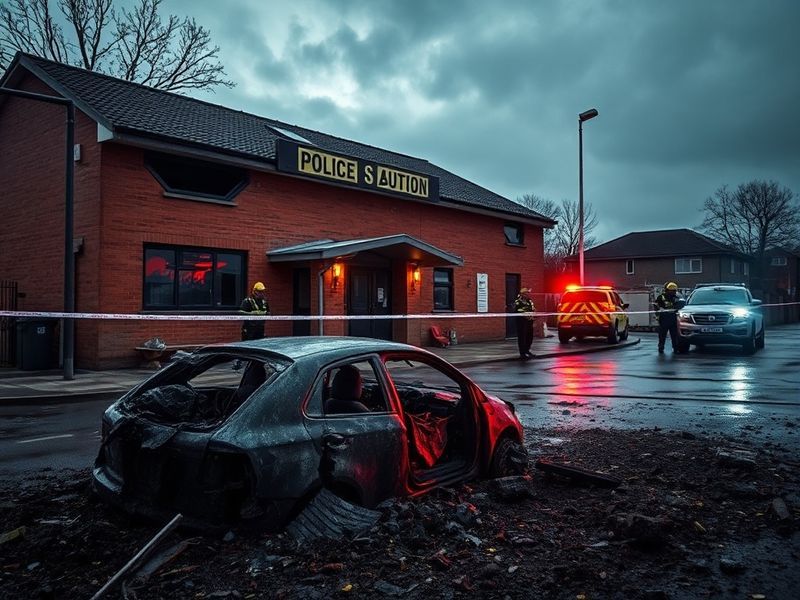
The car bomb detonated outside Dunmurry Police Station in Belfast on October 13, 1990, marked a brutal escalation in Northern Ireland’s Troubles. The explosion injured 20 people and caused extensive damage to the station, which served as a key target during the conflict. This attack was not an isolated incident but part of a broader pattern of violence that defined the era.
The Provisional IRA claimed responsibility, stating the bombing was retaliation for British security forces’ actions. At the time, police stations across Northern Ireland were frequent targets, reflecting the intense hostility between republican paramilitaries and state forces. The attack underscored the dangers faced by law enforcement and the civilian population alike.
Global Context: Terrorism and Policing in the 1990s
Dunmurry’s bombing occurred during a decade when terrorism was reshaping law enforcement strategies worldwide. In the United States, the 1993 World Trade Center bombing and the 1995 Oklahoma City bombing forced authorities to rethink counter-terrorism measures. European cities like Paris and Madrid also faced similar threats, with police stations and public infrastructure remaining vulnerable.
The 1990s saw a shift in how governments addressed domestic terrorism. In Northern Ireland, the British government increased security around police stations, while also pursuing diplomatic solutions. Internationally, agencies like the FBI and Interpol expanded their collaboration, recognizing that terrorism often crossed borders.
This period also highlighted the psychological toll on police officers. In Northern Ireland, officers faced daily risks, while in other conflict zones, law enforcement struggled with similar challenges. The Dunmurry attack was a stark reminder of how terrorism could destabilize communities and erode public trust in institutions.
Cultural Impact: How the Media Shaped Perceptions
Media coverage of the Dunmurry bombing played a crucial role in shaping public perception. Local newspapers like the Belfast Telegraph provided real-time updates, while international outlets framed the attack within the broader context of the Troubles. The images of shattered windows and injured civilians became symbolic of the conflict’s brutality.
In contrast, other regions experiencing terrorism adopted different narrative approaches. In Spain, the 2004 Madrid train bombings were initially blamed on the Basque separatist group ETA before evidence pointed to Islamist extremists. The media’s role in shaping initial reactions highlighted the importance of accurate reporting in crisis situations.
The Dunmurry bombing also influenced popular culture. Films, documentaries, and literature have since explored the Troubles, often using police stations as central symbols of state power and vulnerability. Works like In the Name of the Father and ’71 reflect the era’s tensions, blending historical events with fictional storytelling.
Lessons Learned: Security and Resilience in Modern Policing
The attack on Dunmurry Police Station forced authorities to rethink security protocols. In the years that followed, police stations across Northern Ireland were fortified with barriers, reinforced windows, and increased surveillance. These measures mirrored global trends, as cities from London to New York adopted similar strategies in response to rising threats.
Today, technology plays a pivotal role in preventing such attacks. Surveillance cameras, bomb disposal robots, and real-time intelligence sharing have become standard tools for law enforcement. In Northern Ireland, the Police Service of Northern Ireland (PSNI) continues to balance security needs with community engagement, a legacy of the Troubles.
However, challenges remain. The rise of lone-wolf attacks and cyber threats has introduced new vulnerabilities. Authorities must now consider not just physical security but also digital risks, as seen in recent incidents targeting government websites and critical infrastructure.
For those interested in the broader history of policing in conflict zones, the News section on Dave’s Locker offers further insights into how law enforcement adapts to evolving threats. The Dunmurry bombing serves as a reminder that security is an ongoing process, requiring constant vigilance and innovation.
Reflecting on a Dark Chapter in Northern Ireland’s History
The car bomb at Dunmurry Police Station was more than just an act of violence—it was a moment that exposed the fragility of peace and the resilience of those who endured it. The attack left scars that lasted for generations, both physically and emotionally. Yet, it also spurred efforts to rebuild and reconcile, as communities sought to move forward despite the trauma.
In the decades since, Northern Ireland has made progress toward peace, though challenges persist. The legacy of the Troubles remains a cautionary tale about the dangers of unchecked conflict and the importance of dialogue. The Dunmurry bombing, like other pivotal events, serves as a reminder of how history shapes the present—and how societies can learn from the past.
For further reading on historical conflicts and their lasting impacts, explore the Analysis section on Dave’s Locker. Understanding these events helps us navigate the complexities of modern security and diplomacy.