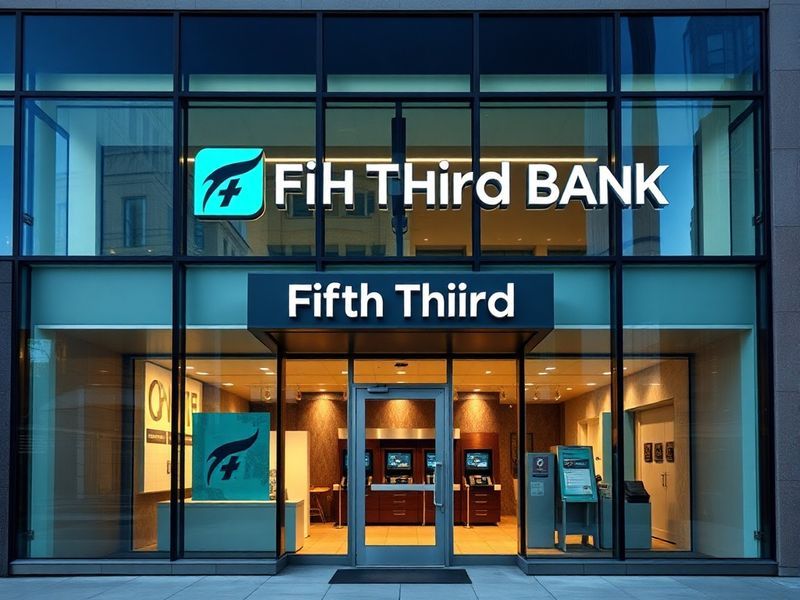
Founded in 1858 as the Bank of the Ohio Valley, Fifth Third Bank has grown into one of the nation’s most recognizable regional financial institutions. With a name derived from its 1908 merger between the Third National Bank and the Fifth National Bank, the institution has spent over 160 years adapting to economic shifts, regulatory changes, and consumer demands. Today, it operates across 10 states primarily in the Midwest and Florida, serving over 3 million customers through 1,100 branches and a robust digital platform. Its history reflects not just the evolution of American banking, but also the enduring role of regional banks in local communities.
What sets Fifth Third apart is its dual identity: a traditional community bank with deep Midwestern roots and a forward-thinking financial services provider embracing innovation. While it competes with national giants like JPMorgan Chase and Bank of America, Fifth Third has carved a distinct path by focusing on customer experience, technological advancement, and strategic growth—particularly through targeted acquisitions and a strong emphasis on financial wellness programs. This balance of legacy and innovation positions Fifth Third as a case study in the resilience and adaptability of regional banking in the 21st century.
The Origins and Growth: From Humble Beginnings to Regional Powerhouse
Fifth Third Bank’s story begins in Cincinnati, Ohio, where it was originally established as the Bank of the Ohio Valley. The institution’s early years were marked by steady growth and prudent leadership, a hallmark of its operating philosophy. By the late 19th century, Cincinnati was a burgeoning commercial hub, and the bank capitalized on the region’s industrial and agricultural expansion. The 1908 merger that created “Fifth Third” wasn’t merely a consolidation—it was a strategic move to strengthen capital and expand reach in a rapidly changing economy.
Through the 20th century, Fifth Third expanded cautiously but deliberately, opening branches in neighboring states and acquiring smaller institutions. A pivotal moment came in 1983 when it acquired the First National Bank of Florida, marking its first major foray outside the Midwest. This expansion strategy continued into the 21st century, with notable purchases such as the 2001 acquisition of Old Kent Financial Corporation and the 2014 purchase of Vantiv, a payments technology company. While Vantiv was later spun off as a separate entity (now Worldpay), the move signaled Fifth Third’s commitment to modernizing its operations and diversifying revenue streams.
Today, Fifth Third’s footprint spans Ohio, Florida, Georgia, Illinois, Indiana, Kentucky, Michigan, Missouri, North Carolina, and Tennessee. Its growth has been organic and acquisitive, but always grounded in a philosophy of relationship-based banking. Unlike megabanks that prioritize scale at the expense of personal service, Fifth Third has maintained a strong local presence while investing in digital tools to meet evolving customer expectations.
Digital Transformation and Customer-Centric Innovation
In an era where mobile banking and fintech partnerships dominate the conversation, Fifth Third has made significant strides in digital transformation. Its mobile app consistently ranks among the top in customer satisfaction, offering features like real-time fraud alerts, Zelle integration, and personalized financial insights powered by artificial intelligence. The bank’s “Early Pay” service allows customers to receive paychecks up to two days early, a feature that has resonated strongly with younger, tech-savvy users.
One of Fifth Third’s most notable digital initiatives is its partnership with fintech companies to enhance customer experience. Through strategic collaborations, it has integrated financial wellness tools such as budgeting dashboards and credit score monitoring directly into its online banking platform. These tools are not just add-ons—they reflect a broader mission to empower customers with financial literacy and proactive money management.
Another key innovation is the bank’s investment in cloud computing and data analytics. By leveraging AI to detect unusual spending patterns, Fifth Third has reduced fraud losses while improving response times. This blend of technology and human oversight has helped it maintain trust—a critical factor in an industry often scrutinized for cybersecurity risks.
Key Digital Offerings
- Mobile Banking App: Rated highly for usability and features like mobile check deposit and card controls.
- Early Pay: Enables direct deposit users to access funds before traditional payday schedules.
- Financial Insights Engine: Uses AI to categorize spending and provide personalized recommendations.
- Secure Authentication: Biometric login and two-factor authentication for enhanced security.
- Fintech Integrations: Partnerships with platforms like Zelle and Plaid for seamless money movement.
Financial Wellness and Community Engagement: More Than Just Banking
Beyond products and profits, Fifth Third has placed a strong emphasis on financial wellness—a concept increasingly central to modern banking. Its “Empower U” program offers free financial education workshops in communities across its footprint, covering topics like homebuying, retirement planning, and student loan management. These initiatives target underrepresented groups, including first-time homebuyers and low-to-moderate-income families, who often lack access to financial advisors.
The bank’s commitment to community development is also evident in its lending practices. Through programs like the Small Business Lending initiative, Fifth Third supports local entrepreneurs with low-interest loans and mentorship. In 2023 alone, it originated over $1.2 billion in small business loans, helping to sustain Main Street economies in cities like Detroit, Cincinnati, and Tampa.
Environmental, social, and governance (ESG) factors are also part of Fifth Third’s strategy. The bank has committed to $100 billion in sustainable financing by 2030 and has reduced its own operational carbon footprint by 50% since 2019. These efforts reflect a broader industry trend toward responsible banking, but Fifth Third’s implementation stands out for its measurable goals and transparency.
Challenges and the Road Ahead
Despite its strengths, Fifth Third faces challenges common to regional banks in a consolidating industry. Rising interest rates have pressured net interest margins, while competition from digital-only banks like Chime and Ally threatens traditional branch-based models. Additionally, regulatory scrutiny around data privacy and consumer protection continues to intensify, requiring ongoing investment in compliance and cybersecurity.
Another challenge is maintaining a cohesive brand identity across a vast geographic footprint. While its Midwestern roots remain a source of pride, expanding into diverse markets like Florida and North Carolina has required cultural adaptation—balancing local priorities with corporate consistency. The bank’s recent rebranding efforts, including a refreshed logo and updated digital aesthetic, signal an attempt to modernize its image without losing its heritage.
Yet, Fifth Third’s leadership believes its community-focused approach is a competitive advantage. By combining local decision-making with national-scale technology, it aims to serve customers who value both personal touch and digital convenience. As banking continues to evolve, Fifth Third’s ability to innovate while preserving trust may well determine its next century of success.
Conclusion: A Bank Rooted in the Past, Looking to the Future
Fifth Third Bank’s journey from a 19th-century Ohio bank to a digitally advanced regional powerhouse illustrates the enduring value of adaptability and purpose. In an industry often criticized for impersonal service, Fifth Third has demonstrated that technology and tradition can coexist. Its focus on financial wellness, community investment, and responsible growth sets a standard for regional banks nationwide.
As it navigates economic uncertainty, regulatory change, and consumer expectations, Fifth Third remains a compelling example of how legacy institutions can evolve without losing sight of their core mission: serving people, not just accounts. For customers seeking a bank that balances innovation with integrity, Fifth Third offers a model worth watching.
Whether you’re a long-time customer or exploring your financial options, Fifth Third’s story reminds us that banking isn’t just about transactions—it’s about trust, growth, and the communities we serve.