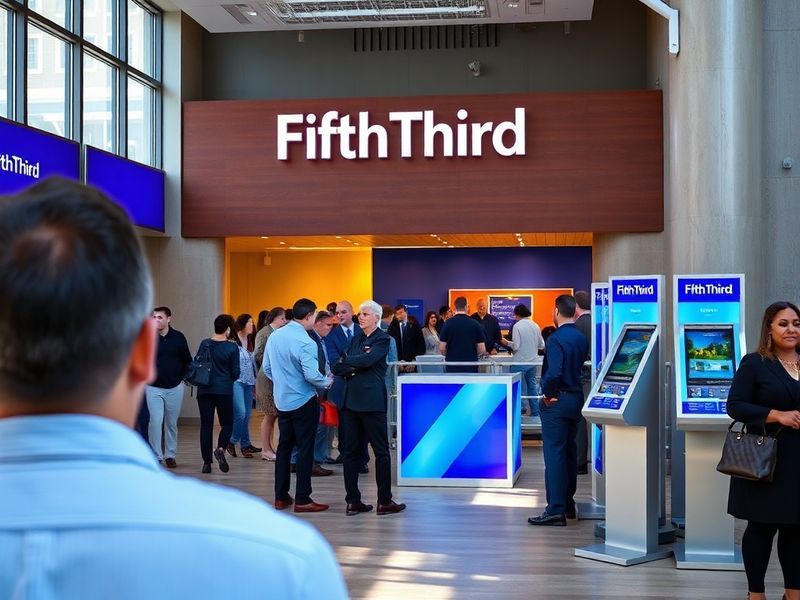
Fifth Third Bank: History, Growth and Future in American Finance
“`html
Fifth Third Bank: A Century of Adaptation in American Finance
Published on by Dave’s Locker Staff
The Origins and Early Growth of Fifth Third Bank
Fifth Third Bank traces its roots to 1858, when the Bank of the Ohio Valley opened its doors in Cincinnati. The institution evolved through a series of mergers, most notably in 1908 when the Third National Bank and the Fifth National Bank combined to form Fifth Third National Bank of Cincinnati. This merger created a financial institution with a name that would become synonymous with Midwestern banking.
The bank’s early years were marked by steady expansion across Ohio. By the 1920s, Fifth Third had established itself as a community-focused lender, supporting local businesses and families during a period of rapid industrialization. The Great Depression tested its resilience, but the bank’s conservative lending practices allowed it to survive where others failed. By the mid-20th century, Fifth Third had grown into one of the region’s most trusted financial institutions.
Its name, often a point of curiosity, stems from the merger of two predecessor banks—Third National and Fifth National—rather than any numerical significance. This quirky branding became a hallmark of the bank’s identity, setting it apart in an era when financial institutions often prioritized formality over memorability.
Expansion and Modernization in the Digital Age
Fifth Third’s growth accelerated in the late 20th and early 21st centuries as it expanded beyond Ohio. Acquisitions played a key role in this strategy, including the 1986 purchase of the failing Ohio-based Bank of Kentucky and the 2001 merger with Old Kent Financial Corporation, which extended its reach into Michigan and Indiana. By 2007, Fifth Third had assets exceeding $100 billion, solidifying its position as a regional powerhouse.
The bank’s approach to modernization has been pragmatic. While many financial institutions rushed into subprime lending during the housing boom, Fifth Third maintained stricter underwriting standards. This cautious stance shielded it from the worst of the 2008 financial crisis, though it still faced significant losses from its exposure to toxic assets. The aftermath prompted a period of restructuring, including leadership changes and a renewed focus on core banking services.
Key Milestones in Fifth Third’s Expansion
- 1986: Acquired Bank of Kentucky, marking its first major out-of-state expansion.
- 2001: Merged with Old Kent Financial, adding Michigan and Indiana to its footprint.
- 2010: Acquired back financial assets from the U.S. Treasury after the financial crisis.
- 2018: Launched a digital banking platform, Fifth Third Express Banking, to compete with fintech disruptors.
- 2023: Announced plans to acquire select assets from bankrupt First Republic Bank, further strengthening its West Coast presence.
In recent years, Fifth Third has also invested in technology to enhance customer experience. Its mobile app, rated highly for usability, reflects a broader industry trend toward digital-first banking. Yet, the bank has balanced innovation with a commitment to in-person service, maintaining branches in underserved communities where digital adoption lags.
Corporate Responsibility and Community Impact
Beyond its financial operations, Fifth Third has positioned itself as a leader in corporate social responsibility. The Fifth Third Foundation, established in 1948, has donated over $500 million to charitable causes, with a focus on affordable housing, education, and small business development. The bank’s Community Reinvestment Act (CRA) rating has consistently been among the highest in the industry, reflecting its commitment to equitable lending.
One of its most notable initiatives is the Fifth Third Empowering Black Futures program, launched in 2020 to address racial wealth gaps through grants, loans, and financial education. The program targets Black-owned businesses and entrepreneurs, areas historically underserved by traditional banks. Early data suggests it has helped hundreds of small businesses secure capital and expand operations.
However, Fifth Third has not been without controversy. In 2020, it paid a $85 million settlement to the U.S. Department of Justice over allegations of discriminatory lending practices in its auto loan division. The case highlighted the challenges banks face in ensuring fairness across all product lines, even as they champion broader social initiatives.
The Future of Fifth Third in a Fragmented Banking Landscape
The banking industry is undergoing rapid transformation, driven by fintech competition, regulatory changes, and shifting consumer expectations. Fifth Third faces pressure on multiple fronts: from digital-only banks like Chime to the rise of embedded finance, where banking services are integrated into non-financial platforms. To stay competitive, the bank has emphasized partnerships, such as its collaboration with fintech startups to enhance its digital offerings.
Regulatory scrutiny remains another challenge. The 2023 collapse of Silicon Valley Bank and Signature Bank exposed vulnerabilities in regional banks, leading to calls for stricter oversight. Fifth Third, with its strong capital ratios and diversified loan portfolio, appears well-positioned to weather such storms. Yet, the bank must also navigate the complexities of Basel III regulations and potential interest rate volatility.
Looking ahead, Fifth Third’s strategy seems to hinge on three pillars: scale, technology, and social impact. By expanding its geographic footprint through selective acquisitions, investing in AI-driven customer service tools, and doubling down on community-focused programs, the bank aims to carve out a sustainable niche in an increasingly competitive market.
“Regional banks like Fifth Third play a crucial role in maintaining financial diversity. They provide competition to megabanks, support local economies, and often take a more personalized approach to lending. The question is whether they can innovate fast enough to keep pace with fintech and changing consumer habits.”
For consumers, Fifth Third’s future may come down to trust. In an era of bank failures and data breaches, its long-standing reputation in the Midwest could be a significant asset. The bank’s ability to merge tradition with innovation will determine whether it remains a regional staple or evolves into a national contender.