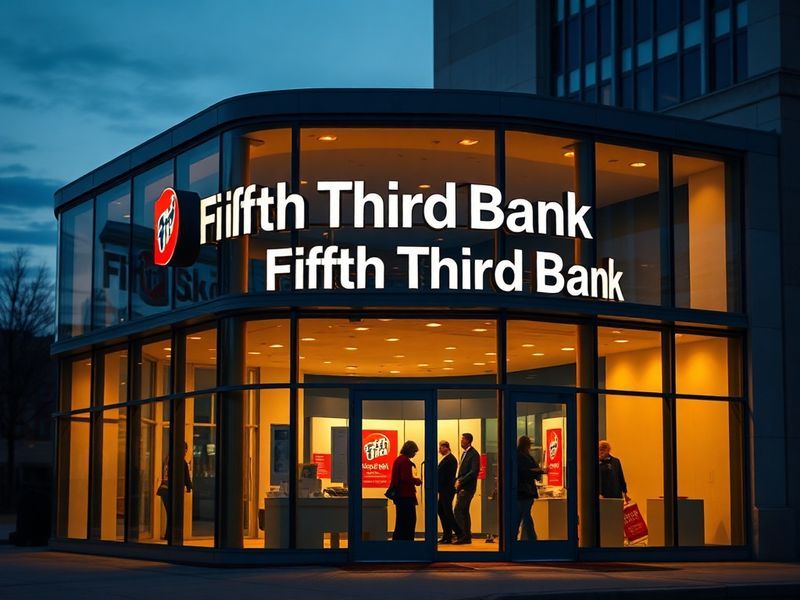
Fifth Third Bank: History, Performance and Future in 2024
“`html
Fifth Third Bank: A Century of Financial Evolution
Founded in 1858 as the Bank of the Ohio Valley, Fifth Third Bank has grown into one of the Midwest’s most recognizable financial institutions. With roots stretching back over 160 years, the bank has evolved from a small regional player into a major regional bank with assets exceeding $200 billion. Its journey reflects broader trends in American banking, including consolidation, technological adaptation, and shifting customer expectations.
The bank’s name itself is a nod to its early history. In 1908, the Fifth National Bank and the Third National Bank merged, creating the Fifth-Third National Bank of Cincinnati. The hyphen was later dropped, but the name endured as a testament to the institution’s resilience and adaptability. Today, Fifth Third operates in 10 states, primarily in the Midwest and Florida, serving more than 6.5 million customers through its network of branches, ATMs, and digital platforms.
Financial Performance and Market Position
Fifth Third Bank ranks among the top 20 largest banks in the United States by asset size, a position it has maintained through strategic acquisitions and organic growth. In 2023, the bank reported net income of $2.07 billion, with a return on average assets (ROAA) of 1.23%. Its commercial banking division remains a cornerstone, generating nearly 60% of total revenue. The bank’s focus on middle-market lending has positioned it as a key player for businesses seeking financing solutions.
The bank’s performance is closely tied to the economic health of the Midwest, where it holds a dominant market share. In Ohio, for example, Fifth Third Bank serves as the primary depository for many municipalities and school districts. Its strong local presence has allowed it to weather economic downturns better than some national competitors. However, like all regional banks, it faces challenges from rising interest rates, regulatory changes, and competition from fintech firms.
Fifth Third’s stock, traded under the ticker FITB, has shown steady growth over the past decade, outperforming many of its regional peers. The bank’s dividend yield, currently around 4%, makes it an attractive option for income-focused investors. Analysts often highlight its efficient cost management and disciplined lending practices as key strengths.
Innovation and Digital Transformation
In an industry increasingly dominated by digital-first competitors, Fifth Third Bank has invested heavily in technology to remain competitive. Its mobile banking app, launched in 2016, has consistently ranked among the top 10 in customer satisfaction surveys. The app offers features like mobile check deposit, peer-to-peer payments, and real-time fraud alerts—tools that have become essential for modern banking.
The bank’s digital transformation extends beyond consumer banking. In 2021, Fifth Third introduced a new core banking platform designed to improve efficiency and scalability. This upgrade supports faster transaction processing and enhances the bank’s ability to integrate with third-party fintech solutions. Additionally, Fifth Third has partnered with companies like Stripe and Plaid to offer embedded financial services, allowing businesses to embed banking products directly into their platforms.
Fifth Third’s commitment to innovation is also evident in its approach to cybersecurity. The bank has allocated significant resources to combat fraud and protect customer data, including the use of artificial intelligence to detect suspicious transactions. In 2022, it invested $100 million in upgrading its IT infrastructure, a move aimed at future-proofing its operations amid growing cyber threats.
- Mobile Banking: 5-star rated app with over 4 million active users.
- Fintech Partnerships: Collaborations with Stripe, Plaid, and others to expand service offerings.
- AI and Cybersecurity: $100M investment in IT upgrades to combat fraud and enhance security.
- Core Banking Platform: Modernized system to improve efficiency and scalability.
Community Impact and Corporate Responsibility
Beyond its financial performance, Fifth Third Bank has long emphasized its role as a community partner. Through its Fifth Third Foundation, the bank has donated over $1 billion to nonprofit organizations since 2003. Focus areas include education, workforce development, and affordable housing. In 2023 alone, the foundation contributed $40 million to initiatives across its 10-state footprint.
One of the bank’s most notable programs is its Empowering Women to Lead initiative, which provides grants and mentorship to women entrepreneurs. The program has supported over 5,000 small businesses since its launch in 2018. Additionally, Fifth Third’s L.I.F.E. (Lives Improved Through Financial Empowerment) initiative offers free financial literacy workshops to underserved communities, helping individuals build credit, save for emergencies, and plan for retirement.
The bank’s commitment to sustainability is another key pillar of its corporate responsibility efforts. Fifth Third has pledged to achieve net-zero greenhouse gas emissions by 2050, aligning with broader industry trends toward environmental, social, and governance (ESG) goals. It has also committed to financing $10 billion in sustainable projects by 2030, including renewable energy and green building initiatives.
Challenges and Future Outlook
Despite its strengths, Fifth Third Bank faces several challenges as it looks to the future. Rising interest rates, while beneficial for net interest margins, also increase the risk of loan defaults. The bank’s commercial real estate portfolio, in particular, has come under scrutiny due to the ongoing shift to remote work and the potential for declining property values. In response, Fifth Third has tightened lending standards and diversified its loan book to mitigate risk.
Regulatory pressures also pose a challenge. The banking industry has faced increased scrutiny in recent years, particularly around capital requirements and consumer protection. Fifth Third has maintained a strong capital position, with a Tier 1 leverage ratio of 9.5% as of 2023, well above the regulatory minimum. However, compliance costs continue to rise, putting pressure on profitability.
Looking ahead, Fifth Third Bank’s ability to adapt to changing customer preferences will be critical. The rise of digital-only banks and fintech disruptors has forced traditional banks to rethink their business models. Fifth Third’s recent investments in technology and fintech partnerships suggest it is taking this challenge seriously. However, its success will depend on its ability to balance innovation with the personalized service that has long been a hallmark of regional banking.
The bank’s leadership team, led by CEO Tim Spence, has outlined a strategic plan focused on three key priorities: deepening customer relationships, driving operational efficiency, and expanding its digital capabilities. If executed successfully, these initiatives could position Fifth Third for continued growth in an increasingly competitive landscape.
Fifth Third Bank’s story is one of resilience and adaptation. From its humble beginnings in Cincinnati to its current status as a regional powerhouse, the bank has demonstrated an ability to evolve with the times. As it navigates the challenges and opportunities of the 21st century, Fifth Third remains a testament to the enduring value of community-focused banking in an era of rapid change.