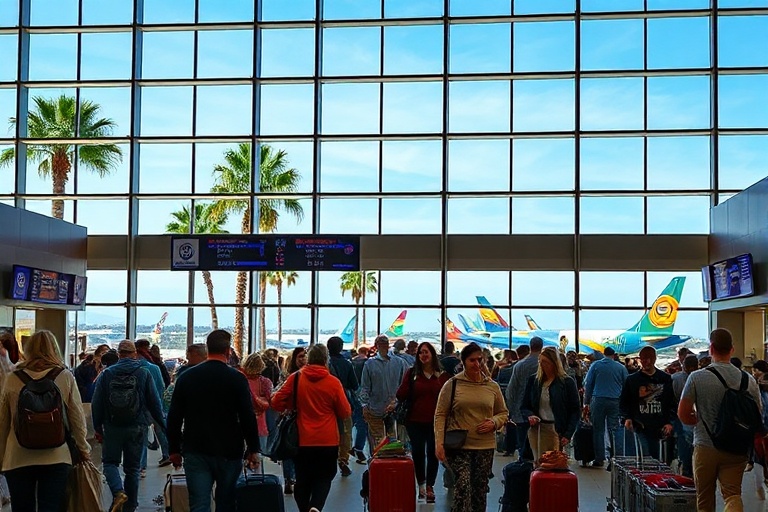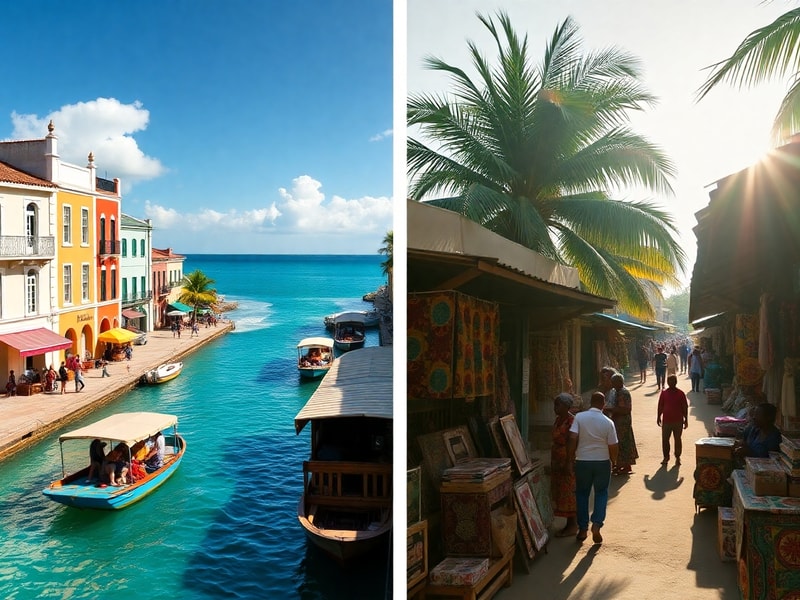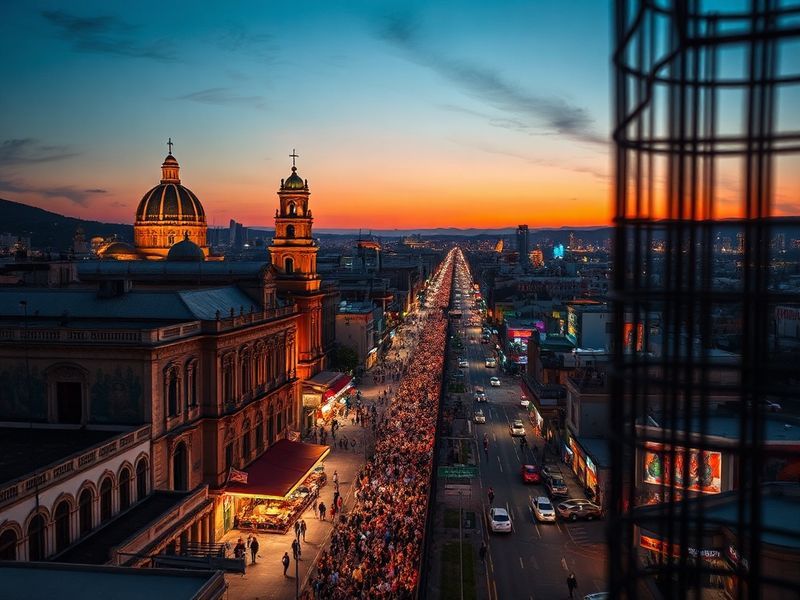
Mexico’s urban landscape is defined by contrasts, and few routes illustrate this better than the journey from Guadalajara to Tijuana. Stretching over 1,800 miles across the country, this corridor passes through colonial cities, industrial hubs, and borderland cultures, each leaving an indelible mark on the traveler’s experience. While direct flights connect these cities in a matter of hours, the overland route reveals layers of Mexico’s geography, economy, and identity that no airport terminal ever could.
Guadalajara, known as the “Pearl of the West” or simply “La Perla,” anchors Mexico’s second-largest metropolitan area. It is a city where tradition and modernity coexist: baroque churches stand beside glass towers, mariachi music drifts from plazas while tech startups fill coworking spaces. Tijuana, on the other hand, is a city of motion—its identity shaped by migration, trade, and the constant hum of the U.S.-Mexico border. Together, these cities represent the dual pulse of Mexico: one rooted in heritage, the other in transformation.
The Cultural Contrasts: Tradition Meets Transience
Guadalajara’s cultural depth is immediately apparent. The historic center, a UNESCO World Heritage site, is home to landmarks like the Hospicio Cabañas, a 19th-century hospice adorned with murals by José Clemente Orozco. The city’s culinary scene reflects its Jalisco roots, with birria, tortas ahogadas, and tequila defining local gastronomy. Art and literature thrive here, nurtured by institutions like the University of Guadalajara and events such as the FIL Guadalajara book fair, one of the most important in the Spanish-speaking world.
In contrast, Tijuana’s culture is fluid and dynamic, shaped by its proximity to California. The city’s food scene is a fusion of Mexican and Asian influences, with ramen shops and seafood stands lining Avenida Revolución. Art collectives like La Casa del Tunel and the Museo El Trompo showcase contemporary creativity that often addresses themes of migration and identity. Music ranges from norteño corridos to electronic beats in underground venues, reflecting a city constantly redefining itself.
This cultural duality isn’t just aesthetic. It reflects deeper economic and social realities. Guadalajara, as a hub for IT and advanced manufacturing, attracts young professionals and international investors. Tijuana, with its maquiladoras and cross-border economy, draws workers seeking opportunities on both sides of the fence. Both cities, in their own ways, exemplify Mexico’s role as a bridge between worlds.
The Economic Engines: Innovation and Industry
Guadalajara has long been a center of industry and innovation. Nicknamed the “Silicon Valley of Mexico,” it hosts major tech companies and a thriving startup ecosystem. The city’s electronics manufacturing sector dates back decades, earning it the nickname “Mexico’s Detroit” in the 20th century. Today, sectors like aerospace, software development, and information technology dominate, supported by institutions like ITESO and the Tecnológico de Monterrey campus.
Tijuana, meanwhile, is one of the most important manufacturing hubs in North America. The city’s maquiladoras—foreign-owned factories—produce everything from medical devices to electronics for global markets. The automotive sector is especially prominent, with major OEMs operating large plants. What sets Tijuana apart is its integration with the U.S. economy. Nearly half of its exports go to California, and over 50,000 commuters cross the border daily for work, a testament to the region’s economic interdependence.
Yet this economic strength comes with challenges. Both cities struggle with inequality, informality, and the pressures of rapid urbanization. Guadalajara’s growth has led to traffic congestion and housing shortages, while Tijuana grapples with infrastructure gaps and environmental concerns near the border. The contrast between high-tech campuses and informal settlements underscores a persistent divide in opportunity and access.
The Border Experience: Life Between Two Worlds
Traveling from Guadalajara to Tijuana isn’t just a physical journey—it’s a passage through Mexico’s evolving relationship with its northern neighbor. The route can be traveled by bus, car, or even train (via Ferromex), each offering a different perspective on the landscape. The journey typically passes through León, Guanajuato; Aguascalientes; Zacatecas; Torreón; and Mexicali before reaching Tijuana—a traverse of deserts, valleys, and industrial corridors.
Upon arriving in Tijuana, the border becomes impossible to ignore. The San Ysidro Port of Entry, the busiest land border crossing in the Western Hemisphere, sees over 70,000 vehicles and 20,000 pedestrians daily. The contrast between Tijuana and San Diego is stark: one city of dense neighborhoods and informal markets, the other of gleaming office towers and suburban sprawl. Yet the two are deeply interconnected. Families live on one side and work on the other. Goods move freely in both directions. The border is not a wall, but a membrane—porous, contested, and essential to both economies.
This duality shapes daily life in Tijuana. The city’s identity is neither fully Mexican nor American, but a hybrid born of necessity and opportunity. Local media often reflects this duality, covering both Mexican national news and U.S.-focused topics. The city’s youth, fluent in Spanglish and familiar with both cultures, represent a generation that sees borders as bridges rather than barriers.
Why This Route Matters Beyond the Journey
The Guadalajara–Tijuana corridor is more than a geographical line. It is a microcosm of Mexico’s challenges and aspirations. It highlights the country’s industrial might, cultural richness, and complex relationship with the United States. It also exposes the inequalities that persist despite economic growth. For policymakers, urban planners, and cultural observers, this route offers a living case study in regional integration and disparity.
For travelers, the journey is an education. It reveals a Mexico that is often obscured by stereotypes—one that is both deeply traditional and relentlessly modern, both proudly Mexican and irrevocably linked to its northern neighbor. Whether exploring the colonial plazas of Jalisco or the border markets of Baja California, visitors leave with a more nuanced understanding of what it means to be Mexican in the 21st century.
As Mexico continues to evolve, the dialogue between its regions—between its heartland and its frontier—will only grow in importance. Guadalajara and Tijuana, though separated by geography and culture, are united by their role in defining the nation’s future. Their stories are not separate, but intertwined, each reflecting a part of Mexico’s soul.
For those seeking to understand Mexico beyond the headlines, this journey offers an essential starting point. It’s not just a trip from one city to another. It’s a passage through the forces shaping a nation.
Explore More About Mexico’s Cities and Culture
Interested in learning more about Mexico’s urban landscapes? Visit our Travel and Culture sections for deeper insights into destinations across Mexico and beyond.
Key Takeaways From Guadalajara to Tijuana
- Cultural Duality: Guadalajara embodies tradition and innovation, while Tijuana reflects transience and borderland identity.
- Economic Hubs: Guadalajara leads in tech and innovation; Tijuana excels in manufacturing and cross-border trade.
- Border Reality: The U.S.-Mexico border is a daily lived experience for millions, shaping culture, economy, and identity.
- Urban Challenges: Both cities face housing shortages, inequality, and environmental pressures despite economic growth.