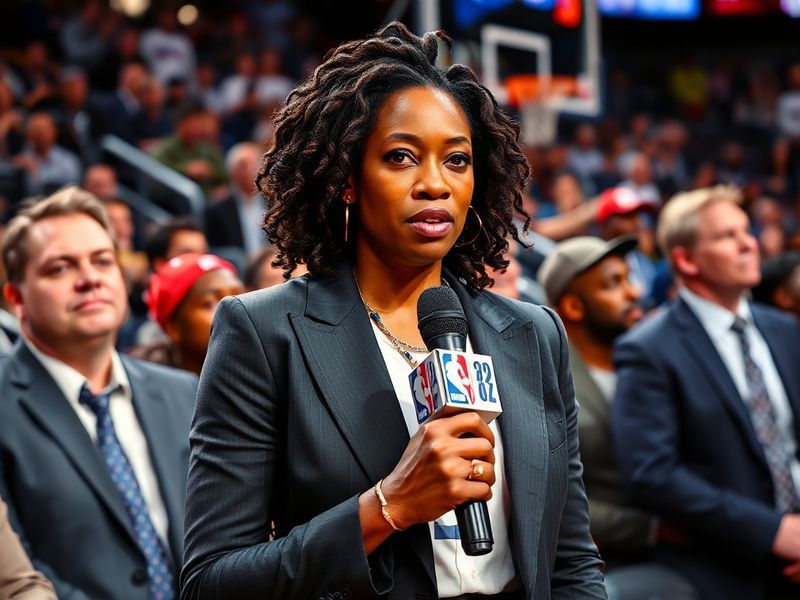
Malika Andrews has become one of the most recognizable figures in sports journalism, carving out a space where her analytical depth and engaging storytelling stand out. At a time when sports media often prioritizes sensationalism over substance, Andrews has consistently delivered coverage that balances insight with integrity. Her rapid ascent is not just a personal achievement but a reflection of broader changes in how sports stories are told and consumed.
From Early Career to National Prominence
Andrews began her professional journey at the Chicago Tribune, where her early work covering high school sports and local college teams demonstrated a knack for identifying compelling narratives. Her break came when she joined ESPN in 2016 as a digital reporter, a role that allowed her to cover the NBA with a fresh perspective. Unlike traditional beat reporters focused solely on game recaps, Andrews integrated social issues, player perspectives, and broader cultural context into her reporting.
By 2018, she had become a regular on NBA Countdown, where her ability to dissect plays while contextualizing them within the league’s evolving dynamics made her a standout. Her reporting on player movements, contract negotiations, and off-court developments often provided clarity in an era of information overload. Andrews’ approach was particularly notable for lifting the curtain on the human side of professional athletes—something that resonated deeply with audiences.
Key Milestones in Her Career
- 2016: Joined ESPN as a digital reporter, covering the NBA.
- 2018: Became a regular on NBA Countdown, expanding her national profile.
- 2020: Led coverage of the NBA Bubble during the COVID-19 pandemic, highlighting player experiences.
- 2021: Named a co-host of NBA Today, further solidifying her role as a central voice in sports media.
- 2023: Hosted The Jump, becoming one of the few Black women to anchor a primetime sports show.
The Impact of Her Reporting Style
What sets Andrews apart is her refusal to treat athletes as one-dimensional figures. Whether discussing LeBron James’ activism, Ja Morant’s rise, or Brittney Griner’s wrongful detention, she approaches each story with nuance. This method has earned her respect not only from fans but also from the athletes she covers. Players often highlight how her interviews feel less like interrogations and more like conversations—an essential distinction in an era where media scrutiny can feel relentless.
Her reporting on the NBA Bubble in 2020 was particularly impactful. While other journalists focused on the game itself, Andrews delved into the mental and emotional toll the isolation took on players. She interviewed athletes about their fears, routines, and the unprecedented challenges of playing in a pandemic. This kind of storytelling humanized figures who are often seen as untouchable, reinforcing the idea that sports journalism can—and should—be more than just score updates.
Andrews’ work also reflects a broader shift in sports media toward inclusivity. As one of the few Black women in a field historically dominated by white men, she has become a role model for aspiring journalists of color. Her presence challenges the industry’s status quo, proving that diverse voices bring fresh perspectives that enrich the conversation.
Challenges and Criticisms
Despite her success, Andrews has not been immune to criticism. Some traditionalists argue that her reporting occasionally veers too far into analysis rather than hard news. Others have questioned whether her visibility as a Black woman in sports media subjects her to disproportionate scrutiny, particularly when covering issues of race and social justice. In 2021, she faced backlash from a subset of fans who accused her of bias in her coverage of Zion Williamson’s injury history—a moment that underscored the pressures of being a trailblazer.
Andrews has addressed these challenges with a mix of transparency and resilience. In interviews, she has spoken openly about the need for sports media to evolve, emphasizing that objectivity does not mean detachment. Instead, she advocates for a journalism that acknowledges the humanity of athletes and the societal contexts in which they operate. This perspective has made her a target for those who prefer a more traditional, less interpretive approach to sports reporting.
Broader Implications for Sports Media
Andrews’ career is a microcosm of the larger transformation occurring in sports journalism. The rise of social media has democratized access to athletes, while the demand for multimedia content has forced reporters to adapt. In this environment, Andrews has thrived by leveraging her platform to amplify underrepresented voices and challenge conventional narratives. Her success suggests that the future of sports media lies not in chasing clicks but in fostering genuine connections between audiences and the stories that matter.
Moreover, her career highlights the importance of mentorship and representation. Andrews has consistently used her platform to uplift other women and journalists of color, whether through public endorsements, collaborations, or simply leading by example. This commitment to fostering the next generation ensures that her impact extends beyond her own work.
For those interested in the intersection of sports, media, and social change, Andrews’ trajectory offers valuable lessons. She demonstrates that journalism can be both rigorous and empathetic, that storytelling can be analytical yet deeply human. In an era where sports media often prioritizes spectacle over substance, her career is a reminder of the power of thoughtful, inclusive reporting.
To explore more about the evolving landscape of sports journalism, visit our Sports and News categories. Here, you’ll find additional analysis on how media shapes our understanding of sports and culture.
Conclusion: A Lasting Legacy in the Making
Malika Andrews’ rise is far from over. As she continues to shape the conversation around sports journalism, her influence will likely expand beyond basketball to encompass broader discussions about race, gender, and media accountability. What makes her stand out is not just her ability to report the news but her dedication to redefining how sports stories are told.
In a field often resistant to change, Andrews has proven that progress is possible—and necessary. Her work challenges both journalists and audiences to demand more from sports media: more depth, more empathy, and more honesty. As she moves forward, one thing is clear: Malika Andrews is not just a reporter. She is a force reshaping the industry from within.