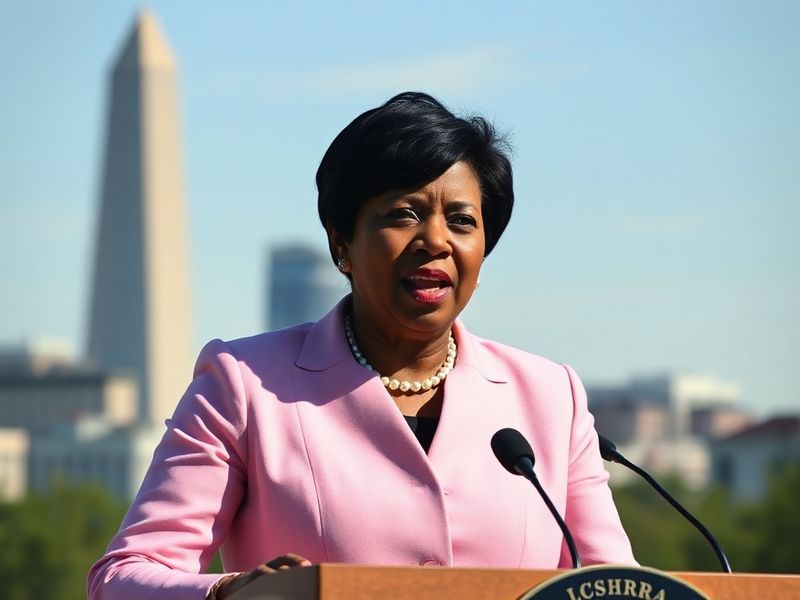
Muriel Bowser has shaped the nation’s capital for nearly a decade, first as a council member and then as mayor since 2015. Her leadership has navigated Washington D.C. through economic growth, public health crises, and political challenges while maintaining her progressive roots. The first woman to be re-elected as mayor in D.C. history, Bowser’s tenure reflects both the city’s evolving priorities and her own political evolution.
Early Career and Political Rise
Born in 1972 in Washington D.C., Muriel Bowser grew up in the city’s northeast quadrant, developing an early connection to its neighborhoods. She earned a bachelor’s degree in history from Chatham University in Pennsylvania before returning to D.C. to work in nonprofits and community organizations. Her political career began in 2004 when she was elected to Advisory Neighborhood Commission Single Member District 4B09, representing the Riggs Park neighborhood.
Bowser’s first major electoral victory came in 2007 when she won a seat on the D.C. Council representing Ward 4. During her eight years on the council, she established herself as a pragmatic legislator focused on economic development and public safety. Her 2014 mayoral campaign emphasized “One City” initiatives, promising to address inequality while fostering growth across all eight wards. The campaign’s success demonstrated Bowser’s ability to connect with voters across demographic lines while maintaining strong support in her base ward.
Policy Priorities and Legislative Impact
As mayor, Bowser has overseen significant policy shifts in several key areas. Her administration prioritized affordable housing through initiatives like the Housing Production Trust Fund, which has funded thousands of new affordable units. The mayor also championed the District’s $15 minimum wage increase, implemented in phases beginning in 2016, making D.C. one of the first jurisdictions to reach this threshold.
Public safety remains a central focus for Bowser’s administration. She has expanded the Metropolitan Police Department while implementing community policing strategies. The mayor’s “Violence Interruption” programs, which employ former offenders to mediate conflicts, represent a different approach to reducing gun violence in neighborhoods like Southeast D.C. These initiatives have shown mixed results, with some success in specific communities but persistent challenges in others.
Bowser’s transportation policies have also left a mark on the city. She championed the controversial streetcar project along H Street NE, which faced delays and cost overruns but represents the city’s largest infrastructure investment in decades. The mayor also pushed for expansion of protected bike lanes and expanded Capital Bikeshare programs, reflecting D.C.’s shift toward multimodal transportation.
Education and Workforce Development
The Bowser administration has maintained D.C.’s aggressive school reform agenda while adding new workforce development initiatives. The mayor’s “Pathways to the Middle Class” program combines job training with social services to help residents secure living-wage employment. In education, she has expanded pre-K programs while facing criticism over standardized test scores and school funding disparities between wealthier and poorer neighborhoods.
- Established the Mayor’s Youth Leadership Institute
- Created the “Learn2Earn” apprenticeship program
- Expanded adult education opportunities through the Office of Adult and Family Literacy
Controversies and Challenges
No mayoral tenure is without controversy, and Bowser’s administration has faced several significant challenges. The city’s response to the COVID-19 pandemic became a particular flashpoint. While D.C. fared better than many jurisdictions, Bowser faced criticism for initially slow vaccine rollouts and inconsistent messaging about reopening policies. Her administration also faced scrutiny over pandemic-related spending, with some questioning the transparency of contracts awarded during the emergency.
The mayor’s handling of homelessness has drawn both praise and criticism. While she has increased funding for permanent supportive housing, the visible homelessness crisis in neighborhoods like Downtown and the Wharf has persisted. Bowser’s approach combines enforcement sweeps with housing-first initiatives, a strategy that some advocates argue criminalizes poverty while others see as necessary for public health and safety.
Police Reform and Community Relations
Bowser’s relationship with the Metropolitan Police Department has evolved significantly during her tenure. Early in her administration, she faced criticism for not doing enough to address police reform following the 2015 death of Freddie Gray in Baltimore and subsequent protests. More recently, her response to the 2020 George Floyd protests and subsequent calls for police accountability drew both support and condemnation.
The mayor’s decision to rename the section of 16th Street NW leading to the White House as “Black Lives Matter Plaza” became an international symbol of the movement. However, her administration’s handling of protests near the White House and Lafayette Square led to accusations of excessive force by federal and local law enforcement. These incidents resulted in lawsuits and federal investigations that continue to shape D.C.’s policing landscape.
Looking Ahead: Bowser’s Political Future
As Bowser approaches the end of her third term, speculation about her political future has intensified. While she has not indicated whether she will run for higher office, her national profile has grown significantly. She has served as a prominent surrogate for Democratic presidential campaigns and maintains close relationships with national party leaders.
Within D.C., Bowser’s legacy appears secure in many areas but contested in others. Her economic development achievements are undeniable—during her tenure, the city added tens of thousands of jobs and saw significant population growth. Yet these gains have come with rising inequality, as evidenced by the city’s status as one of the most economically segregated in the nation.
The upcoming 2026 mayoral election will determine whether Bowser’s leadership style continues or if D.C. voters are ready for new direction. Her potential successors already include several prominent council members and former Bowser allies who have begun positioning themselves for the race. Regardless of what comes next, Bowser’s tenure has fundamentally reshaped Washington D.C. in ways that will influence the city for decades.
For those interested in D.C.’s political landscape, resources like Dave’s Locker Politics section provide ongoing coverage of local developments. The site’s News category also tracks how D.C. policies intersect with broader national conversations.
As Washington D.C. continues to evolve, Muriel Bowser’s leadership will be remembered for navigating the city through extraordinary challenges while maintaining its status as a beacon of progressive governance. Her ability to balance competing interests—between growth and equity, between tradition and innovation—has defined her time in office and will shape the city’s future long after she leaves the Wilson Building.