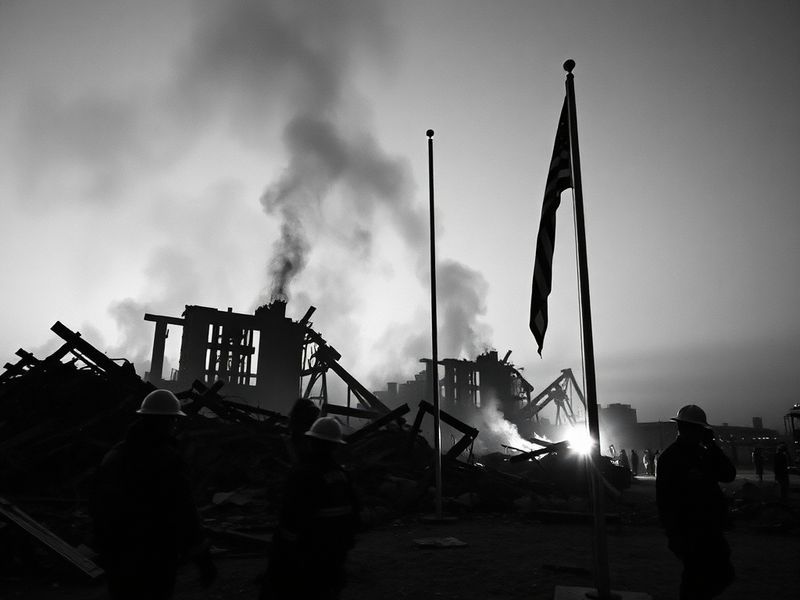
The Oklahoma City bombing remains one of the most devastating terrorist attacks in U.S. history. On April 19, 1995, a homemade bomb hidden in a Ryder rental truck exploded outside the Alfred P. Murrah Federal Building, killing 168 people and injuring hundreds more. The attack was both a national tragedy and a turning point in how America viewed domestic terrorism.
The Attack and Its Immediate Aftermath
The explosion occurred at 9:02 a.m., reducing much of the nine-story building to rubble. Emergency responders rushed to the scene, but the scale of destruction made rescue efforts painfully slow. Rescue dogs, heavy machinery, and volunteers worked for days, often pulling survivors and victims from the wreckage. The attack left a scar on Oklahoma City that would take years to heal.
Within hours, authorities identified Timothy McVeigh as the primary suspect. His arrest came just 90 minutes after the blast, following a traffic stop for a missing license plate. McVeigh, a decorated Gulf War veteran, had ties to anti-government extremist movements. His co-conspirator, Terry Nichols, was arrested days later in Kansas. Together, they had plotted the bombing as retaliation for the federal government’s handling of the Ruby Ridge siege and the Waco siege.
Investigation and Legal Consequences
The FBI’s investigation, codenamed OKBOMB, became one of the most extensive in history. Over 28,000 interviews were conducted, and more than three tons of evidence were gathered. The trial of McVeigh and Nichols began in 1997, with prosecutors presenting a mountain of evidence linking them to the attack. McVeigh was convicted on 11 federal counts, including conspiracy and use of a weapon of mass destruction. He was sentenced to death and executed in 2001. Nichols received a life sentence without parole.
The legal proceedings revealed disturbing details about the bombers’ motives. McVeigh and Nichols were deeply influenced by extremist ideologies that viewed the federal government as tyrannical. Their actions were not just random acts of violence but calculated strikes against symbols of authority. The trial also exposed gaps in law enforcement’s ability to track domestic extremists, sparking reforms in counterterrorism efforts.
Key Takeaways from the Investigation
- McVeigh and Nichols were motivated by anti-government extremism, particularly in response to federal actions like Ruby Ridge and Waco.
- The bombing was meticulously planned over more than a year, with detailed preparations for the attack.
- The FBI’s OKBOMB investigation set new standards for handling large-scale domestic terrorism cases.
- The trial highlighted the need for better intelligence-sharing between federal and local law enforcement.
Broader Implications for American Society
The Oklahoma City bombing forced America to confront the threat of domestic terrorism in ways never seen before. Before 9/11, it was the deadliest terrorist attack on U.S. soil. The attack shattered the illusion that terrorism was solely an international problem, revealing vulnerabilities within America’s own borders. It also exposed the deep divisions between government authorities and certain extremist groups, many of which continue to thrive today.
In the years following the bombing, federal agencies like the FBI and ATF underwent significant changes. The Antiterrorism and Effective Death Penalty Act of 1996 was passed in response, expanding law enforcement’s powers to investigate and prosecute domestic terrorists. The Oklahoma City National Memorial & Museum was later established to honor the victims and educate the public about the dangers of extremism.
Yet, the legacy of the bombing extends beyond policy changes. It served as a grim reminder of the fragility of national security and the ease with which hatred can manifest into violence. The attack also sparked conversations about the role of militias and extremist ideologies in American culture, topics that remain relevant in today’s polarized political climate.
Lessons Learned and Unfinished Business
Thirty years later, the Oklahoma City bombing still resonates as a cautionary tale. It demonstrated how quickly a single act of violence could alter the national psyche, leaving lasting emotional and political scars. While the immediate threat posed by McVeigh and Nichols has been neutralized, the ideologies that fueled their actions persist. Domestic extremism remains a persistent challenge, with groups like the Oath Keepers and Proud Boys carrying on the legacy of anti-government sentiment.
For survivors and the families of victims, the pain of that day has never fully faded. The Oklahoma City National Memorial stands as a solemn reminder of the lives lost and the resilience of a community that refused to be broken. Yet, the bombing also serves as a call to vigilance. It challenges every generation to remain alert to the dangers of extremism, whether foreign or domestic.
As we reflect on the Oklahoma City bombing, it is essential to remember not just the tragedy itself, but the lessons it imparts. Vigilance, unity, and a commitment to addressing the root causes of extremism are critical to ensuring such an event never happens again.
For further reading on domestic terrorism and its impact on American policy, visit our News and Analysis sections.