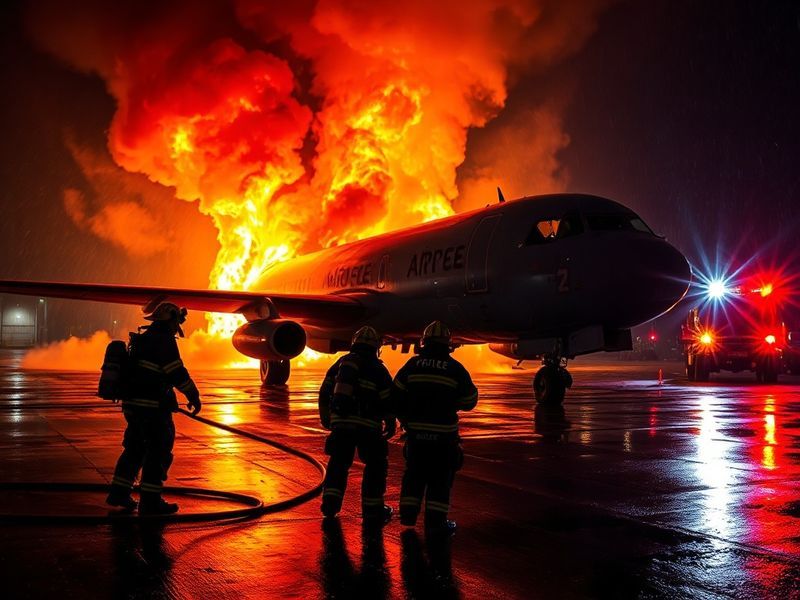
The recent fire at the US Air Force base in Fairford, England, has drawn international attention not only for its scale but also for its potential impact on global military logistics. Fairford is one of the few locations in Europe capable of hosting US military aircraft, including the B-52 Stratofortress and B-2 Spirit bombers, making it a critical node in transatlantic defense operations. The incident, which occurred on a quiet Tuesday evening, has raised concerns about the base’s operational readiness and the broader implications for NATO’s strategic positioning.
Local authorities were quick to respond, with firefighters battling the blaze for several hours before bringing it under control. Eyewitnesses described the scene as intense, with flames reaching significant heights and thick plumes of smoke visible for miles. The fire reportedly started in a hangar housing aircraft maintenance equipment, though the exact cause remains under investigation. Military officials have not yet released detailed information about the damage, but initial reports suggest that critical infrastructure was spared.
The Role of Fairford in Global Military Operations
RAF Fairford has served as a key staging point for US military operations since the Cold War era. Its strategic location in Gloucestershire, England, provides a forward operating base for long-range bombers and refueling tankers, enabling rapid deployment across Europe, Africa, and the Middle East. The base’s runway is one of the longest in the UK, capable of accommodating even the largest military aircraft.
Beyond its logistical importance, Fairford has played a pivotal role in recent conflicts, including operations in Iraq and Afghanistan. Its proximity to potential hotspots in Eastern Europe and the Middle East makes it an indispensable asset for rapid response scenarios. The fire’s timing—amid rising geopolitical tensions—has led to speculation about how the incident might affect NATO’s deterrence strategy.
Global Reactions and Military Preparedness
NATO allies have closely monitored the situation, with several governments issuing statements of support for the US and the UK. The incident has underscored the vulnerabilities of critical military infrastructure, prompting discussions about contingency planning and resource allocation. In a press briefing, a NATO spokesperson emphasized the alliance’s commitment to maintaining operational readiness across all member states.
Meanwhile, military analysts have begun assessing the long-term implications of the fire. Some experts suggest that even minor disruptions at Fairford could have cascading effects on global military logistics, particularly in regions where US forces are already stretched thin. The incident has also reignited debates about the resilience of Western defense networks in the face of climate change, cyber threats, and aging infrastructure.
Investigating the Cause: What We Know So Far
Investigators from the US Air Force and the UK’s Health and Safety Executive are collaborating to determine the fire’s origin. Early theories point to an electrical malfunction or mechanical failure within the hangar, though arson has not been ruled out. The base’s fire suppression systems were reportedly operational, but the intensity of the blaze may have overwhelmed them.
As the investigation unfolds, questions about maintenance protocols and safety standards have come to the forefront. Military bases worldwide adhere to stringent regulations, but human error and equipment malfunctions remain persistent risks. The Fairford incident could serve as a case study for improving fire prevention measures in high-risk environments.
Broader Implications for Military Infrastructure
The fire at Fairford highlights a broader trend: the increasing strain on aging military infrastructure. Many US and NATO bases were constructed during the mid-20th century and are now facing the dual pressures of deferred maintenance and evolving operational demands. Climate change, in particular, poses a growing threat, with extreme weather events becoming more frequent and severe.
To address these challenges, military leaders have begun exploring innovative solutions, including modular construction, renewable energy integration, and AI-driven predictive maintenance. The Fairford incident may accelerate these efforts, serving as a catalyst for modernization across the defense sector.
Looking Ahead: What’s Next for Fairford?
In the coming weeks, US Air Force officials are expected to release a detailed assessment of the damage and outline a timeline for recovery. While the base may remain operational, the fire could lead to temporary reductions in aircraft deployments or training exercises. For now, Fairford’s role in global military operations remains intact, but the incident serves as a reminder of the fragility of even the most robust systems.
As the world watches, the Fairford fire underscores the need for vigilance in maintaining critical infrastructure. Whether through technological innovation or policy reforms, the lessons learned from this incident could shape the future of military logistics for decades to come.
For more insights into global military operations and defense strategies, explore our News section. To understand how geopolitical events impact local communities, visit our Analysis page.