US-Iran Relations: History, Conflict, and Future Prospects
“`html
US-Iran Relations: A Complex History of Tension and Diplomacy
The relationship between the United States and Iran has been one of the most intricate and consequential diplomatic dynamics of the past half-century. From the 1953 coup that reshaped Iran’s government to the 2015 nuclear deal and its subsequent collapse, the two nations have navigated a fraught partnership marked by mutual distrust, strategic rivalry, and occasional glimpses of cooperation.
This history is not merely a backdrop but an active force shaping current geopolitical realities. Sanctions, military posturing, and proxy conflicts have all played roles in defining what a future US-Iran relationship might look like. Understanding this dynamic requires examining key moments, ideological clashes, and the persistent challenges that continue to define bilateral ties.
The 1953 Coup and the Roots of Distrust
The origins of modern US-Iran tensions trace back to the 1953 coup orchestrated by the CIA and British intelligence. The operation, codenamed Operation Ajax, overthrew Iran’s democratically elected Prime Minister Mohammad Mossadegh after he nationalized the country’s oil industry. This move was driven largely by Western interests in maintaining control over Iran’s vast petroleum resources.
The coup reinstated the Shah, Mohammad Reza Pahlavi, who ruled Iran as an authoritarian monarch aligned with the United States. Despite his oppressive regime, the Shah’s government was a key US ally during the Cold War, providing a buffer against Soviet influence in the region. However, widespread discontent with his rule culminated in the 1979 Islamic Revolution, which brought Ayatollah Ruhollah Khomeini to power and established an anti-Western theocracy.
The revolutionaries seized the US embassy in Tehran, holding 52 American diplomats hostage for 444 days. This crisis severed diplomatic ties and cemented a narrative of mutual enmity that persists to this day. The hostage crisis became a foundational trauma for American policymakers, shaping perceptions of Iran as an untrustworthy and hostile actor.
Nuclear Ambitions and Failed Diplomacy
The issue of Iran’s nuclear program has been a central flashpoint in US-Iran relations for decades. International concerns about Iran’s uranium enrichment capabilities grew in the early 2000s, leading to a series of United Nations sanctions. Iran maintained its program was for peaceful civilian purposes, while Western powers suspected it was pursuing nuclear weapons capability.
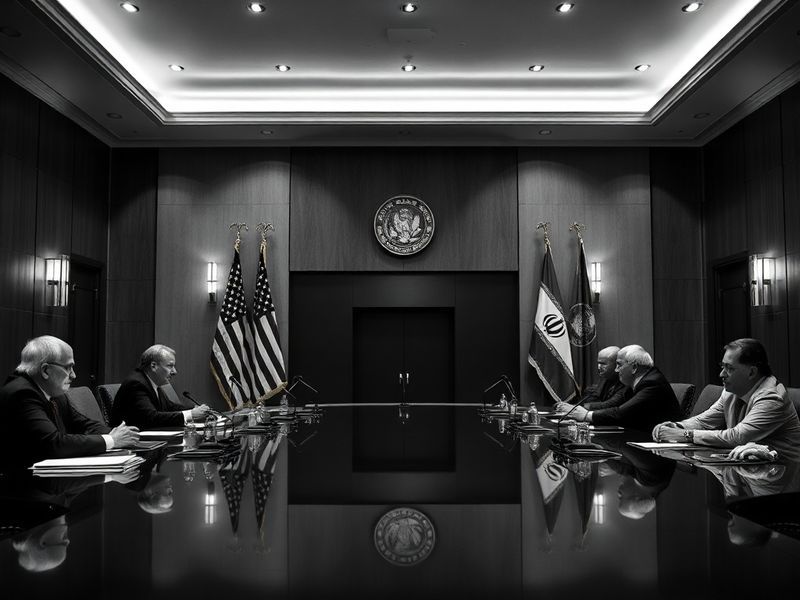
After years of negotiation, the Joint Comprehensive Plan of Action (JCPOA), commonly known as the Iran nuclear deal, was signed in 2015. The agreement, struck between Iran and the P5+1 group (the five permanent members of the UN Security Council plus Germany), lifted economic sanctions in exchange for strict limits on Iran’s nuclear activities and enhanced inspections by the International Atomic Energy Agency (IAEA).
For a brief period, the deal appeared to ease tensions. Iran’s oil exports increased, and foreign investment began returning to the country. However, the political landscape in both nations shifted dramatically. In 2018, then-President Donald Trump withdrew the United States from the JCPOA, reimposing harsh sanctions and labeling Iran’s Islamic Revolutionary Guard Corps (IRGC) as a terrorist organization.
The Trump administration’s “maximum pressure” campaign sought to force Iran back to the negotiating table through economic strangulation. Instead, Iran responded by gradually breaching the deal’s restrictions, enriching uranium to higher levels and reducing IAEA monitoring. The Biden administration has expressed willingness to rejoin the deal but faces significant domestic and international hurdles.
Key Provisions of the JCPOA
- Iran agreed to reduce its uranium enrichment levels by 98% and limit stockpiles to 300 kilograms of low-enriched uranium.
- All existing nuclear-related sanctions imposed by the UN, US, and EU were lifted in exchange for Iran’s compliance.
- The deal included a sunset clause, with some restrictions set to expire in 15 years, which critics argued allowed Iran to eventually resume enrichment.
- Inspectors from the IAEA gained unprecedented access to Iranian nuclear sites.
Proxy Conflicts and Regional Power Struggles
Beyond the nuclear issue, US-Iran relations have been defined by their involvement in regional proxy conflicts. Both nations support opposing sides in multiple theaters, including Syria, Yemen, Iraq, and Lebanon. Iran’s support for groups like Hezbollah in Lebanon and the Houthis in Yemen is framed as resistance against US influence and Israeli aggression.
The US, in turn, has backed regional allies such as Saudi Arabia and Israel, both of which view Iran as an existential threat. The 2020 US assassination of Iranian General Qasem Soleimani in Baghdad escalated tensions to their highest level in years. Soleimani, commander of the IRGC’s Quds Force, was a key figure in Iran’s regional strategy and his death sparked outrage in Iran and calls for retaliation.
In response, Iran launched missile strikes on US military bases in Iraq. While no American lives were lost, the attack demonstrated Iran’s capacity for asymmetric warfare and its willingness to confront the US directly. The incident underscored the dangers of miscalculation in a region where both sides have invested heavily in military posturing.
These proxy conflicts have turned nations like Iraq and Syria into battlegrounds for indirect confrontation. In Iraq, where the US maintains a military presence, Iran-backed militias have repeatedly targeted American forces. The political landscape in Iraq remains deeply divided between pro-Iran factions and those seeking closer ties with Washington.
Human Rights, Sanctions, and Civil Society
Human rights concerns have further complicated US-Iran relations. Iran’s government has faced widespread criticism for its treatment of political dissidents, women, and ethnic minorities. The 2022 death of Mahsa Amini in police custody, following her arrest for “improper hijab,” sparked nationwide protests and a brutal government crackdown. The US and other Western nations have condemned these actions and imposed sanctions on Iranian officials.
On the other side, US sanctions have devastated Iran’s economy, contributing to shortages of food, medicine, and fuel. While intended to pressure the regime, the sanctions have also harmed ordinary Iranians, deepening resentment toward American policy. Human rights organizations argue that broad sanctions often punish civilians without effectively changing government behavior.
The humanitarian impact of sanctions has become a point of contention in international diplomacy. The COVID-19 pandemic further exposed the vulnerabilities of Iran’s healthcare system under economic pressure. Despite these challenges, Iran has maintained robust public health responses, though with limited access to international medical supplies.
Civil society in Iran remains vibrant but repressed. Despite government censorship and surveillance, activists continue to challenge state policies, particularly regarding women’s rights and environmental issues. The US has occasionally highlighted these struggles, though critics argue that geopolitical interests often overshadow human rights concerns.
Looking Ahead: Possible Paths Forward
The future of US-Iran relations remains uncertain. Several potential paths could define the coming years, each with significant implications for regional stability and global security.
One possibility is a return to the JCPOA framework, though this faces substantial obstacles. Iran’s leadership has signaled a willingness to negotiate, but its demands—including guarantees that future US administrations will not abandon the deal—complicate efforts. Meanwhile, regional allies like Israel and Saudi Arabia oppose any US rapprochement with Iran, fearing it would embolden Tehran.
Another scenario involves continued confrontation, with both sides doubling down on their current strategies. The US could expand sanctions or increase military presence in the Persian Gulf, while Iran may accelerate its nuclear activities or intensify proxy engagements. Such a path risks further escalation and potential conflict.
A third possibility is a gradual thaw in relations, driven by shared interests such as counterterrorism or regional stability. While unlikely in the near term, smaller confidence-building measures—such as prisoner exchanges or humanitarian cooperation—could lay the groundwork for broader dialogue.
Regardless of the path chosen, the stakes remain high. A misstep in diplomacy or a miscalculation in military strategy could have catastrophic consequences. The US and Iran must navigate a delicate balance between asserting their interests and avoiding a direct confrontation that neither truly seeks.
For now, the relationship remains in a state of frozen conflict, suspended between hostility and the possibility of dialogue. The lessons of history suggest that lasting change will require more than just political will—it will demand courage, compromise, and a recognition that neither side can achieve its goals through confrontation alone.
As regional dynamics continue to evolve, the question is not whether the US and Iran will interact, but how. The answer to that question will shape the Middle East—and the world—for decades to come.