How NFL Draft Picks Shape Team Futures: Strategy & Success
“`html
NFL Draft Picks: How Teams Build for Success
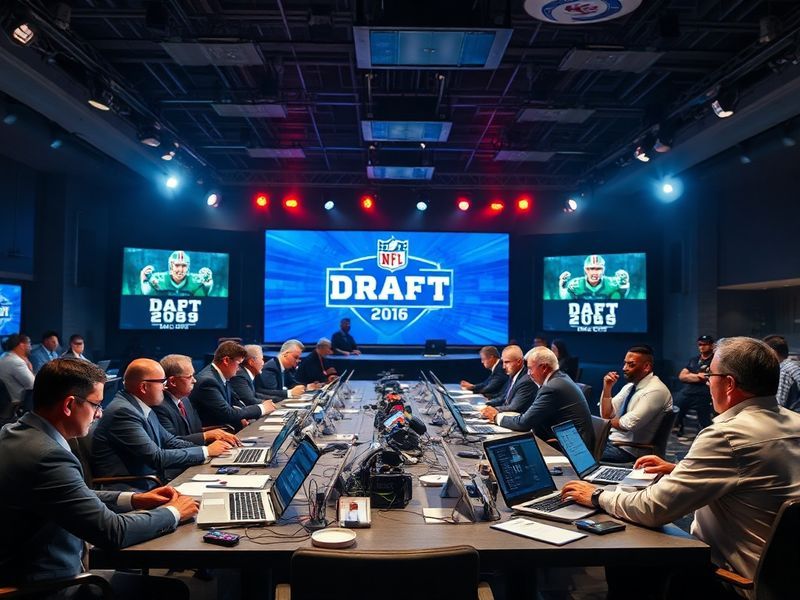
Every April, the NFL Draft transforms the league’s competitive landscape. Teams invest millions in scouting, strategy, and selection to secure the players who will define their future. The process blends analytics, intuition, and high-stakes decision-making, making it one of sports’ most fascinating annual events.
The Role of NFL Draft Picks in Team Rebuilding
Draft picks are the lifeblood of NFL franchise renewal. Unlike free agency, where established stars command premium contracts, draft selections offer cost-controlled talent with long-term potential. Teams like the Jacksonville Jaguars and Chicago Bears have leveraged early-round picks to rebuild from the ground up, prioritizing positions of need such as offensive line or cornerback.
For smaller-market franchises, the draft represents their best chance to compete. The NFL salary cap system limits spending on veteran players, forcing front offices to rely on homegrown talent. Successful drafting requires balancing risk and reward—selecting a sure-fire prospect versus a high-ceiling project with developmental concerns.
Positional Value in the Draft
Not all draft positions carry equal weight. Quarterbacks, for instance, often dictate a team’s draft strategy. Franchises like the New England Patriots and Green Bay Packers have drafted QBs early to secure franchise pillars. Meanwhile, teams with established QBs prioritize trenches—offensive and defensive lines—which are critical to both run and pass success.
The first round typically features a mix of positions, but recent trends show an emphasis on:
- Edge rushers: Vital for pass rush in modern defensive schemes
- Cornerbacks: Teams prioritize coverage specialists to counter aggressive passing attacks
- Offensive tackles: Protecting QBs is non-negotiable in high-pressure divisions
- Wide receivers: Speed and route-running ability can instantly revitalize offenses
Draft Strategy: Analytics vs. Instinct
Modern NFL front offices blend data-driven decision-making with traditional scouting. The league’s embrace of analytics has led to a deeper understanding of player efficiency, injury history, and positional value. Teams like the Baltimore Ravens and San Francisco 49ers have built reputations for marrying analytics with on-field performance.
However, instinct still plays a role. The Kansas City Chiefs famously drafted Patrick Mahomes in 2017 despite concerns about his college production. His subsequent rise underscores the unpredictability of the draft—a reminder that no model is foolproof. Scouts evaluate intangibles like work ethic, football IQ, and adaptability, traits that don’t always translate to measurable metrics.
The Trade-Down Phenomenon
Teams frequently trade draft positions to accumulate additional picks or secure a higher-value player. The Philadelphia Eagles mastered this approach, trading down in multiple drafts to gather surplus value. In 2023, the Lions moved back from the 6th overall pick to the 9th, ultimately selecting a guard who anchored their offensive line.
Trade-downs often involve a delicate negotiation process. Front offices must weigh:
- Current roster needs versus long-term depth
- Future draft capital versus immediate impact
- Player-specific fit within their system
Draft Day Surprises and Busts
The NFL Draft is as much about avoiding mistakes as it is about making smart selections. History is littered with cautionary tales: busts like JaMarcus Russell (1st overall, 2007) or Ryan Leaf (2nd overall, 1998) serve as reminders of the stakes involved. Conversely, late-round gems like Tom Brady (199th overall, 2000) prove that value exists beyond the first round.
In 2022, the Lions selected Aidan Hutchinson with the 2nd overall pick, a move that drew criticism due to his limited sack production in college. Yet, Hutchinson’s rookie-year performance justified the selection, tallying 9.5 sacks and earning Defensive Rookie of the Year honors. This illustrates how draft narratives evolve quickly based on real-world performance.
Cultural Impact of High-Profile Picks
When a franchise selects a local hero or a transcendent talent, the draft transcends sports. The New York Jets’ selection of Aaron Rodgers in 2005 energized a fanbase starved for success. Similarly, the Cleveland Browns’ 2021 pick of Greg Newsome II, a Northwestern product, resonated with regional pride and signaled a commitment to defensive improvement.
High-profile selections also influence merchandise sales, ticket demand, and even real estate markets in team cities. The Indianapolis Colts’ 2012 draft of Andrew Luck revitalized downtown development, with businesses citing fan enthusiasm as a catalyst for growth.
The Future of the NFL Draft
The draft’s evolution reflects broader changes in sports and technology. Virtual scouting, driven by the COVID-19 pandemic, has become standard practice. Teams now rely on 3D motion capture, biometric tracking, and AI-driven performance projections to evaluate prospects. The tech integration in scouting mirrors advancements seen in other sports leagues, where data analytics have reshaped player evaluation.
Another emerging trend is the focus on “athletic testing”—drills like the 40-yard dash and vertical jump that measure raw physical traits. While these metrics don’t replace film study, they provide a standardized way to compare prospects across college programs. The Dallas Cowboys, under executive Will McClay, have emphasized athletic testing in their scouting process, leading to the drafting of players like CeeDee Lamb.
The International Expansion of the Draft
The NFL has increasingly looked overseas for talent, with international players now being selected in every draft class. The 2023 draft featured the first German-born player (Nolan Smith) and the first Nigerian-born player (Olu Oluwatimi) taken in the first round. This global approach reflects the league’s ambition to grow its international footprint while diversifying talent pipelines.
Teams like the New England Patriots and Las Vegas Raiders have scouted players from Europe and Australia, betting on raw athleticism and untapped potential. As the NFL expands into new markets, international draft picks may become more commonplace, reshaping the league’s cultural and competitive landscape.