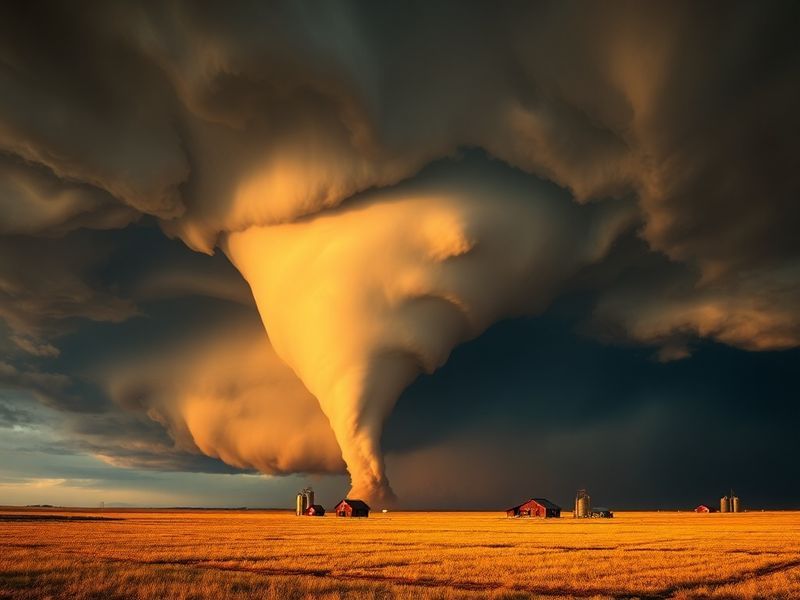
pds tornado watch
“`html
PDS Tornado Watch: Understanding the Risk and Staying Safe
Severe weather alerts demand attention, especially when they involve the rare PDS Tornado Watch. Here’s what you need to know about these high-risk warnings and how to prepare.
The PDS Tornado Watch: What It Means
A PDS Tornado Watch is not your typical severe weather alert. The acronym “PDS” stands for “Particularly Dangerous Situation,” a designation reserved for the most extreme tornado threats. These watches are issued by the National Weather Service (NWS) when conditions are favorable for tornadoes that could produce significant damage, injuries, or fatalities.
Unlike standard tornado watches, which cover broader areas and longer timeframes, PDS watches are rare and highly specific. They indicate an elevated risk of long-lived, destructive tornadoes. The NWS uses this classification sparingly, typically only a few times per year across the entire country. When a PDS Tornado Watch is issued, it signals that residents should take immediate action to prepare for life-threatening weather.
The criteria for a PDS Tornado Watch include:
- An environment capable of supporting violent, long-track tornadoes (EF4 or EF5 on the Enhanced Fujita Scale)
- Strong wind shear and instability in the atmosphere
- Historical evidence of tornado outbreaks in the region
Historical Context: Why PDS Watches Matter
PDS Tornado Watches have been issued for some of the most notorious tornado events in U.S. history. For example, the April 2011 Super Outbreak, which produced 362 tornadoes across 21 states, included multiple PDS Tornado Watches. Similarly, the 2013 Moore, Oklahoma tornado—an EF5 that killed 24 people—occurred under a PDS Tornado Watch.
These watches are not just technical distinctions; they serve as a clear warning to communities. Research shows that when a PDS Tornado Watch is issued, the likelihood of a tornado-related fatality increases significantly compared to standard watches. The urgency embedded in the PDS designation is designed to prompt immediate action, from seeking shelter to monitoring real-time updates.
However, the rarity of PDS watches can also lead to complacency. Because they occur infrequently, some residents may underestimate the threat. Meteorologists emphasize that even if a PDS watch has never been issued in a particular area, the risk of a devastating tornado is always present in Tornado Alley and other high-risk regions.
How to Prepare When a PDS Tornado Watch Is Issued
When a PDS Tornado Watch is activated, time is of the essence. Unlike a warning—which indicates a tornado has been spotted—watches cover larger areas and longer timeframes (typically 6-8 hours). This gives residents a critical window to prepare. Here’s how to respond:
- Stay Informed: Monitor weather alerts via NOAA Weather Radio, local news, or trusted weather apps. Ensure your phone’s emergency alerts are enabled.
- Identify Your Shelter: Basements, storm shelters, or interior rooms on the lowest floor of a sturdy building are safest. Avoid mobile homes and vehicles.
- Prepare an Emergency Kit: Include water, non-perishable food, medications, flashlights, batteries, and a first-aid kit. Have helmets or sturdy shoes to protect against debris.
- Secure Loose Items: Bring in outdoor furniture, grills, and other objects that could become projectiles in high winds.
- Plan for Pets and Vulnerable Individuals: Ensure pets have a safe space, and assist elderly neighbors or those with disabilities.
It’s also wise to practice your tornado drill with family members. Know the difference between a watch and a warning: a watch means conditions are favorable for tornadoes, while a warning means a tornado has been spotted or indicated by radar. When a warning is issued, take shelter immediately.
The Broader Implications of PDS Tornado Watches
PDS Tornado Watches highlight the evolving nature of severe weather forecasting. Advances in meteorology, such as high-resolution modeling and dual-polarization radar, have improved the accuracy of these alerts. However, the increasing frequency of extreme weather events—fueled by climate change—raises questions about how prepared communities truly are.
Urban sprawl and aging infrastructure in tornado-prone regions also exacerbate risks. For example, the 2021 tornado that struck Mayfield, Kentucky, demonstrated how densely populated areas can suffer catastrophic damage when a violent tornado intersects with vulnerable structures. PDS watches often precede such events, underscoring the need for resilient building codes and public education.
Climate scientists warn that rising global temperatures could lead to more frequent and intense tornado outbreaks, particularly in the southeastern U.S. This trend makes PDS Tornado Watches not just a meteorological tool but a critical component of disaster mitigation. Communities that invest in early warning systems, community shelters, and emergency planning are better positioned to survive these events.
“A PDS Tornado Watch is a wake-up call. It’s the weather service’s way of saying, ‘This isn’t just another storm—this could be life-altering.’ Preparation saves lives, and every second counts when a tornado is bearing down.” — Dr. Sarah Mitchell, Meteorologist and Severe Weather Expert
Final Thoughts: Staying Ahead of the Storm
PDS Tornado Watches are rare but represent the most severe tornado threats facing the U.S. Understanding what they mean—and how to respond—can make the difference between safety and tragedy. As severe weather patterns evolve, staying informed and prepared is more important than ever.
For those living in tornado-prone regions, regular drills, investments in safe shelter, and a proactive approach to weather alerts are non-negotiable. The next time a PDS Tornado Watch is issued, remember: it’s not just a warning—it’s a call to action.
Stay safe, stay prepared, and know the risks before the storm arrives.
—
METADATA
{
“title”: “PDS Tornado Watch: What It Means and How to Stay Safe”,
“metaDescription”: “Learn what a PDS Tornado Watch means, why it’s issued, and how to prepare for the most severe tornado threats.”,
“categories”: [“News”, “Science”],
“tags”: [“tornado watch”, “PDS alert”, “severe weather”, “storm safety”, “tornado preparedness”],
“imageDescription”: “A dark, stormy sky with a massive supercell thunderstorm forming a rotating wall cloud, indicating potential tornado development. The scene includes power lines and a rural road in the foreground, with a tense, ominous mood emphasizing the urgency of severe weather.”
}
—END METADATA—
“`