SpaceX’s Falcon Heavy: How a 2018 Launch Changed Space Travel Forever
“`html
SpaceX’s Falcon Heavy Rocket Launch: A New Era in Space Exploration
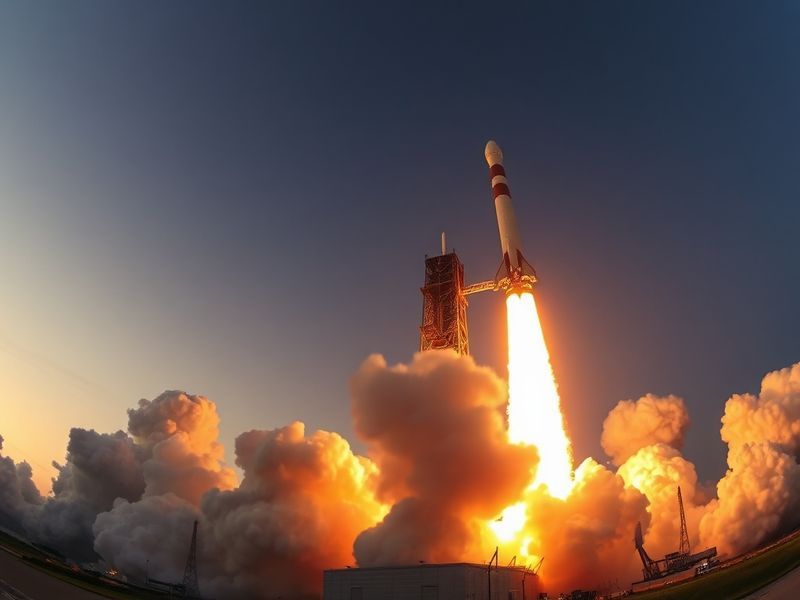
On February 6, 2018, SpaceX achieved a milestone that sent ripples through the aerospace industry and beyond. The Falcon Heavy, the world’s most powerful operational rocket, roared to life at Kennedy Space Center’s Launch Complex 39A, the same pad that once sent astronauts to the moon. The launch wasn’t just a technical triumph; it was a statement. With a payload consisting of Elon Musk’s personal Tesla Roadster—complete with a spacesuit-clad mannequin named “Starman” at the wheel—the mission captured imaginations worldwide. What followed was more than spectacle; it was a glimpse into the future of space travel.
The Technical Marvel Behind the Falcon Heavy
The Falcon Heavy isn’t just a bigger rocket; it’s a carefully engineered system designed to push the boundaries of what’s possible. At its core, the rocket is essentially three Falcon 9 rockets strapped together, creating a behemoth with 27 Merlin engines that generate over 5 million pounds of thrust at liftoff. This configuration allows the Falcon Heavy to lift nearly 64 metric tons into low Earth orbit—more than twice the capacity of any other operational rocket.
One of the most critical innovations is the rocket’s reusable design. Both the central core and the two side boosters are designed to return to Earth after launch, landing either on drone ships at sea or back at the launch site. This reusability is key to SpaceX’s mission of reducing the cost of spaceflight. By recovering and refurbishing rocket components, SpaceX aims to slash the price tag of orbital missions from hundreds of millions to tens of millions of dollars.
During the 2018 test flight, the two side boosters made a synchronized landing at Cape Canaveral, while the central core attempted to land on a drone ship. Though the central core missed its mark and crashed into the ocean, the success of the side boosters demonstrated the viability of the rocket’s return-to-flight profile. Subsequent missions have refined this process, with SpaceX now routinely recovering all three boosters.
Key Features of the Falcon Heavy
- Payload Capacity: Up to 64 metric tons to low Earth orbit, 26 metric tons to Mars, or 16 metric tons to Pluto.
- Reusability: All three boosters are designed to be recovered and reflown, drastically reducing mission costs.
- Engine Configuration: 27 Merlin engines in a triple-core layout, providing unparalleled thrust and redundancy.
- Fairing Size: A 13.1-meter-tall payload fairing, capable of housing oversized satellites or future crewed missions.
- Cost Efficiency: Launch costs estimated at around $90 million, significantly lower than competitors like the Delta IV Heavy, which costs over $300 million per launch.
Why This Launch Matters Beyond the Launchpad
The Falcon Heavy’s debut wasn’t just about proving a rocket could work—it was about demonstrating that commercial spaceflight could take on missions once reserved for government agencies. The launch opened doors for a range of possibilities, from deploying massive satellites to sending scientific payloads to the outer planets. It also reignited public interest in space exploration, proving that spaceflight could be both ambitious and accessible.
One of the most immediate impacts has been on the satellite industry. Traditional rockets struggle to lift heavy payloads to geostationary orbit, but the Falcon Heavy’s capacity allows for direct insertion of large satellites, reducing the need for on-orbit maneuvers that consume fuel and shorten a satellite’s lifespan. Companies like ViaSat and Arabsat have already booked Falcon Heavy launches to deploy their next-generation communication satellites.
Beyond Earth, the Falcon Heavy has implications for deep-space missions. While SpaceX’s Starship is poised to take over many of these roles, the Falcon Heavy remains a critical asset for now. NASA’s Psyche mission, which aims to explore a metal-rich asteroid, launched aboard a Falcon Heavy in 2023. The rocket’s power also makes it a candidate for future crewed missions to the moon or Mars, though SpaceX has not yet announced such plans.
The Broader Implications for Space Exploration
The success of the Falcon Heavy has forced a reevaluation of what’s possible in spaceflight. Competitors like Blue Origin and United Launch Alliance are developing heavy-lift rockets to keep pace, while international players like China and Europe are accelerating their own programs. The commercial space race is no longer a two-horse competition; it’s a full-blown industry transformation.
For SpaceX, the Falcon Heavy is a stepping stone. The company’s ultimate goal is to make life multiplanetary, and the Falcon Heavy is a tool to help achieve that vision. By demonstrating the rocket’s reliability and cost-effectiveness, SpaceX has positioned itself as a leader in the new space economy. This has attracted customers from around the world, from commercial satellite operators to government space agencies.
However, the Falcon Heavy isn’t without its challenges. The rocket’s complexity means higher development and operational costs compared to smaller vehicles. SpaceX has also faced criticism for the environmental impact of its launches, particularly the carbon footprint of rocket fuel. While the company has made strides in reducing emissions and improving reusability, these concerns remain part of the broader conversation about the future of spaceflight.
The Road Ahead for the Falcon Heavy
Looking ahead, the Falcon Heavy is poised to play a central role in several high-profile missions. Here are some of the key developments to watch:
- Lunar and Martian Ambitions: While Starship is the long-term focus for crewed missions, the Falcon Heavy could serve as a bridge, launching precursor missions or cargo to the moon and Mars.
- Military and Government Contracts: The U.S. Space Force and other agencies are increasingly turning to commercial providers for heavy-lift capabilities, and the Falcon Heavy is well-positioned to secure these contracts.
- Interplanetary Science Missions: NASA and other organizations are exploring ambitious missions to the outer solar system, where the Falcon Heavy’s payload capacity could be a game-changer.
- Commercial Space Stations: Companies like Axiom Space and Orbital Reef are planning private space stations, and the Falcon Heavy could be the workhorse for deploying their modules.
Despite its successes, the Falcon Heavy faces a crowded field. The United Launch Alliance’s Vulcan Centaur and Blue Origin’s New Glenn are both in development, promising even more capabilities. However, SpaceX’s head start and proven track record give it a significant advantage in the race to secure contracts and customers.
Conclusion: A Rocket That Changed the Game
The Falcon Heavy’s 2018 launch was more than a technical achievement; it was a cultural moment. It proved that spaceflight could be bold, innovative, and even playful. By pushing the limits of what’s possible, SpaceX has redefined the role of private companies in space exploration. The Falcon Heavy may not be the final answer, but it’s a critical chapter in the story of humanity’s journey beyond Earth.
As we look to the future, the lessons learned from the Falcon Heavy will shape the next generation of rockets. Whether it’s the fully reusable Starship, a new breed of heavy-lift vehicles, or entirely different propulsion systems, the spirit of innovation embodied by the Falcon Heavy will continue to drive progress. For now, it stands as a testament to what can be achieved when ambition meets engineering.
For those eager to follow the next chapter in space exploration, keep an eye on Dave’s Locker Technology section for updates on rockets, missions, and the companies shaping the final frontier. And for deeper dives into the business of space, don’t miss our Business category, where we explore the economics behind the headlines.