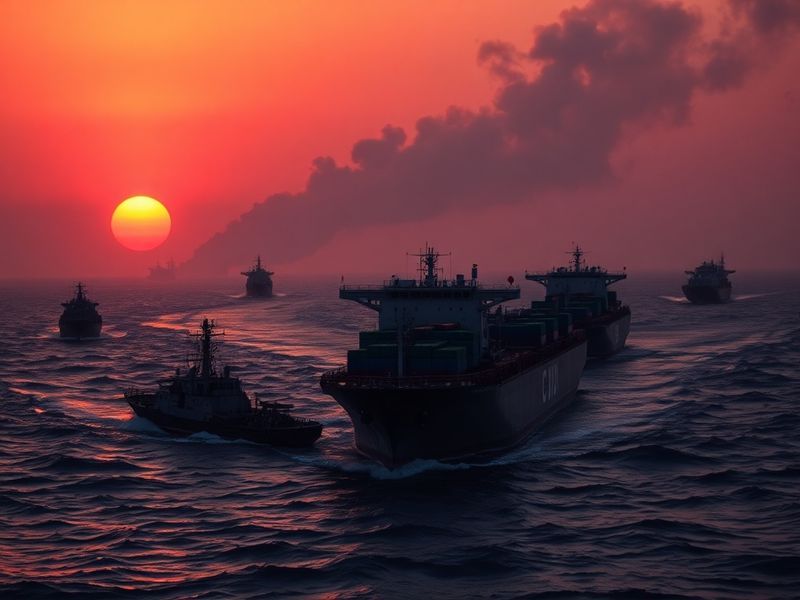
Strait of Hormuz Oil Shock: Why This Chokepoint Still Rules Global Energy
“`html
Strait of Hormuz Oil Shock: Why This Chokepoint Still Rules Global Energy
The Strait of Hormuz remains the world’s most critical oil chokepoint, a narrow waterway where geography and geopolitics collide. Roughly 20% of the world’s oil supply passes through this 21-mile-wide passage between Iran and Oman every single day. When tensions rise—whether through military posturing, sabotage, or blockades—the ripple effects are felt from Houston to Hong Kong.
Recent escalations have underscored how vulnerable global energy markets remain to disruptions in this region. In 2023 alone, drone strikes on tankers and Iranian naval drills near the strait sent oil prices soaring within hours. While the world debates renewable energy transitions, the Strait of Hormuz serves as a stark reminder that fossil fuel dependency persists—and with it, geopolitical leverage.
This article examines the Strait of Hormuz’s enduring role in global oil markets, the mechanisms of disruption, and what it means for energy security in an era of shifting power dynamics.
The Strait’s Strategic Importance: By the Numbers
The Strait of Hormuz isn’t just a geographic feature; it’s a pressure point for the global economy. According to the U.S. Energy Information Administration, about 21 million barrels of oil per day flowed through the strait in 2022—nearly one-fifth of global petroleum consumption. This makes it the single most critical maritime oil chokepoint on Earth.
- Daily Oil Flow: 21 million barrels (2022 data)
- Percentage of Global Oil Trade: ~20%
- Length of Strait: 21 nautical miles at narrowest point
- Bordering Nations: Iran, Oman, United Arab Emirates
- Key Exporting Countries: Saudi Arabia, Iraq, UAE, Kuwait, Iran
The strait’s significance is magnified by the concentration of oil infrastructure around it. Major Saudi oil fields like Ghawar and Khurais rely on Hormuz-bound tankers to reach Asian markets. Meanwhile, Qatar’s massive liquefied natural gas (LNG) exports depend on the strait for shipments to Europe and Asia. A prolonged closure or disruption would trigger immediate price spikes and supply shortages.
Mechanisms of Disruption: How Tensions Translate to Oil Shocks
Disruptions in the Strait of Hormuz don’t require a full-scale blockade to cause market turmoil. Even minor incidents can send shockwaves through energy markets. The most common mechanisms include:
- Military Posturing: Iran has repeatedly threatened to close the strait during past crises, such as during the 1980s Iran-Iraq War and more recent tensions with the U.S.
- Sabotage and Attacks: Unclaimed drone strikes on tankers in 2019 temporarily removed 5.7 million barrels of oil per day from the market.
- Mine Threats: Mines deployed during the 1980s Tanker War halved oil shipments through the strait for months.
- Regulatory Restrictions: Iran has threatened to bar certain tankers from transiting the strait over sanctions compliance.
The 2019 attack on Saudi Aramco’s Abqaiq facility—linked to Iranian-backed Houthi rebels—removed 5.7 million barrels of oil per day from the market. Oil prices surged by 20% in two days, demonstrating how quickly localized incidents can escalate into global crises. Similarly, in 2021, an Israeli-linked cyberattack on an Iranian port disrupted fuel exports, though the full impact was mitigated by strategic stockpiles.
These incidents highlight a paradox: despite decades of warnings about oil dependency, the world remains unprepared for a prolonged Hormuz disruption. The International Energy Agency (IEA) estimates that even a three-month closure could remove 10 million barrels per day from the market—roughly 10% of global supply—triggering price spikes and economic slowdowns.
Geopolitical Chess: Who Holds the Leverage?
The Strait of Hormuz is a geopolitical chessboard where Iran, the U.S., and Gulf States play competing moves. Iran’s Revolutionary Guard has repeatedly demonstrated its ability to disrupt shipping, from seizing tankers to deploying anti-ship missiles. Meanwhile, the U.S. maintains a naval presence in Bahrain to ensure “freedom of navigation,” a euphemism for preventing Iranian interference.
For Gulf States like Saudi Arabia and the UAE, the strait is both a lifeline and a vulnerability. While they rely on Hormuz to export their oil, they also invest heavily in alternative routes—such as the Abu Dhabi Crude Oil Pipeline and the planned East-West Pipeline in Saudi Arabia—to bypass the strait in emergencies. These projects reduce but don’t eliminate their exposure.
China, the world’s largest oil importer, is particularly exposed. Roughly 40% of its oil imports transit the Strait of Hormuz. In response, Beijing has invested in ports in Pakistan (Gwadar) and Iran to create overland supply routes, though these remain underdeveloped. Meanwhile, India is expanding its strategic petroleum reserves and exploring pipelines from Russia to reduce Hormuz dependency.
The geopolitical jockeying extends to sanctions and diplomatic maneuvers. The U.S. has imposed sanctions on Iranian oil exports, but Iran retaliates by threatening to disrupt Hormuz shipping. Meanwhile, European nations grapple with balancing energy security against sanctions enforcement. The result is a fragile equilibrium where any miscalculation could trigger a crisis.
Energy Transition: A Distraction or a Solution?
Amid calls for renewable energy, the Strait of Hormuz remains a stubborn reminder of fossil fuel dependency. Proponents of green energy argue that reducing oil consumption would diminish the strait’s importance, but the transition is happening too slowly to eliminate immediate risks. The IEA’s Net Zero by 2050 scenario still projects oil demand above 75 million barrels per day by 2030—far above levels where Hormuz disruptions would be inconsequential.
Moreover, the energy transition itself creates new vulnerabilities. Electric vehicle (EV) supply chains depend on rare earth minerals, many of which are sourced from China and processed in facilities near critical shipping lanes. A disruption in the Strait of Malacca or Hormuz could still ripple through EV manufacturing.
For now, the world remains caught between two realities: the urgent need to reduce oil dependency and the stubborn persistence of oil as the backbone of the global economy. Until that changes, the Strait of Hormuz will retain its status as the world’s most dangerous chokepoint.
What’s Next for Oil Markets and the Strait?
The future of the Strait of Hormuz hinges on three key factors: Iran’s nuclear negotiations, U.S.-China rivalry, and the pace of the energy transition. If Iran reaches a nuclear deal with the West, sanctions could ease, reducing tensions in the strait. Conversely, a breakdown in talks could lead to further military posturing or even conflict.
The U.S.-China rivalry adds another layer of complexity. As China deepens ties with Iran through trade and infrastructure deals, the U.S. may face pressure to tighten or loosen its stance on Hormuz-related security. Meanwhile, China’s growing navy could eventually challenge U.S. dominance in the region, altering the balance of power.
For energy markets, the critical question is whether the world can reduce its reliance on Hormuz-bound oil before the next crisis strikes. Strategic stockpiles, alternative pipelines, and renewable energy adoption offer partial solutions, but none are foolproof. The 2022 Russian invasion of Ukraine demonstrated how quickly energy markets can spiral out of control—even when the source of disruption is thousands of miles away.
As long as oil remains a cornerstone of the global economy, the Strait of Hormuz will dictate the rhythm of energy security. The only question is whether policymakers will act before the next shock hits.
For more on global energy dynamics, explore our Energy category. To understand how geopolitical tensions shape markets, visit our Finance section.