<!DOCTYPE html>
<html lang="en">
<head>
    <meta charset="UTF-8">
    <meta name="viewport" content="width=device-width, initial-scale=1.0">
    <title>Apple Weather App Outage Leaves Users Searching for Forecasts</title>
</head>
<body>
    <article>
        <header>
            <h1>Apple Weather App Outage Leaves Users Searching for Forecasts</h1>
            <p><em>By Dave's Locker Staff</em></p>
            <p><time datetime="2024-05-15">May 15, 2024</time></p>
        </header>

        <section>
            <h2>Widespread Disruptions Reported Across iOS and macOS Devices</h2>
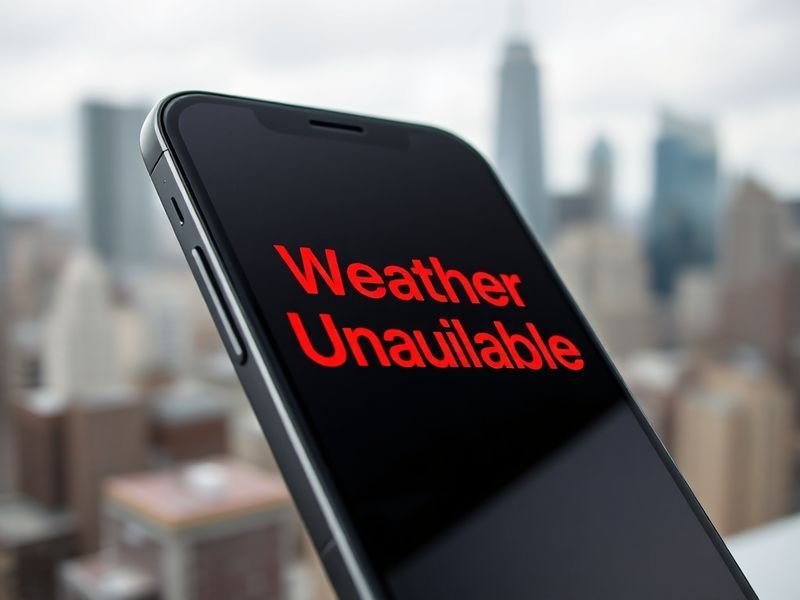
            <p>Multiple users reported issues with the Apple Weather app on Wednesday, describing it as either completely non-functional or delivering wildly inaccurate forecasts. Reports flooded social media platforms as people turned to alternative sources for weather updates ahead of potential storms in some regions.</p>

            <p>Initial investigations suggest the outage affects both iPhone and Mac users, with symptoms ranging from app crashes to missing data. Some users noted that the app would open but fail to load any weather information, while others experienced delays of several minutes before forecasts appeared. The timing of the disruption coincides with a period of volatile weather patterns across the United States, amplifying frustrations among those relying on Apple's service for daily planning.</p>

            <h3>Regional Impact Varies</h3>
            <p>The severity of the outage appears unevenly distributed. While some users in North America reported total failure, others in Europe and Asia experienced only minor delays. This regional disparity suggests the issue may stem from localized server problems rather than a universal system failure.</p>
        </section>

        <section>
            <h2>Apple's Response and Potential Causes</h2>
            <p>Apple has not yet issued an official statement regarding the weather app outage. However, the company's support channels have begun acknowledging the issue in recent hours. Users attempting to contact Apple Support through the company's website or the Support app have received automated responses directing them to "check back later for updates."</p>

            <p>Industry analysts point to several potential causes for the disruption. One possibility is a third-party data provider issue, as Apple Weather relies on multiple meteorological services to compile its forecasts. Another theory suggests a backend infrastructure problem within Apple's own systems, potentially related to recent iOS updates or API changes.</p>

            <h3>Historical Precedents</h3>
            <p>Apple Weather isn't the only service to experience recent outages. In March, a similar disruption affected Apple's News and Stocks apps, both of which rely on external data feeds. While these incidents may appear coincidental, they raise questions about the resilience of Apple's ecosystem when integrating third-party data sources.</p>

            <p>The company's approach to weather data differs from competitors like The Weather Channel or AccuWeather, which maintain proprietary forecasting models. Apple's reliance on aggregated data from multiple providers may create vulnerabilities when one source experiences problems.</p>
        </section>

        <section>
            <h2>User Reactions and Workarounds</h2>
            <p>Social media became a hub for frustrated users sharing their experiences. On Twitter, the hashtag #AppleWeatherDown trended briefly as people exchanged alternative weather apps and workarounds. Popular solutions included:</p>

            <ul>
                <li><strong>Weather.com</strong> - Many users praised the website's reliability and comprehensive data</li>
                <li><strong>AccuWeather</strong> - Noted for its accurate hourly forecasts and radar maps</li>
                <li><strong>Dark Sky</strong> - A favorite among iOS users for its hyperlocal predictions</li>
                <li><strong>System Weather</strong> - A lightweight alternative that pulls from multiple sources</li>
            </ul>

            <p>Some power users turned to command-line tools like <code>curl</code> to fetch weather data directly from APIs, demonstrating the lengths to which some will go to bypass Apple's systems. Others joked about resorting to traditional methods like looking out the window or consulting local news broadcasts.</p>

            <h3>Impact on Daily Life</h3>
            <p>For commuters and outdoor workers, the app's failure created immediate practical challenges. One construction foreman in Chicago reported that his team had to adjust schedules based on improvised forecasts from local news stations. Similarly, a delivery driver in Seattle noted that the outage affected his route planning during a particularly rainy afternoon.</p>
        </section>

        <section>
            <h2>Broader Implications for Apple's Ecosystem</h2>
            <p>This outage comes at a time when Apple is increasingly positioning itself as a comprehensive service provider. The company's subscription services, including Apple News+, Apple TV+, and Apple Fitness+, have expanded its role beyond hardware sales. When core services like Weather fail, it challenges the perception of Apple as a seamless ecosystem.</p>

            <p>More significantly, the incident highlights the risks of Apple's growing reliance on cloud services and external data partnerships. As the company expands its software offerings, maintaining uptime across these services becomes crucial to user trust. The Weather app outage may serve as a wake-up call for Apple to invest more heavily in redundant systems and fail-safes.</p>

            <h3>Competitive Landscape</h3>
            <p>Competitors have already capitalized on Apple's misfortune. The Weather Channel's app downloads spiked by 20% during the outage window, according to initial estimates. This presents an opportunity for third-party developers to win over disaffected Apple users, particularly if the outage persists.</p>

            <p>For Apple, the path forward may involve diversifying its weather data sources or developing more robust monitoring systems to detect issues before they affect users. The company's typically secretive approach to service issues may need to evolve as its software ecosystem grows in complexity and importance to daily life.</p>
        </section>

        <section>
            <h2>What Users Can Do Now</h2>
            <p>While waiting for Apple to resolve the issue, users have several options to stay informed about weather conditions:</p>

            <ol>
                <li><strong>Check Apple's System Status Page:</strong> <a href="https://www.apple.com/support/systemstatus/">https://www.apple.com/support/systemstatus/</a> for updates on the Weather app status</li>
                <li><strong>Use Alternative Apps:</strong> Consider downloading one of the recommended weather apps mentioned earlier</li>
                <li><strong>Enable Notifications:</strong> Some third-party apps allow you to set up alerts for severe weather in your area</li>
                <li><strong>Check Local News Websites:</strong> Many local news stations provide reliable weather coverage online</li>
                <li><strong>Use Siri:</strong> Asking Siri for the weather may still work if the issue is limited to the app interface</li>
            </ol>

            <p>Users can also try force-quitting the Weather app and reopening it, or restarting their devices to clear potential temporary glitches. If the problem persists after these steps, checking for iOS or macOS updates may help, as Apple often releases patches that address service-related issues.</p>

            <blockquote>
                "Apple's Weather app outage reminds us that even the most polished ecosystems can face unexpected vulnerabilities. The key for users is knowing where to turn when primary services fail."
            </blockquote>
        </section>

        <footer>
            <p>For more technology news and analysis, visit our <a href="https://www.daveslocker.net/technology">Technology</a> and <a href="https://www.daveslocker.net/news">News</a> sections. Stay tuned to Dave's Locker for updates on Apple's service restoration efforts.</p>
        </footer>
    </article>

    <hr>

    <section id="metadata">
        <h2>Metadata</h2>
        <pre>