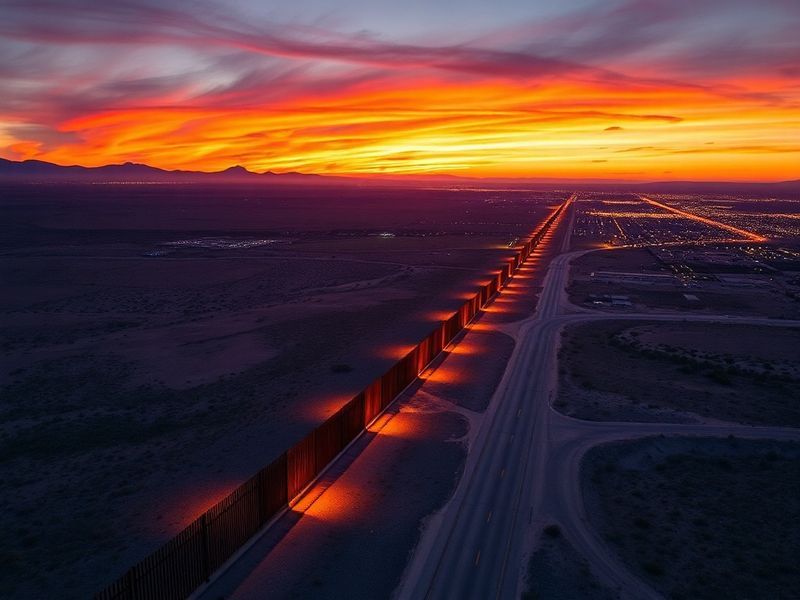
The 1,954-mile border between Mexico and the United States is more than a line on a map. It is a dynamic region where history, economics, and policy intersect in ways that shape the lives of millions on both sides. This boundary has evolved from a contested frontier into one of the most heavily monitored and economically significant borders in the world.
Understanding the Mexico-United States border requires looking beyond the headlines. It demands a closer examination of its historical roots, the economic ties that bind the two nations, and the policies that govern its operations. The border is not just a barrier; it is a bridge that facilitates billions of dollars in trade, cultural exchange, and human movement each year.
The Historical Evolution of the Border
The modern Mexico-United States border is the result of a complex history marked by territorial disputes, wars, and negotiations. The Treaty of Guadalupe Hidalgo in 1848, which ended the Mexican-American War, established the initial border along the Rio Grande and the Gila River. This treaty ceded nearly half of Mexico’s territory to the United States, including present-day California, Arizona, New Mexico, and parts of Colorado, Nevada, Utah, and Wyoming.
The Gadsden Purchase of 1853 further refined the border, adding a strip of land in southern Arizona and New Mexico to facilitate a transcontinental railroad route. These historical agreements laid the foundation for the border as it exists today, though their legacy continues to influence diplomatic relations and regional identities.
The border region has always been a zone of cultural and economic exchange. Indigenous communities, such as the Tohono O’odham, have lived in the area long before national boundaries were drawn. Spanish missions and Mexican settlements predated Anglo-American expansion, creating a rich cultural tapestry that persists despite political divisions.
Economic Ties and Trade Flows
The economic relationship between Mexico and the United States is one of the most integrated in the world. The border serves as the primary gateway for this exchange, with nearly $1.7 billion in goods and services crossing daily. This trade supports millions of jobs on both sides of the border and fuels industries ranging from automotive manufacturing to agriculture.
A significant portion of this trade occurs at key border crossings such as San Ysidro, El Paso, and Laredo. These ports of entry are critical arteries for supply chains that connect manufacturers in Mexico with consumers and businesses in the United States. The automotive industry, in particular, relies heavily on cross-border production networks, with components often moving multiple times between the two countries before final assembly.
Beyond trade, the border region is also a hub for tourism and cultural exchange. Cities like San Diego and Tijuana, El Paso and Ciudad Juárez, and McAllen and Reynosa have developed binational identities. Residents frequently cross the border for work, shopping, healthcare, and entertainment, blurring the lines between the two nations.
Key Economic Points
- Daily Trade Value: Approximately $1.7 billion in goods and services cross the border each day.
- Major Industries: Automotive, aerospace, electronics, agriculture, and medical devices.
- Employment Impact: The border region supports millions of jobs in manufacturing, logistics, and services.
- Supply Chains: Components often cross the border multiple times before final assembly, especially in the automotive sector.
- Tourism and Culture: Binational cities thrive on cross-border tourism, shopping, and cultural events.
Policy Challenges and Border Security
Managing the Mexico-United States border is a formidable challenge that involves balancing security, trade, and humanitarian concerns. The U.S. Customs and Border Protection (CBP) agency employs a mix of personnel, technology, and infrastructure to monitor and control the border. This includes physical barriers, drones, sensors, and thousands of agents.
However, border security is not solely about preventing unauthorized crossings. It also involves managing legal immigration, facilitating trade, and addressing humanitarian issues such as asylum seekers. The Trump administration’s push to build a wall along significant portions of the border highlighted the political and social divides surrounding this issue. While proponents argued for enhanced security, critics pointed to the wall’s cost, environmental impact, and questionable effectiveness in reducing illegal crossings.
Another critical issue is the treatment of migrants at the border. The journey north is perilous, and many who arrive at the border seek asylum from violence, poverty, and political instability in their home countries. The backlog of asylum cases in U.S. immigration courts has reached record levels, creating significant humanitarian and logistical challenges for both nations.
Broader Implications and Future Outlook
The Mexico-United States border is a microcosm of broader geopolitical and economic trends. The region’s future will be shaped by several key factors, including U.S.-Mexico relations, global trade dynamics, and technological advancements in border security.
One area of growing importance is the integration of technology into border management. Artificial intelligence, big data analytics, and advanced surveillance systems are increasingly being deployed to enhance security while minimizing disruptions to legitimate trade and travel. These technologies promise to improve the efficiency and effectiveness of border operations, though they also raise concerns about privacy and civil liberties.
The economic interdependence between the two countries suggests that cooperation will remain essential. Disruptions to supply chains, such as those caused by the COVID-19 pandemic or trade disputes, can have far-reaching consequences. Conversely, collaborative efforts to streamline customs processes and invest in infrastructure can yield significant benefits for both nations.
Culturally, the border region continues to be a vibrant space where Mexican and American identities intertwine. Festivals, art, music, and cuisine reflect this blending of cultures, creating a unique regional identity that defies simple categorization. As political tensions ebb and flow, the people who live and work along the border remain a testament to the enduring ties between the two countries.
Looking ahead, the challenge for policymakers will be to find a balance that addresses security concerns without undermining the economic and cultural relationships that make the border region so vital. This will require nuanced approaches that go beyond simplistic solutions like walls or open borders. It will demand cooperation, innovation, and a deep understanding of the complex realities that define this unique part of the world.
The Mexico-United States border is not just a line dividing two nations; it is a living, breathing entity that reflects the past, shapes the present, and will determine the future of millions. Navigating its complexities will require more than political posturing—it will require thoughtful, evidence-based policies and a commitment to the shared prosperity of both nations.
For those interested in exploring the cultural and economic dynamics of the border region further, Dave’s Locker Culture section offers a wealth of articles on how borders influence art, music, and societal trends. Additionally, the Travel section provides insights into the vibrant cities and landscapes that define this unique corridor.