By Alex Carter | Published
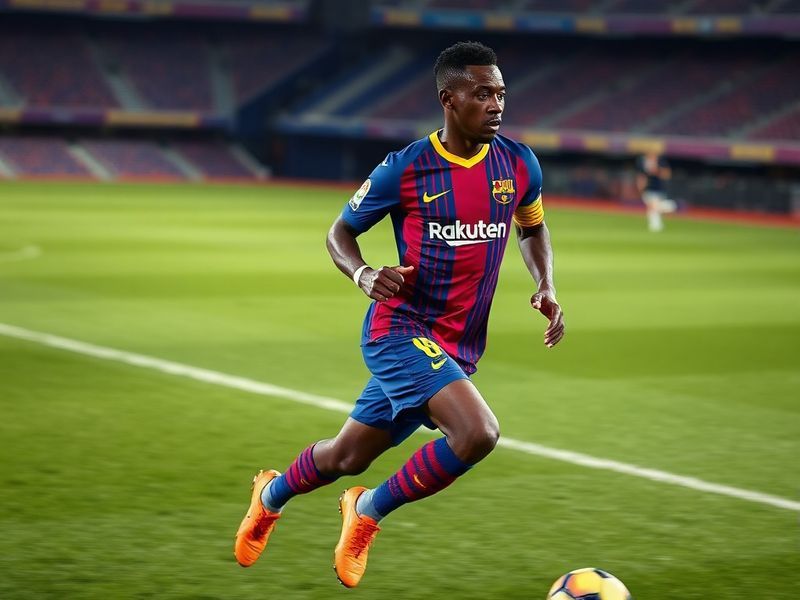
Ousmane Dembélé has spent years in the shadow of bigger names, yet his influence on the pitch remains undeniable. The French winger’s career is a study in contrasts: explosive talent paired with frustrating inconsistency. At his best, he dazzles with speed, skill, and creativity. At his worst, he vanishes for stretches, leaving fans and critics alike to question what could have been.
The Early Years: A Prodigy in the Making
Born in Vernon, France, in 1997, Dembélé’s journey to professional football began in the youth ranks of Stade Rennais. His breakthrough came during the 2015-16 season, when he scored 13 goals and provided 10 assists in Ligue 1. That performance earned him a €15 million transfer to Borussia Dortmund in 2016, a fee that seemed steep at the time but now looks like a bargain.
His Bundesliga debut was electric. Dembélé scored twice in a 6-0 thrashing of Darmstadt, announcing himself as a player to watch. By the end of the season, he had 6 goals and 9 assists, helping Dortmund finish second behind Bayern Munich. His ability to glide past defenders with ease and deliver pinpoint crosses made him an instant fan favorite in Germany.
Key Traits That Define Dembélé’s Game
- Blistering pace: Few players in modern football can match his acceleration over the first 10 yards.
- Technical skill: His close control and dribbling often leave defenders grasping at air.
- Versatility: While primarily a winger, he can play as an attacking midfielder or even a false nine.
- Decision-making: When at his best, his choices under pressure—whether to shoot, pass, or dribble—are spot-on.
The Barcelona Chapter: Highs, Lows, and Unfulfilled Potential
In 2017, Barcelona paid Dembélé’s €140 million release clause, making him the third-most expensive player in history at the time. The move was seen as a statement: Barça were transitioning from the Messi era and needed fresh blood. But injuries and form struggles derailed his start. A hamstring tear in his first training session kept him sidelined for months, and when he returned, he struggled to replicate his Dortmund form.
His first season in Spain was a mixed bag. He scored 8 goals and provided 5 assists in La Liga, but his impact was inconsistent. The 2018-19 campaign saw flashes of brilliance, including a crucial goal in the Champions League quarterfinal against Manchester United. Yet, injuries continued to plague him, and his involvement in a car crash just weeks before the 2019 Champions League final raised questions about his professionalism.
Despite these setbacks, Dembélé has shown glimpses of his immense potential. In the 2022-23 season, he was a key part of Barcelona’s treble-winning campaign, scoring 13 goals and providing 10 assists in La Liga. His partnership with Robert Lewandowski and Gavi became one of the most dynamic in Europe, proving he could still deliver on the biggest stage.
France’s Enigma: Dembélé’s Role in the National Team
Dembélé’s international career has mirrored his club career: moments of brilliance interspersed with frustration. He made his debut for France in 2017 and was included in the squad for the 2018 World Cup, which France won. However, he played just 19 minutes across the tournament, leaving many to wonder what might have been if he’d gotten more minutes.
Since then, he has been a regular squad player but rarely a starter. His relationship with Didier Deschamps has been a topic of debate. Some argue he deserves more playing time, while others believe his inconsistent form at the club level justifies his role as a rotational option. Yet, when given a chance, Dembélé delivers. His performance against the Netherlands in the 2022 Nations League final—a game France won 2-1—showed he can rise to the occasion.
Why Dembélé Remains a Polarizing Figure
- Injury history: His career has been repeatedly interrupted by muscle problems, raising concerns about his durability.
- Mental resilience: There are questions about his ability to handle the pressure of elite football, particularly at Barça.
- Tactical fit: His style of play doesn’t always align with every system, which has limited his opportunities in some teams.
- Loyalty vs. ambition: His decision to stay at Barcelona despite interest from other clubs has been both praised and criticized.
The Broader Implications: What Dembélé Represents in Modern Football
Dembélé’s career offers a window into the modern football landscape. He is a product of the hyper-commercialized era, where young players are thrust into the spotlight with massive price tags. His story highlights the pressures of playing for elite clubs, where expectations are sky-high and margins for error are slim.
Yet, Dembélé also embodies the unpredictability of football. Talent alone doesn’t guarantee success, and even the most gifted players can struggle to find their footing. His journey raises important questions about how clubs develop and manage young talent. Should teams invest in players with his profile, knowing the risks? Or is the potential reward worth the gamble?
For fans, Dembélé is a reminder of football’s beauty and brutality. One moment, he’s a mesmerizing dribbler leaving defenders in his wake. The next, he’s invisible for 80 minutes. His career is a testament to the fact that genius and inconsistency can exist in the same player, often frustratingly intertwined.
As he enters the prime years of his career, the question remains: Can Dembélé finally fulfill the promise that made him one of the most exciting prospects in world football? Or will he remain a “what if” story, a player whose talent was never quite enough to silence the doubters?
“Dembélé is the kind of player who makes you believe in magic on the pitch. But magic is unpredictable—it can dazzle or disappear in an instant.” — Football analyst
One thing is certain: Ousmane Dembélé is not just another talented footballer. He is a case study in the highs and lows of the beautiful game, a player whose career forces us to confront the complexities of talent, opportunity, and resilience.
For more insights into the careers of rising stars and established talents, explore our Sports and Analysis sections.