The White House: Power, Symbolism, and the Stories Behind the Building
“`html
The White House: Power, Symbolism, and Unseen Realities
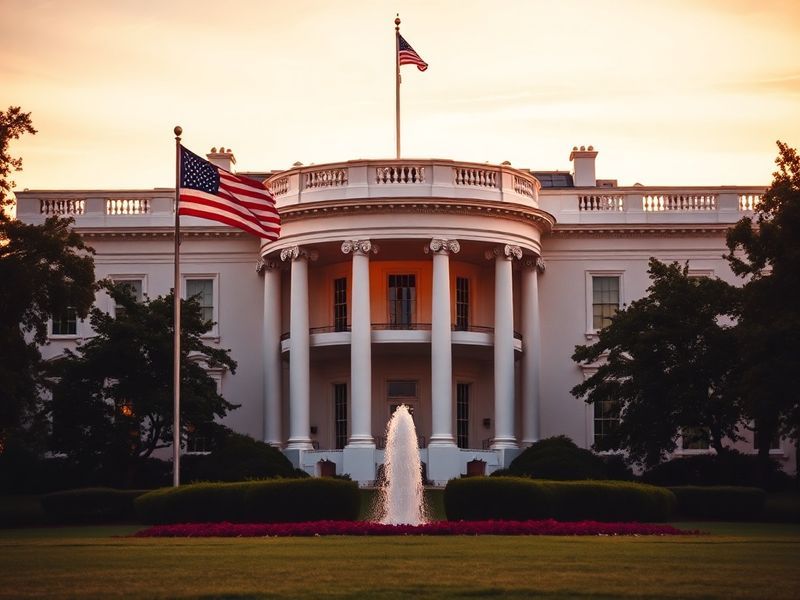
The White House is more than just a building. It is the physical embodiment of American political power, a global symbol of democracy, and a stage where history unfolds in real time. Since its construction in 1800, the White House has witnessed pivotal moments—from policy decisions that shaped nations to moments of personal reflection that humanized its occupants. Behind its neoclassical façade and manicured lawns lies a complex institution that operates both as a fortress and a home, a museum and a command center.
Its white sandstone walls have absorbed the weight of executive decisions, from wars declared to crises averted. Yet, it remains a place of contradictions: open to public tours yet heavily fortified, a home to families yet a workplace for thousands of staff, a tourist attraction and a seat of secrecy. Understanding the White House requires looking beyond its iconic image to examine its function, its occupants, and its role in shaping—and being shaped by—history.
The Architecture of Authority: Design, Symbolism, and Function
Designed by Irish-born architect James Hoban, the White House was conceived as a statement of democratic ideals. Hoban’s winning design drew inspiration from Leinster House in Dublin and the Roman Pantheon, blending classical European aesthetics with practical American needs. Construction began in 1792, and though it took eight years to complete, the building was immediately recognized as a symbol of the new republic’s stability and ambition.
The White House’s neoclassical style was intentional. Neoclassicism, with its emphasis on symmetry, proportion, and grandeur, mirrored the values of the Enlightenment—reason, order, and civic virtue. The north and south porticoes were added in 1824 and 1829, respectively, enhancing its monumental presence. The building’s layout reflects its dual role: the East Wing houses offices and ceremonial spaces, while the West Wing contains the Oval Office, the Cabinet Room, and the Situation Room—spaces where decisions with global consequences are made.
Structurally, the White House is a marvel of early American engineering. Built with sandstone from Virginia and Maryland, its exterior was originally painted white not for aesthetic reasons, but to cover the damage caused by fire during the War of 1812. The fire, set by British troops during the burning of Washington, left the building blackened and charred. Repainting it white became a symbol of resilience—a decision that inadvertently gave the building its name.
Key Features of the White House Complex
- Executive Residence: The central building where the First Family lives, featuring 132 rooms, including the Oval Office, the Blue Room, and the East Room.
- West Wing: Houses the Oval Office, the Vice President’s office, and the Cabinet Room—ground zero for presidential decision-making.
- East Wing: Contains offices for the First Lady and senior staff, as well as the White House Visitor Center.
- The Situation Room: A secure conference room for high-level crisis management and intelligence briefings.
- South Lawn: A ceremonial space used for events like the Easter Egg Roll and Marine One landings.
The Occupants: Leaders, Families, and the Weight of History
Every president since John Adams has called the White House home, each bringing a unique perspective and leadership style to its halls. The building has seen both towering figures and controversial leaders, moments of triumph and periods of national trauma. Abraham Lincoln’s presidency, for instance, was marked by the Civil War, and the White House became a symbol of Union resilience. Meanwhile, Franklin D. Roosevelt’s tenure saw the building adapt to the challenges of the Great Depression and World War II, including the addition of the Oval Office in 1934.
But the White House is not just a workplace for presidents—it is also a home for their families. The First Ladies, in particular, have played a crucial role in shaping the cultural and social legacy of the residence. Jacqueline Kennedy’s restoration of the White House in the 1960s transformed it into a living museum, preserving historical artifacts and artworks. Michelle Obama’s initiatives, such as the White House garden, redefined its role as a space for advocacy and education. These women often used their position to amplify causes, from education reform to military family support, proving that the White House’s influence extends beyond politics.
The children who grow up in the White House—often called “White House kids”—face unique challenges. Living under constant public scrutiny, they must navigate the pressures of fame while maintaining a semblance of normalcy. The stories of these children, from John F. Kennedy Jr.’s famous salute at his father’s funeral to Sasha and Malia Obama’s teenage years, humanize the presidency and remind us that the White House is, at its core, a family home.
Security and Secrecy: Balancing Openness with Protection
The White House is one of the most secure buildings in the world. Its protection falls under the jurisdiction of the Secret Service, which employs advanced surveillance technology, armed agents, and rigorous screening protocols. The perimeter is patrolled by uniformed officers, and the airspace above is restricted, with fighter jets on standby in case of emergencies. Despite these measures, breaches have occurred—most notably in 2014, when an armed intruder scaled the fence and made it deep into the building before being apprehended.
Yet, security is not just about physical barriers. The White House operates under a veil of secrecy that extends beyond classified briefings. Sensitive communications, classified documents, and classified meetings are shielded from public view, raising questions about transparency. The tension between security and openness is a defining feature of the modern presidency. While the White House hosts public tours and events, much of its work remains behind closed doors, accessible only to a select few.
This duality extends to the press. The White House Press Corps, a group of journalists granted daily access to the briefing room, plays a crucial role in holding the administration accountable. Their questions shape public discourse, yet their access is carefully controlled. The briefings themselves are often carefully choreographed, with press secretaries delivering carefully worded responses to avoid revealing too much. In an era of misinformation and deepfakes, the White House’s relationship with the media is more complex than ever.
Beyond the Building: The White House in the Public Imagination
The White House is more than a physical structure—it is an idea. It represents the promise of democracy, the burden of leadership, and the contradictions of power. Its image appears in films, television shows, and art, often serving as a backdrop for stories about power, conspiracy, and heroism. From The West Wing’s idealized vision of governance to House of Cards’ ruthless portrayal of ambition, popular culture shapes how we perceive the institution.
Yet, the White House’s cultural footprint extends beyond entertainment. It is a site of protest, a backdrop for demonstrations, and a symbol of both American ideals and its failures. During the Civil Rights Movement, protesters marched past the White House, demanding action from a president who often moved too slowly. In 2020, Black Lives Matter protesters gathered outside, calling for an end to systemic racism. These moments underscore the White House’s role as a stage for national conversations—sometimes as a participant, sometimes as a target.
The building also faces challenges from within. Critics argue that the presidency has become too imperial, with the White House functioning more like a monarchy than a democratic institution. The concentration of power in the executive branch, combined with the secrecy that surrounds it, fuels debates about accountability. Meanwhile, the cost of maintaining the White House—estimated at over $1 billion annually—has led to calls for greater fiscal transparency.
As the United States navigates an era of political polarization and global uncertainty, the White House remains a focal point. Its ability to adapt—whether through technological advancements, security upgrades, or shifts in public perception—will determine its relevance in the decades to come. One thing is certain: the White House will continue to be both a sanctuary and a battleground, a home and a fortress, a symbol of democracy and a target of its critics.
For those who visit, whether on a tour or through the lens of media, the White House offers a glimpse into the machinery of power. But its true significance lies not in its walls or its history, but in what it represents: the ideals of a nation, the burdens of leadership, and the enduring struggle to live up to them.
Interested in more on political institutions and their cultural impact? Explore our News and Analysis sections for deeper insights into how power shapes society.