ULA Atlas V Rocket: Engineering, History, and Future Missions
“`html
ULA Atlas V Rocket Launch: A Technical and Historical Perspective
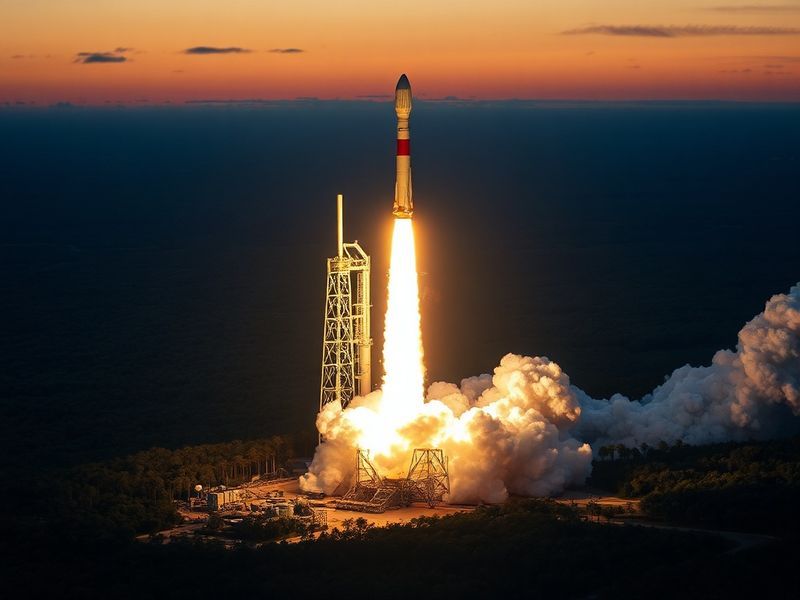
The United Launch Alliance (ULA) Atlas V rocket has long stood as a symbol of American aerospace innovation, reliability, and precision. With a launch record spanning nearly two decades, the Atlas V has played a pivotal role in both commercial and governmental missions, from deploying critical satellites to supporting deep-space exploration. Each launch represents a carefully orchestrated blend of engineering, physics, and real-time problem-solving.
As the Atlas V continues to operate in an increasingly competitive space industry, its launches remain high-stakes events watched by engineers, policymakers, and space enthusiasts alike. The technical complexity behind each mission—from pre-launch preparations to payload deployment—underscores the enduring importance of the Atlas V in modern spaceflight.
The Atlas V: Design, Capabilities, and Evolution
The Atlas V is a two-stage rocket, developed by ULA in partnership with Lockheed Martin and Boeing. Its core design is built upon the heritage of the Atlas family, which dates back to the early days of the U.S. space program. The rocket uses a combination of Russian-built RD-180 engines in its first stage and an American RL10 engine in its Centaur upper stage, a hybrid approach that reflects both historical collaboration and evolving geopolitical realities.
One of the Atlas V’s defining features is its modular design, allowing for customization through various payload fairing sizes and booster configurations. The rocket is available in multiple variants, designated by a three-digit number system (e.g., Atlas V 541). The first digit indicates the diameter of the payload fairing in meters, the second the number of solid rocket boosters, and the third the number of engines on the Centaur upper stage. This flexibility has made the Atlas V a versatile choice for diverse missions.
The Atlas V has launched payloads ranging from communication satellites to interplanetary probes. Notably, it has supported NASA missions such as the Mars Reconnaissance Orbiter and the New Horizons probe to Pluto. Its reliability record—over 80 successful launches as of 2023—has cemented its reputation as one of the most dependable launch vehicles in operation.
However, the Atlas V’s future has faced uncertainty due to geopolitical concerns surrounding the RD-180 engine, sourced from Russia. In response, ULA has been developing the Vulcan Centaur, a next-generation rocket designed to replace both the Atlas V and Delta IV launch systems. Despite this transition, the Atlas V remains active and continues to serve as a critical asset in the U.S. space launch inventory.
Key Milestones in Atlas V Launch History
The Atlas V’s journey began with its maiden flight on August 21, 2002, carrying the Hot Bird 6 commercial communications satellite. Since then, it has completed numerous high-profile missions that have shaped both commercial and scientific spaceflight.
One of the most significant launches occurred on August 12, 2018, when an Atlas V carried NASA’s Parker Solar Probe into orbit. The mission marked humanity’s first attempt to “touch the Sun,” with the probe designed to study the solar corona and solar wind from an unprecedented proximity. The Atlas V’s precise trajectory and high-energy upper stage were critical to placing the probe on its ambitious trajectory.
In the commercial sector, the Atlas V has been a preferred launch provider for companies like Boeing and Sierra Nevada Corporation. For instance, the Atlas V launched Boeing’s CST-100 Starliner spacecraft on its first uncrewed Orbital Flight Test in December 2019, a key step toward NASA’s Commercial Crew Program. Although the mission encountered software issues, it demonstrated the rocket’s capability to support human spaceflight missions.
Another landmark was the launch of the GOES-R weather satellite in November 2016. This advanced geostationary satellite significantly improved weather forecasting and environmental monitoring capabilities for the National Oceanic and Atmospheric Administration (NOAA). The Atlas V’s ability to deliver heavy payloads to precise orbits made it an ideal choice for such critical missions.
The Atlas V has also played a role in international collaboration. In 2011, it launched the Juno spacecraft, which continues to study Jupiter’s atmosphere and magnetic field. The mission exemplified how U.S. rockets can support deep-space exploration in partnership with NASA’s Jet Propulsion Laboratory.
Notable Atlas V Launches
- 2006: Launch of the New Horizons probe to Pluto, the first mission to explore the dwarf planet.
- 2015: Deployment of the MUOS-3 military communications satellite for the U.S. Navy.
- 2018: Parker Solar Probe mission to study the Sun’s outer atmosphere.
- 2020: Launch of the Sentinel-6 Michael Freilich satellite to monitor global sea levels.
Technical Challenges and Real-Time Decision Making
Despite its strong track record, every Atlas V launch involves a series of potential challenges that demand rapid, informed decision-making. Weather conditions, technical anomalies, and range safety constraints can all impact launch schedules. The ULA launch team monitors thousands of data points in real time, from engine performance to atmospheric conditions.
One notable example of problem-solving occurred during the March 2016 launch of the OA-6 Cygnus resupply mission to the International Space Station (ISS). A hydraulic issue in the Atlas V’s first stage prompted a 24-hour delay, allowing engineers to resolve the problem without compromising mission safety. Such delays, though frustrating for observers, are a testament to the discipline required in spaceflight.
Another challenge involves the integration of payloads with the rocket. Satellites often require weeks or months of preparation, including thermal and mechanical testing. Delays in payload readiness can cascade through the launch schedule, affecting multiple missions. ULA’s launch manifest must balance these variables while maintaining operational readiness at Cape Canaveral and Vandenberg Space Force Base.
The Atlas V’s Centaur upper stage, while highly reliable, has also faced scrutiny. In 2018, a rare anomaly during the launch of the AEHF-4 military satellite led to a temporary loss of telemetry. Investigators traced the issue to a valve malfunction, which was corrected in subsequent flights. These incidents highlight the importance of continuous system improvements and rigorous testing.
ULA’s use of the Common Avionics System across both Atlas V and Delta IV rockets has improved reliability and reduced costs. However, as the aerospace industry evolves, the Atlas V must adapt to new standards, including enhanced cybersecurity measures and compatibility with next-generation payloads.
The Atlas V’s Role in the Future of Spaceflight
As ULA transitions toward the Vulcan Centaur, the Atlas V remains operational and continues to secure contracts for critical missions. Its role in supporting both government and commercial launches ensures that it will remain relevant in the near term, even as newer rockets enter service.
Looking ahead, the Atlas V may continue to support NASA’s Artemis program, which aims to return humans to the Moon. While the Space Launch System (SLS) will serve as the primary rocket for crewed lunar missions, the Atlas V could assist with cargo and secondary payload deployments. Such collaborations illustrate the layered approach to space exploration, where multiple launch systems work in tandem.
The commercial sector also sees value in the Atlas V. Companies like Amazon’s Project Kuiper and OneWeb are deploying constellations of broadband satellites, and the Atlas V’s lift capacity makes it a viable option for deploying large numbers of satellites in a single launch. This adaptability ensures the rocket remains competitive in the growing small-satellite market.
Moreover, ULA’s focus on reusability with the Vulcan Centaur signals a broader industry shift toward sustainability. While the Atlas V is expendable, its legacy will inform the design of future rockets, particularly in areas such as engine performance, fairing recovery, and rapid turnaround capabilities.
Despite its eventual retirement, the Atlas V’s contributions to spaceflight are undeniable. It has enabled scientific discovery, supported national security, and fostered international partnerships. As the rocket enters its final years of service, its history serves as a reminder of the dedication required to push the boundaries of human achievement.
Conclusion: A Lasting Legacy in Spaceflight
The ULA Atlas V rocket represents more than just a launch vehicle; it embodies decades of aerospace innovation, resilience, and collaboration. From its first flight in 2002 to its role in some of the most ambitious space missions of the 21st century, the Atlas V has consistently delivered precision and reliability.
As the space industry evolves, the Atlas V’s legacy will live on through the missions it enabled and the lessons it imparted. Whether launching weather satellites, deep-space probes, or commercial payloads, the rocket has cemented its place in the annals of spaceflight history.
For enthusiasts and professionals alike, the Atlas V remains a symbol of what can be achieved through engineering excellence and perseverance. As ULA continues to innovate with the Vulcan Centaur, the Atlas V’s final launches will be a moment of reflection on an era defined by progress and possibility.
For more on recent developments in space technology, visit our Technology section. To explore U.S. aerospace innovations, check out our Science category.