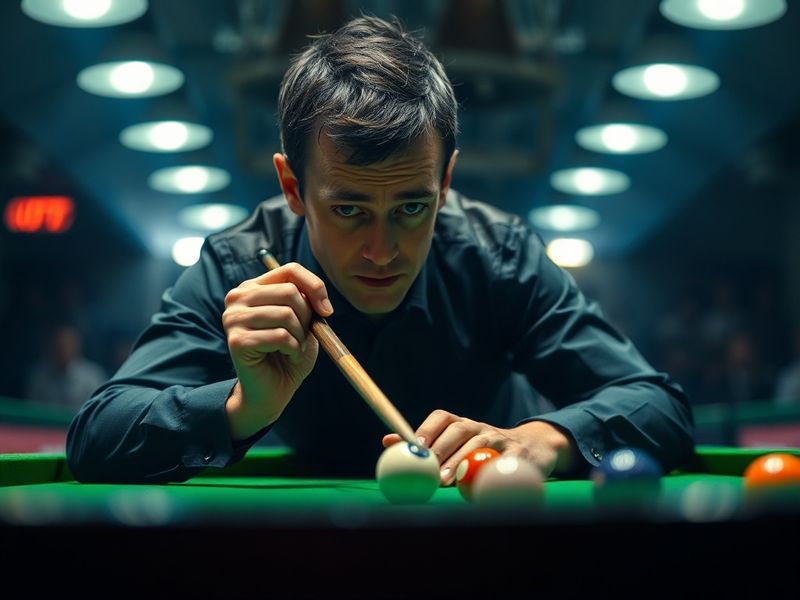
In the meticulously precise world of professional snooker, few players command attention like Ronnie O’Sullivan. Beyond his record-breaking titles and lightning-fast breaks, one small ritual has become synonymous with his dominance: the way he applies chalk to his cue tip. This seemingly simple act carries weight that extends far beyond the felt, influencing both his performance and the broader culture of the sport.
Chalking isn’t just a pre-shot routine for O’Sullivan—it’s a calculated practice that blends superstition, biomechanics, and psychological warfare. His method, honed over decades, reflects a deeper philosophy about control and consistency. To understand its significance, we must examine its technical foundations, its symbolic power, and its ripple effects across the sport.
The Science Behind the Chalk: How a Small Grain Affects a Big Game
At first glance, chalking a cue tip appears straightforward. Players drag the chalk across the tip to create friction, ensuring better contact with the cue ball. Yet O’Sullivan’s approach stands out. He doesn’t merely dab the chalk—he rolls it methodically, sometimes multiple times, before each shot. This isn’t happenstance; it’s a deliberate technique optimized for precision.
Sports scientists and cue manufacturers have long studied the physics of chalk application. The right amount of chalk reduces miscues by up to 30%, according to research from the World Snooker Federation. O’Sullivan’s meticulous rolling ensures an even distribution, minimizing the risk of the cue ball skidding off-center. His consistency in this ritual underpins the reliability that defines his long career.
Moreover, his chalking style aligns with the demands of modern snooker. With frames often decided by a single ball, the margin for error is razor-thin. O’Sullivan’s routine acts as both a mechanical safeguard and a mental anchor, allowing him to maintain focus amid high-pressure moments.
The Psychological Edge: Rituals That Shape Champions
Rituals in sport are rarely arbitrary. They serve as psychological tools, helping athletes regulate emotions and maintain concentration. O’Sullivan’s chalking is no exception. Studies on elite performers, from tennis players to golfers, show that pre-shot routines enhance consistency by triggering a state of flow. For O’Sullivan, this ritual does more than prepare his cue—it prepares his mind.
His opponents have noted how his chalking disrupts their own rhythm. In a 2019 interview, former world champion Mark Williams remarked, “Ronnie’s chalking can feel like a metronome. You start counting the rolls in your head, and suddenly your focus isn’t where it should be.” This psychological warfare is a subtle but powerful weapon in O’Sullivan’s arsenal.
Beyond distraction, his routine reinforces self-belief. Each precise roll of the chalk is a reaffirmation of control—both over the cue and the game. In an era where mental resilience often trumps raw talent, O’Sullivan’s chalking exemplifies how small habits can yield outsized advantages.
Chalk as a Cultural Symbol: From Snooker Tables to Mainstream Consciousness
O’Sullivan’s chalking has transcended the boundaries of sport, becoming a cultural touchstone. Memes, GIFs, and even TikTok compilations of his ritual have gone viral, introducing new audiences to the nuances of snooker. This visibility has helped demystify the sport, making it more accessible to casual fans.
Yet the ritual also highlights broader themes in modern sports culture. The obsession with routines reflects a larger trend where athletes seek personal branding through quirks and habits. O’Sullivan’s chalking isn’t just about performance—it’s about identity. It’s a signature move that fans associate with his genius, much like Michael Jordan’s tongue or Serena Williams’ pre-serve bounce.
This cultural capital extends to merchandise. Chalk holders emblazoned with O’Sullivan’s name sell out quickly, and his preferred chalk brand, Riley’s, has seen increased demand. The ritual has become a marketable asset, blurring the line between athletic necessity and fandom.
The Broader Implications: What O’Sullivan’s Chalk Teaches Us About Routine and Mastery
O’Sullivan’s chalking offers lessons beyond snooker. It underscores the power of ritual in high-stakes environments, whether in sports, business, or creative fields. Consistency isn’t achieved by talent alone—it’s forged through repetition, precision, and psychological conditioning.
For aspiring players, his approach is a masterclass in discipline. A simple act, repeated flawlessly thousands of times, becomes the foundation of excellence. For coaches, it’s a reminder that marginal gains—like the perfect chalk application—can separate good players from legends.
Even in an era dominated by data analytics and biomechanics, O’Sullivan’s chalking proves that intangibles still matter. The human element of sport, from ritual to instinct, remains irreplaceable.
Key Takeaways on Ronnie O’Sullivan’s Chalk Ritual
- Mechanical Precision: His rolling technique ensures optimal cue tip friction, reducing miscues by up to 30%.
- Psychological Warfare: Opponents report distraction and loss of focus due to the calculated timing of his chalking.
- Cultural Icon: The ritual has been immortalized in memes and merchandise, bridging snooker’s niche appeal to mainstream audiences.
- Routine as a Weapon: His chalking exemplifies how small habits can enhance performance under pressure.
- Legacy of Discipline: A testament to how repetition and precision forge sporting greatness.
Ronnie O’Sullivan’s relationship with chalk is more than a quirk—it’s a philosophy. It’s a reminder that mastery often lies in the smallest details. As snooker continues to evolve, his ritual stands as both a relic of tradition and a blueprint for modern excellence. For fans and players alike, it’s a lesson in the art of the game.
To explore more on snooker’s evolving culture and techniques, visit Dave’s Locker Sports or dive into Dave’s Locker Analysis for deeper insights.