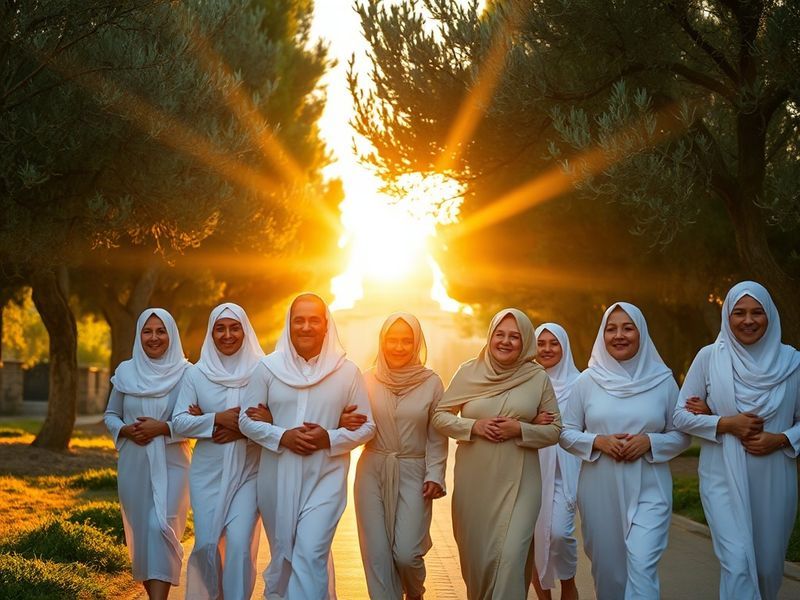
The Ahmadiyya Muslim Community presents a unique interpretation of Islam, emphasizing peace, education, and interfaith dialogue. Founded in the late 19th century, this movement has grown into a global religious organization with millions of followers across 200 countries. Unlike mainstream Islam, the Ahmadiyya Community believes in the continued prophethood of Mirza Ghulam Ahmad, whom they view as a reformer and the promised Messiah for the modern era.
Its teachings challenge conventional Islamic orthodoxy, particularly regarding jihad and the finality of prophethood. While often misunderstood, the Ahmadiyya movement positions itself as a force for moderation in an era marked by religious extremism. Its emphasis on nonviolence, humanitarian service, and moral integrity has drawn both admiration and controversy. This article explores the origins, core beliefs, and broader implications of the Ahmadiyya faith in today’s world.
The Founding Principles and Core Beliefs
The Ahmadiyya Muslim Community was established in 1889 by Mirza Ghulam Ahmad in Qadian, India. Ahmad claimed to be the promised Messiah and Mahdi foretold in Islamic and Abrahamic traditions. His followers, known as Ahmadis, believe he fulfilled prophecies found in the Quran, Hadith, and other religious texts. This claim directly conflicts with the mainstream Islamic belief in the finality of the prophethood of Muhammad.
Central to Ahmadiyya theology is the idea of jihad as a spiritual struggle rather than a physical one. The community rejects violence as a means of spreading faith, instead prioritizing moral reform, education, and service to humanity. This stance has made the Ahmadiyya movement a target for persecution in many Muslim-majority countries, particularly Pakistan, where Ahmadis are legally declared non-Muslims.
The Ahmadiyya faith also emphasizes the unity of God and the brotherhood of humanity. Members are encouraged to engage in constructive dialogue with other religions, promoting peace and mutual understanding. This inclusive approach has led to the establishment of mosques, schools, and humanitarian projects worldwide.
Key Tenets of the Ahmadiyya Muslim Community
- Belief in Mirza Ghulam Ahmad as the promised Messiah and Mahdi, sent to revitalize Islam.
- Rejection of physical jihad in favor of spiritual and moral struggle.
- Emphasis on interfaith harmony and peaceful coexistence with other religions.
- Commitment to education and social welfare through global humanitarian initiatives.
- Nonviolent propagation of faith through dialogue and example.
Global Presence and Humanitarian Contributions
Today, the Ahmadiyya Muslim Community has a presence in over 200 countries, with its largest concentrations in Africa, South Asia, and Europe. The community operates thousands of mosques, schools, and hospitals, many of which serve non-Ahmadi communities as well. Their humanitarian arm, Humanity First, responds to disasters and provides medical care, education, and poverty alleviation programs worldwide.
In the West, Ahmadiyya mosques often serve as centers for interfaith dialogue. Their imams frequently participate in public forums, promoting understanding between Muslims and non-Muslims. This outreach has earned them both praise and criticism—praise for their commitment to peace, and criticism from conservative Muslims who view their beliefs as heretical.
The community’s annual gathering, Jalsa Salana, draws tens of thousands of attendees from around the world. These events feature speeches on spiritual and moral topics, reinforcing the Ahmadiyya emphasis on personal reform and global harmony. The gatherings also highlight the community’s organizational strength and dedication to their faith.
Controversies and Challenges
The Ahmadiyya Muslim Community faces significant challenges, particularly in Muslim-majority nations. In Pakistan, Ahmadis have been systematically persecuted since the 1970s, when the government declared them non-Muslims. This legal exclusion has led to violence, forced conversions, and restrictions on Ahmadi religious practices. Many Ahmadis have fled the country as refugees.
Within the broader Islamic world, mainstream scholars often condemn Ahmadiyya beliefs as incompatible with Islam. The issue of Mirza Ghulam Ahmad’s prophethood remains a point of contention, with critics arguing that it undermines the finality of Muhammad’s prophethood—a cornerstone of Islamic theology. This theological dispute has fueled sectarian tensions in countries like Indonesia and Malaysia, where Ahmadis are often targeted by hardline groups.
Despite these challenges, the Ahmadiyya Community remains resilient. Their commitment to peace and service has earned them recognition from international organizations, including the United Nations. In 2016, the community’s leader, Mirza Masroor Ahmad, addressed the UN, calling for global peace and the abolition of nuclear weapons.
The Ahmadiyya Influence on Modern Islam
The Ahmadiyya movement offers a counter-narrative to the extremist interpretations of Islam that dominate headlines. By rejecting violence and promoting dialogue, they present an alternative model of Islamic practice—one that aligns with modern values of tolerance and human rights. This approach has resonated with many young Muslims who seek a faith that embraces science, education, and social justice.
The community’s emphasis on education is particularly noteworthy. Ahmadiyya schools in Africa and South Asia provide high-quality education to thousands of students, regardless of their religious background. These institutions often outperform government-run schools in their regions, demonstrating the community’s commitment to uplifting society.
However, the Ahmadiyya influence extends beyond their own community. Their interfaith initiatives have inspired other Muslim groups to adopt more inclusive approaches. Organizations like the Muslim-Jewish-Christian Alliance for Peace have drawn inspiration from Ahmadiyya efforts to foster understanding across religious lines.
The Ahmadiyya Muslim Community also plays a significant role in dispelling misconceptions about Islam. Through media appearances, public lectures, and social media campaigns, they challenge stereotypes about Muslims being inherently violent or oppressive. Their message of peace and unity offers a stark contrast to the narratives of extremist groups like ISIS or Al-Qaeda.
The Future of Ahmadiyya Islam
As the world becomes increasingly interconnected, the Ahmadiyya Community’s message of peace and unity may gain greater traction. Their ability to adapt to modern challenges—such as climate change, poverty, and religious extremism—positions them as a relevant voice in global discourse. However, their survival in Muslim-majority countries remains uncertain, particularly as authoritarian regimes and hardline groups continue to target religious minorities.
The Ahmadiyya faith also faces internal challenges, such as generational shifts and the need to modernize their outreach methods. While their traditional methods of propagation—door-to-door preaching and mosque-based sermons—remain effective, younger members are increasingly turning to digital platforms to share their message. Social media has become a powerful tool for the Ahmadiyya Community, allowing them to reach global audiences and counter misinformation.
Ultimately, the Ahmadiyya Muslim Community represents a unique blend of tradition and modernity. Their commitment to peace, education, and humanitarian service offers a compelling vision for the future of Islam. Whether their influence will grow or remain confined to their own community depends on how they navigate the challenges of the 21st century.
For those interested in exploring Ahmadiyya teachings further, the Analysis section on Dave’s Locker provides deeper insights into religious movements and their societal impact. Additionally, the Culture category offers broader perspectives on how faith intersects with modern life.
Conclusion
The Ahmadiyya Muslim Community stands as a testament to the diversity within Islam. While often marginalized, their message of peace, education, and interfaith dialogue offers a hopeful alternative in a world divided by religious strife. Their resilience in the face of persecution demonstrates the power of faith to inspire change and foster unity.
As global tensions rise and religious extremism threatens stability, the Ahmadiyya approach—rooted in nonviolence and moral integrity—deserves greater attention. Whether through their humanitarian work, interfaith initiatives, or commitment to education, the Ahmadiyya Muslim Community provides a model for how faith can be a force for good in the modern world.