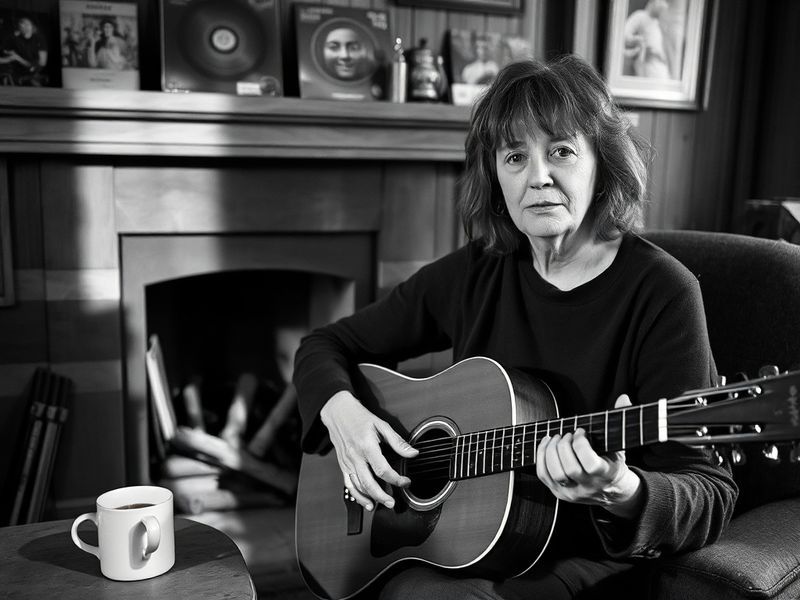
In the pantheon of 1960s British folk music, names like Bert Jansch, John Martyn, and Sandy Denny often dominate the conversation. Yet behind these luminaries stood Beverley Martyn, a figure whose influence shaped the era’s sound without always claiming the spotlight. Her contributions as a singer, songwriter, and collaborator helped define the folk revival’s golden age, while her later work bridged generational gaps in the genre.
Born Beverley Kutner in 1946, she grew up in post-war London, where the remnants of wartime culture still lingered. The city’s folk clubs became her classroom, and by her late teens, she was performing alongside the era’s most promising musicians. Her voice—soft yet resolute, capable of both warmth and melancholy—caught the attention of peers and critics alike. But Martyn’s impact extended beyond her vocal presence; she was a catalyst for creativity, often co-writing songs that became staples of the folk canon.
The Early Years: A Folk Apprentice
Martyn’s musical journey began in the smoky backrooms of London’s folk clubs, where the acoustic guitar was the primary instrument and the audience demanded authenticity over polish. In the early 1960s, these venues were incubators for a new wave of British folk music, one that rejected the commercial pop of the day in favor of traditional ballads and original compositions rooted in folk traditions. Martyn honed her craft in this environment, learning from older musicians while also absorbing the raw energy of the emerging scene.
By 1966, she had caught the ear of producer Joe Boyd, a key figure in the folk revival who would later shape the careers of Fairport Convention and Nick Drake. Boyd recognized Martyn’s potential and signed her to his Witchseason Productions label. Her debut album, I Want to Sing, released in 1968, showcased her songwriting prowess and vocal range. Tracks like “The Time Has Come” and “Morning Way” revealed a songwriter unafraid to blend traditional folk with contemporary themes, a balance that would become a hallmark of her work.
Collaborations That Defined a Generation
Martyn’s most enduring contributions came through her collaborations. Her partnership with John Martyn (whom she later married) produced some of the most innovative folk music of the era. Their 1970 album Stormbringer! is a masterclass in blending folk, blues, and experimental sounds, with Beverley’s vocals providing a counterpoint to John’s innovative guitar work.
Beyond her marriage, Martyn worked with a who’s who of folk and rock musicians. She contributed vocals to Pentangle’s 1969 album Basket of Light, lending her ethereal harmonies to tracks like “Light Flight.” Her ability to elevate a song with her presence made her a sought-after collaborator. Even artists outside the folk sphere, such as Donovan, sought her input, recognizing her knack for crafting melodies that resonated deeply.
- Pentangle’s “Light Flight” (1969) – Beverley’s harmonies added a haunting quality to this instrumental track.
- John Martyn’s “Stormbringer!” (1970) – Her vocals and songwriting were central to the album’s success.
- Donovan’s “Hurdy Gurdy Man” (1968) – Though uncredited, her backing vocals enhanced the track’s mystique.
The Solo Career: A Voice of Quiet Resilience
After her marriage to John Martyn ended in the late 1970s, Beverley Martyn stepped back from the spotlight but continued to write and perform. Her 1977 solo album Stormbringer’s Child is a testament to her resilience, blending folk, jazz, and subtle experimentation. The album’s title track, a reworking of her earlier work with John, showcased her growth as both a vocalist and a songwriter.
Martyn’s solo career never achieved the commercial success of her collaborative work, but it earned her a devoted following among folk purists. Her lyrics often explored themes of love, loss, and introspection, delivered with a rare sincerity. In an era where folk music was increasingly commercialized, Martyn’s refusal to compromise her artistic vision set her apart.
The Cultural Context: Folk in the 1960s and Beyond
The 1960s folk revival was more than a musical trend; it was a cultural movement that reflected the era’s social and political upheavals. The genre’s emphasis on authenticity and storytelling resonated with a generation seeking connection in an increasingly fragmented world. Beverley Martyn’s work embodied this ethos, capturing the spirit of the times without ever pandering to fleeting trends.
Her influence extended beyond the UK. In the United States, where folk music was undergoing its own renaissance, Martyn’s work was celebrated for its universality. American folk artists like Joni Mitchell and Joan Baez cited her as an inspiration, drawn to her ability to blend traditional forms with contemporary sensibilities. This cross-pollination of ideas helped solidify folk music’s place in the global cultural landscape.
Legacy: The Unsung Hero of Folk
Today, Beverley Martyn’s contributions are often overshadowed by the legends she worked alongside. Yet her impact on the folk revival—and on the careers of those she collaborated with—is undeniable. She was a bridge between generations, a voice that could soothe as much as it could challenge. In an era where folk music was dominated by larger-than-life personalities, Martyn’s quiet strength was her greatest asset.
Her songs continue to be covered by contemporary folk artists, a testament to their enduring appeal. In 2013, The Leaves We Lit, a folk collective, released an album of her compositions, reintroducing her work to new audiences. This rediscovery highlights the cyclical nature of folk music, where the past is always waiting to be reclaimed.
Beverley Martyn’s story is one of quiet persistence, of an artist who shaped a movement without ever demanding the spotlight. In an industry that often rewards visibility over substance, her legacy serves as a reminder of the power of authenticity. She may not have been the most famous figure of her time, but her influence is woven into the very fabric of the folk revival—an unsung hero whose songs continue to resonate.