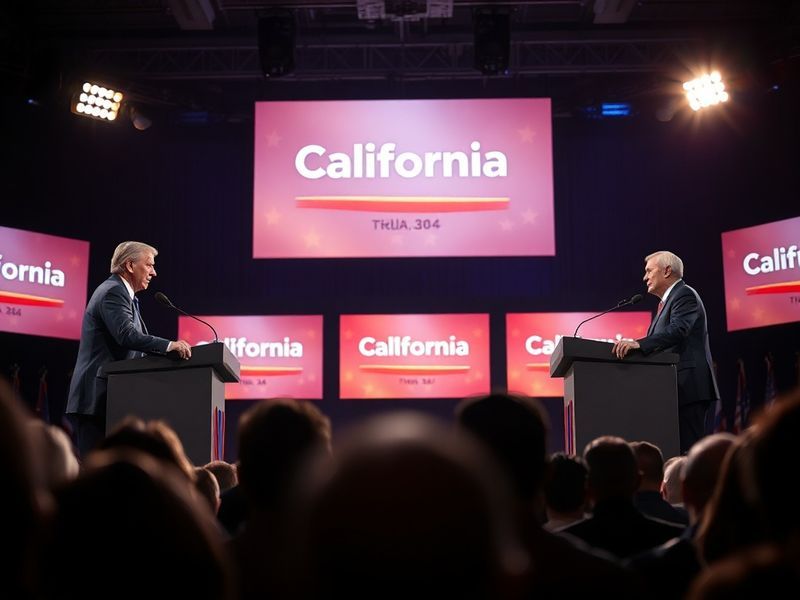
The California governor’s race debate on Tuesday night was more than a local political contest—it was a microcosm of global challenges. As the world’s fifth-largest economy, California often sets the tone for environmental policy, technological innovation, and social equity. The debate between Lieutenant Governor Eleni Kounalakis and former Congressman Kevin Faulconer revealed stark contrasts in vision, particularly on climate action and economic recovery. While both candidates emphasized California’s role in the global stage, their approaches could reshape international perceptions of American leadership.
Climate Policy Takes Center Stage in a State That Leads by Example
Climate change was the most discussed topic of the night, reflecting California’s position as a global leader in environmental policy. Kounalakis advocated for accelerating the state’s transition to renewable energy, citing California’s 2045 carbon-neutral goal as both achievable and necessary. She pointed to the state’s cap-and-trade program and investments in green infrastructure as models for other nations. Faulconer, while acknowledging the urgency of climate action, emphasized a more balanced approach that includes natural gas as a transitional energy source.
This debate mirrors broader international tensions between rapid decarbonization and economic pragmatism. The European Union’s Green Deal faces similar pushback from industries reliant on fossil fuels, while developing nations argue for gradual transitions. California’s policies often influence global markets—its strict emissions standards have shaped automotive regulations worldwide. The candidates’ stances could signal whether the state continues its aggressive climate leadership or adopts a more cautious stance.
The Role of Technology in California’s Future
Beyond climate, technology emerged as another critical battleground. Kounalakis highlighted the need to expand broadband access and invest in artificial intelligence, framing these as essential for economic competitiveness. Faulconer focused on deregulation to foster innovation, particularly in Silicon Valley. The debate underscored a global debate: Should governments prioritize rapid technological advancement, even at the risk of oversight, or adopt a more regulated approach to ensure equity?
California’s tech industry is a global powerhouse, but its influence is not without controversy. Issues like data privacy and AI ethics have sparked international discussions, from the EU’s GDPR to China’s AI governance laws. The next governor’s policies could either align California with stricter global standards or push for a more laissez-faire model, affecting tech companies worldwide.
Economic Recovery and Social Equity: A Global Lens
The candidates’ economic plans revealed fundamental differences in priorities. Kounalakis proposed expanding social programs, including universal childcare and housing initiatives, arguing that reducing inequality is key to long-term prosperity. Faulconer, meanwhile, focused on tax cuts and deregulation to stimulate business growth. These approaches reflect broader global trends: progressive policies in nations like Sweden contrast with the deregulatory agendas seen in the U.S. and U.K.
California’s economic policies often ripple across borders. Its progressive tax structure and high minimum wage have inspired movements in other states and countries. Yet, critics argue that strict regulations could drive businesses to more lenient jurisdictions. The debate’s outcome may signal whether California continues to push the envelope or adopts a more conservative economic model.
Immigration and Social Policies in a Diverse State
Immigration and social justice were also central themes. Kounalakis emphasized protecting undocumented immigrants and expanding healthcare access, aligning with California’s reputation as a sanctuary state. Faulconer, while supporting some protections, called for stricter border enforcement. These positions reflect global divides on immigration, from Canada’s welcoming policies to Australia’s strict border controls.
California’s immigrant population is one of the largest in the world, contributing significantly to its economy. The next governor’s policies could either reinforce the state’s inclusive approach or shift toward restriction, influencing immigration debates from Europe to Latin America.
What the Debate Means for California—and the World
The California governor’s race is not just a local election; it’s a referendum on the state’s global role. The candidates’ visions for climate, technology, and social equity will shape California’s influence on the world stage. Whether the state continues to lead on progressive policies or adopts a more cautious approach, its decisions will resonate far beyond its borders.
For those interested in how California’s policies compare to global trends, our Politics section offers deeper analysis. The outcome of this race could redefine the state’s identity—and its impact on the world.
The debate also highlighted the growing importance of state-level leadership in an era of federal gridlock. As nations struggle to address climate change, economic inequality, and social justice, subnational governments like California’s are stepping into the void. The next governor will not only shape the state’s future but also influence global conversations on these critical issues.
Ultimately, the California governor’s race is a reminder that local elections can have outsized global consequences. The policies enacted in Sacramento will reverberate from Brussels to Beijing, shaping the world’s response to some of its most pressing challenges.