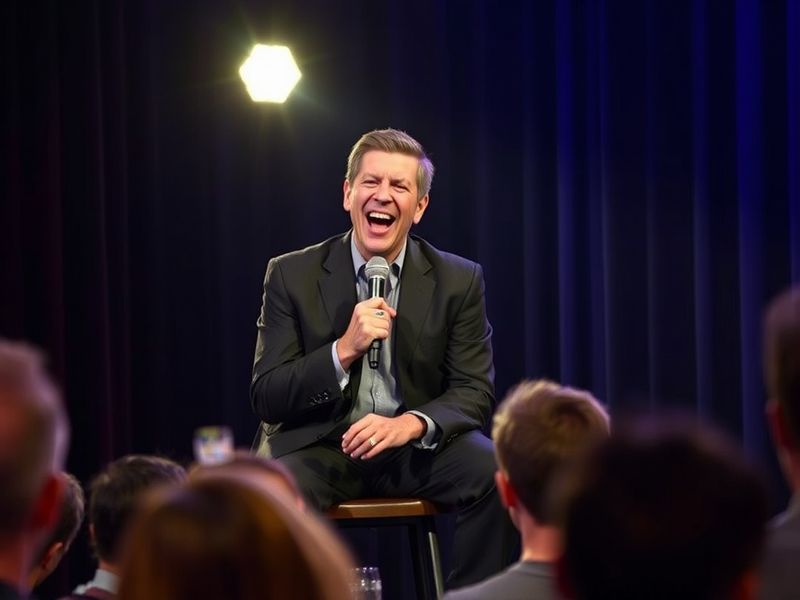
Craig Ferguson’s career spans comedy, television hosting, and storytelling, leaving an indelible mark on global pop culture. Born in Glasgow, Scotland, in 1962, he emerged from a working-class background to become one of the most distinctive voices in entertainment. His rise from stand-up stages in the UK to hosting The Late Late Show in the United States reflects a journey defined by wit, authenticity, and adaptability across cultural boundaries.
Ferguson’s international appeal lies in his ability to blend sharp humor with unfiltered self-reflection. Unlike many late-night hosts, he rarely relied on celebrity interviews or gimmicks. Instead, he used the platform to explore human nature, often through personal anecdotes that resonated across continents. This approach earned him a dedicated global audience, proving that comedy and introspection transcend borders.
The Early Years: From Glasgow to Stand-Up
Before fame, Ferguson honed his craft in the gritty comedy clubs of Glasgow in the 1980s. His early years were marked by struggle and reinvention. After dropping out of university and working odd jobs, he found his calling in stand-up comedy, performing in pubs and small venues. His breakout moment came when he won the 1986 BBC Scotland Young Comedian of the Year award, which launched his career in British television.
By the 1990s, Ferguson had transitioned into acting, appearing in British TV shows like Press Gang and films such as Bean (1997). Yet, it was his return to comedy that solidified his reputation. His one-man show I’m Here to Help in the late 1990s showcased his talent for blending absurdity with vulnerability, a style that would define his later work.
His early experiences in the UK’s comedy scene shaped his approach to humor—direct, self-deprecating, and unafraid to tackle uncomfortable truths. This foundation would later help him navigate the complexities of American late-night television, where he would eventually leave his mark.
Late-Night Reinvention: Hosting The Late Late Show
Ferguson took over The Late Late Show in 2005 after Tom Snyder’s tenure, inheriting a program that had struggled to find its footing. What followed was a transformation. He scrapped the traditional monologue-and-interview format in favor of a more conversational, meandering style. His segments often wandered into philosophical musings, pop culture detours, or even ventriloquism—all delivered with a deadpan sincerity that disarmed audiences.
One of his most iconic moves was reinventing the show’s opening. Instead of a polished monologue, he would sit on a stool, sip tea, and discuss everything from his childhood in Scotland to the absurdities of modern life. This approach felt like a chat with a witty friend rather than a performance, making the show uniquely intimate despite its global reach.
Ferguson’s tenure on The Late Late Show lasted until 2014, during which he interviewed everyone from world leaders to Hollywood stars. Yet, his interviews rarely followed the predictable script. He engaged figures like Julian Assange and Desmond Tutu with the same curiosity he brought to musicians like David Bowie or comedians like Kristen Wiig. His ability to connect with guests on a human level set him apart in an era of increasingly formulaic late-night programming.
Cultural Impact Beyond the United States
While Ferguson’s primary audience was American, his influence extended globally. In the UK, his success was seen as a validation of British comedy’s universal appeal. Fans in Australia, Canada, and parts of Europe embraced his humor, drawn to its intellectual playfulness and lack of pretension. Even in non-English-speaking countries, clips of his show circulated widely online, proving that laughter is a language without borders.
His international appeal was further cemented by his role as a cultural commentator. On The Late Late Show, he often addressed global issues—from the Iraq War to the rise of social media—with a mix of skepticism and humor. This balanced approach resonated with audiences tired of partisan or sensationalist media.
The Storyteller: Books, Podcasts, and Creative Ventures
After leaving late-night television, Ferguson reinvented himself yet again as a storyteller. His 2013 memoir, American on Purpose, detailed his journey from Glasgow to Hollywood, blending humor with heartfelt reflections on identity and belonging. The book became a bestseller, appealing to readers who appreciated his blend of wit and sincerity.
He also ventured into fiction with The President is Missing, a 2018 thriller co-authored with former President Bill Clinton. The novel topped bestseller lists, proving Ferguson’s ability to cross genres and demographics. His follow-up, The House of Wolves (2020), further cemented his place in the literary world.
In addition to writing, Ferguson launched The Craig Ferguson Show, a podcast where he interviews guests in long-form conversations. The show’s success reflects his talent for creating spaces where vulnerability and humor coexist, a skill honed over decades in the public eye.
Legacy and Influence on Modern Comedy
Craig Ferguson’s career offers several lessons for aspiring comedians and entertainers. First, his ability to reinvent himself demonstrates the importance of adaptability in an industry that often rewards novelty. Second, his emphasis on authenticity—even at the risk of alienating some audiences—highlights the power of staying true to one’s voice.
His influence can be seen in the rise of alternative late-night hosts who prioritize conversation over spectacle. Comedians like John Oliver and Trevor Noah have cited Ferguson as an inspiration, particularly in their willingness to tackle serious topics with humor and nuance.
Ferguson’s global reach also underscores the diminishing importance of geographical boundaries in entertainment. In an era where content is instantly accessible worldwide, his story proves that talent and authenticity are universal languages. Whether through his television work, writing, or podcasts, he has consistently delivered content that feels personal, even when addressing global audiences.
What’s Next for Craig Ferguson?
As of 2024, Ferguson remains active in multiple creative ventures. Rumors of a return to television or a new book project circulate among fans, but he has shown no signs of slowing down. His recent work includes voice acting in animated films and occasional guest appearances on podcasts, where he continues to share his perspectives on life, art, and the absurdities of modern existence.
For those who grew up watching his late-night show or reading his books, Ferguson’s career serves as a reminder of the power of reinvention. In an industry that often prioritizes youth and trends, his longevity is a testament to the enduring appeal of wit, authenticity, and a willingness to embrace the unexpected.
Looking ahead, Ferguson’s global fanbase will no doubt continue to follow his journey. Whether he returns to hosting, dives deeper into writing, or explores new creative avenues, one thing is certain: his voice will remain a distinctive presence in the world of entertainment.