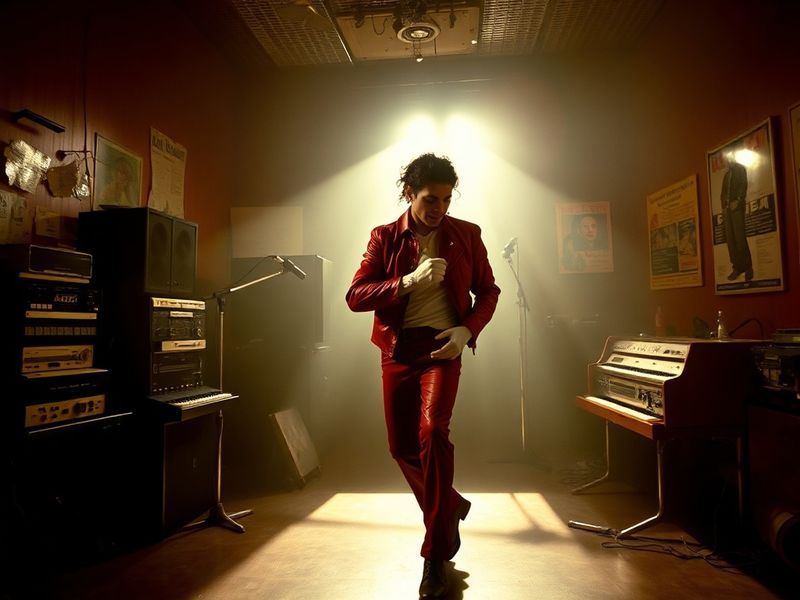
Few figures in popular culture remain as polarizing yet universally recognized as Michael Jackson. The new documentary Michael, directed by Antoine Fuqua, doesn’t attempt to resolve the contradictions of his life. Instead, it offers a fragmented, intimate portrait—one that feels both reverent and unflinching. The film arrives at a moment when Jackson’s music still dominates streaming platforms, yet public perception remains mired in controversy. Rather than shy away from these tensions, Michael leans into them, presenting a figure who was as much a product of his time as he was its most dazzling disruptor.
Fuqua’s approach is deliberate. By weaving together archival footage, interviews, and Jackson’s own voice—via audio recordings never before used in a documentary—the film constructs a narrative that feels less like hagiography and more like a psychological study. The result is a work that asks viewers to reconsider what they think they know about one of the most scrutinized artists in history.
The Documentary’s Unique Structure
Michael stands out for its refusal to conform to traditional biographical formats. Rather than a linear chronology, the film organizes Jackson’s life into thematic chapters—his childhood with the Jackson 5, the making of Thriller, the allegations that derailed his reputation, and his final years spent in seclusion. This structure allows the documentary to highlight Jackson’s contradictions without forcing resolution.
The film’s most striking element is its use of Jackson’s own words. Extensive audio recordings, some never before heard in public, reveal a man who was deeply introspective about his fame, his artistry, and the isolation that accompanied both. These recordings serve as a counterpoint to the sensationalized headlines that defined Jackson’s public life. Where tabloids saw scandal, the documentary uncovers vulnerability.
This approach doesn’t just humanize Jackson—it complicates him. The film doesn’t excuse his flaws, but it contextualizes them within a system that both worshipped and exploited him. The result is a documentary that feels less like a final verdict and more like an invitation to grapple with Jackson’s legacy on its own terms.
Jackson’s Influence on Pop Culture
Jackson’s impact on music and performance is undeniable. He didn’t just break records; he redefined what it meant to be a global superstar. His influence can be seen in artists as disparate as Beyoncé, Bruno Mars, and Lady Gaga, all of whom have cited him as a foundational figure. Yet Jackson’s legacy extends beyond music. His music videos—particularly Thriller and Black or White—pioneered the visual album format long before streaming made it ubiquitous.
Jackson’s choreography, too, became a language of its own. The moonwalk, the spin, the military-style precision—each move was a statement, a fusion of precision and rebellion. These innovations weren’t just technical feats; they were cultural interventions that challenged racial and genre boundaries. In an era when pop music was still segregated, Jackson’s success on MTV was a quiet revolution.
But Jackson’s influence wasn’t limited to artistry. He was also a businessman, a philanthropist, and, at times, a controversial figure. His Neverland Ranch became a symbol of both his generosity and his excesses. The documentary doesn’t shy away from these complexities, instead presenting them as integral to Jackson’s identity. His life was a series of contradictions: innocence and scandal, genius and excess, adoration and isolation.
Public Perception vs. Private Reality
The gap between Jackson’s public image and private struggles is where Michael finds its most compelling tension. The film doesn’t attempt to absolve Jackson of his missteps, but it does contextualize them within a life that was constantly under surveillance. From the moment he stepped into the spotlight as a child, Jackson was denied privacy. Every move was scrutinized, every decision magnified.
This scrutiny wasn’t just external. Jackson himself internalized it, as evidenced by the audio recordings used in the documentary. In one clip, he reflects on his childhood, describing the loneliness of being a child star. In another, he discusses the pressure of maintaining his public persona while grappling with personal demons. These moments reveal a man who was acutely aware of the contradictions in his life but lacked the tools to reconcile them.
The documentary also touches on the role of media in shaping Jackson’s legacy. Tabloids and sensationalist reporting played a significant part in his downfall, often amplifying rumors and accusations without evidence. Michael doesn’t excuse Jackson’s behavior, but it does highlight the uneven playing field he faced—a global superstar whose every action was dissected by an industry that thrived on his misfortune.
Why Jackson’s Legacy Still Matters
Jackson’s death in 2009 didn’t end the conversation about his legacy. If anything, it intensified it. His music continues to top charts, his influence permeates contemporary pop culture, and his life remains a subject of fascination and debate. The release of Michael is just the latest chapter in this ongoing narrative.
What makes Jackson’s story enduring isn’t just his talent, but the questions it raises about fame, identity, and the cost of genius. How much of his behavior was a result of his upbringing? How much was a product of the industry that created him? And how much was simply human? These are questions that Michael doesn’t answer outright, but it does invite viewers to consider them.
Jackson’s legacy is a reminder that art and artist are rarely separable. His music, his performances, and even his controversies are all part of the same story. The documentary’s refusal to simplify that story is what makes it so compelling. It doesn’t offer easy answers, but it does offer a more nuanced understanding of one of the most complicated figures in entertainment history.
Key Takeaways from Michael
- Fragmented Narrative: The documentary avoids a traditional biographical structure, instead organizing Jackson’s life thematically. This approach highlights contradictions without forcing resolution.
- Jackson’s Voice: Extensive use of never-before-heard audio recordings provides an intimate, introspective look at Jackson’s mindset, humanizing him in ways previous documentaries have not.
- Cultural Impact: Jackson’s influence extends beyond music into choreography, fashion, and the business of entertainment. His innovations paved the way for future generations of artists.
- Media’s Role: The documentary scrutinizes how media coverage shaped Jackson’s legacy, often amplifying scandal at the expense of nuance.
- Unresolved Questions: By refusing to simplify Jackson’s life, the film invites viewers to grapple with the complexities of his legacy rather than accept a single narrative.
Ultimately, Michael is less a celebration or a condemnation and more a conversation starter. It’s a film that understands Jackson’s legacy isn’t just about the records he broke or the controversies he sparked. It’s about the man behind the glove—a man who was both a product of his time and a force that reshaped it.
For those seeking a deeper understanding of Jackson’s life and impact, Michael is a necessary addition to the conversation. It doesn’t provide closure, but it does offer a fresh perspective on a figure whose story is far from over.
To explore more about Jackson’s cultural impact, visit our Entertainment and Music sections for additional analysis and features.