Shaun Murphy: How a Working-Class Magician Redefined Modern Snooker
“`html
Shaun Murphy: The Scrambled Genius Redefining Snooker
Shaun Murphy’s career has been a study in contrasts—precision meets improvisation, discipline clashes with flair, and consistency squares off against sheer unpredictability. The 42-year-old English snooker player, known for his distinctive playing style and clutch performances, has spent over two decades at the top of the sport, collecting major titles while defying easy categorization. Murphy’s ability to turn seemingly unwinnable frames into victories has earned him the nickname “The Magician,” but his journey from a working-class background to snooker stardom is just as compelling as his performances on the baize.
The Early Years: From a Working-Class Dream to Professional Breakthrough
Born in Harlow, Essex, in 1982, Murphy’s introduction to snooker came not through privilege but through necessity. His father, a truck driver, introduced him to the game at age eight, using a makeshift table in their modest home. Unlike many of his peers who trained in elite academies, Murphy honed his skills in local clubs, developing a style that relied more on instinct than rigid technique. This unorthodox approach became his strength—and later, his trademark.
His breakthrough arrived in 2005 at the Malta Cup, where he claimed his first ranking title by defeating Malta’s Tony Drago in the final. That victory announced his arrival, but it was his 2005 World Championship win—defeating Matthew Stevens 18-16 in a dramatic final—that cemented his place in snooker history. At 22, Murphy became only the third qualifier to win the tournament, proving that raw talent and resilience could triumph over established order.
Key Milestones in Murphy’s Early Career
- 2000: Turned professional at age 18.
- 2005: Won the Malta Cup, his first ranking title.
- 2005: Claimed the World Championship, defeating Matthew Stevens.
- 2006: Reached the Masters final, further establishing his elite status.
Playing Style: The Art of the Scramble and the Power of Precision
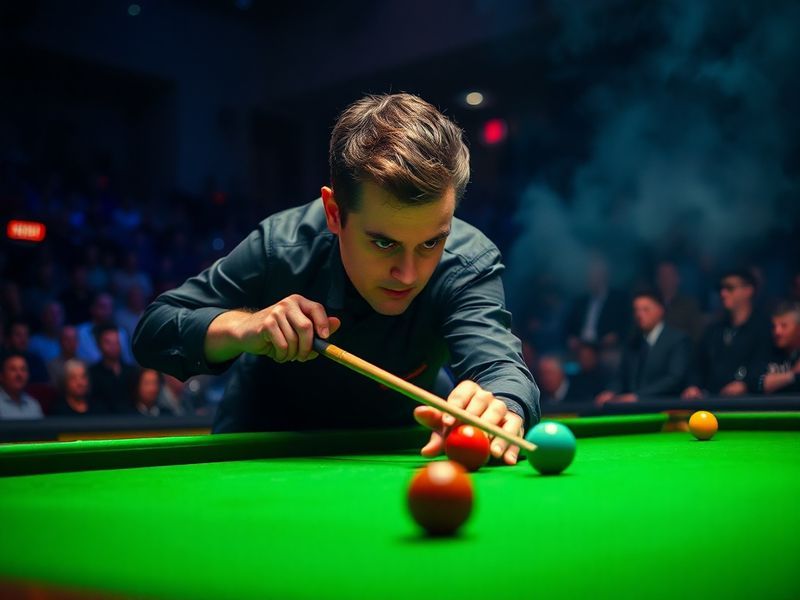
Murphy’s game defies conventional snooker wisdom. Where many top players prioritize safety and gradual point accumulation, Murphy thrives in chaos. His ability to escape snookers—tight configurations where the cue ball is blocked by other balls—has become legendary. Opponents often find themselves trapped in frames they thought they controlled, only for Murphy to conjure escapes and winning breaks out of thin air.
Yet this scrambling ability is only part of the story. Murphy is also a master of controlled aggression, particularly in long potting and long-distance shots. His cue action, smooth and unhurried, belies the precision of his shot selection. This blend of improvisation and technique makes him one of the most unpredictable players in modern snooker—a quality that frustrates rivals but delights fans.
His rivalry with Ronnie O’Sullivan, another master of improvisation, has produced some of the most electrifying matches in recent years. While O’Sullivan plays with a fluid, almost effortless brilliance, Murphy’s game is more methodical in its unpredictability. Together, they represent the dual soul of modern snooker: instinct versus calculation, flair versus discipline.
The Later Years: Wins, Setbacks, and the Pursuit of Consistency
After his 2005 world title, Murphy’s career trajectory mirrored the highs and lows of snooker itself. He added major titles, including the 2015 World Grand Prix and the 2021 Welsh Open, but also faced prolonged droughts between victories. Injuries, form slumps, and the emergence of younger talents like Judd Trump and Mark Selby kept him from dominating the rankings in the way he once did.
Yet Murphy’s resilience has been a defining trait. In 2023, he reached the final of the Tour Championship, the sport’s most lucrative non-ranking event, defeating Neil Robertson and John Higgins en route. Though he fell short in the final, the run demonstrated that his competitive fire—and his ability to grind out victories—remained undimmed.
Off the table, Murphy has also been a vocal advocate for player welfare. He has spoken openly about the mental toll of professional snooker, the pressures of maintaining form, and the challenges of transitioning to life after competition. His transparency has resonated with younger players and fans alike, reinforcing his role not just as a performer but as a voice within the sport.
Murphy’s Most Significant Later-Career Performances
- 2015: Won the World Grand Prix, defeating Barry Hawkins in the final.
- 2017: Reached the Masters semi-finals, defeating Judd Trump in a high-quality match.
- 2021: Claimed the Welsh Open title, defeating Stuart Bingham in a tactical final.
- 2023: Advanced to the Tour Championship final, defeating two former world champions.
Broader Implications: What Murphy Represents in Modern Snooker
Shaun Murphy’s career offers a lens through which to view the evolution of professional snooker. In an era dominated by power players and tactical specialists, Murphy represents the survival—and even the resurgence—of the “old-school” snooker artist. His success underscores a truth often overlooked in modern sports: that unpredictability and creativity still have a place in a results-driven world.
Moreover, Murphy’s longevity challenges the narrative that snooker careers are short-lived. At 42, he remains competitive in the top 16, a testament to his adaptability and commitment. His ability to reinvent aspects of his game—particularly his mental approach—has allowed him to stay relevant in a sport where physical decline often dictates retirement.
There’s also a cultural dimension to Murphy’s appeal. As a working-class player who rose without elite backing, he embodies the romantic ideal of the “people’s champion.” His down-to-earth demeanor, combined with his on-table magic, makes him accessible to fans who value authenticity over glamour. In an era of social media personas and carefully curated brands, Murphy’s unfiltered presence feels refreshingly genuine.
Finally, Murphy’s career raises questions about the future of snooker. With younger players increasingly focused on fitness and data-driven preparation, will room remain for the improviser? Or will the sport continue to trend toward standardization, where only the most technically proficient—or physically dominant—prevail? Murphy’s continued presence on the tour suggests that the magic hasn’t vanished—it’s just harder to find.
Conclusion: The Magician’s Legacy and What Comes Next
Shaun Murphy’s story is not just about trophies or rankings. It’s about the enduring power of individuality in a sport that often rewards conformity. His ability to turn chaos into control, to find solutions where others see only problems, is a rare gift—and one that has made him a fan favorite for nearly two decades.
As he continues to compete, Murphy serves as both a reminder of snooker’s golden past and a bridge to its future. Whether he adds more titles to his collection or not, his impact is already secure. He has redefined what it means to be a snooker player: not just a technician, but a thinker; not just a competitor, but a storyteller.
For fans of the game, that’s magic worth watching.
To explore more on snooker’s evolving landscape, visit our Sports and Entertainment sections for analysis, news, and in-depth features.