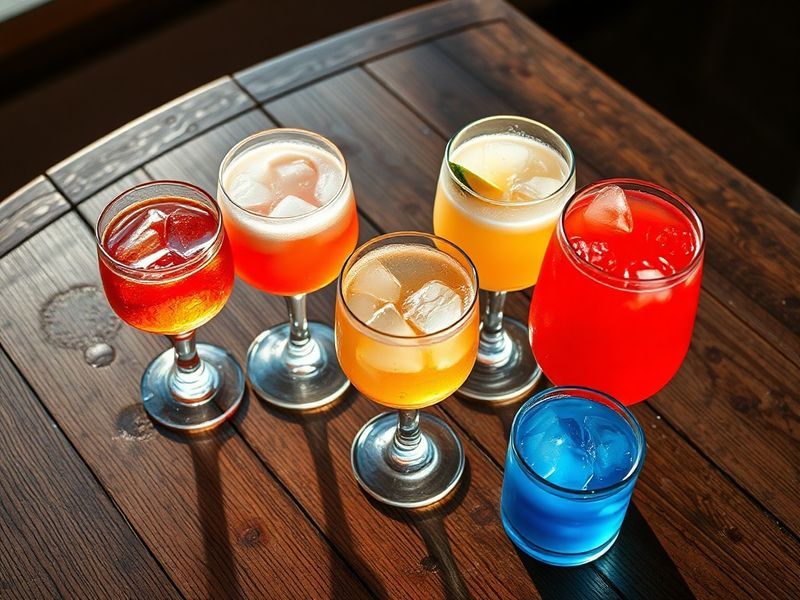
The Cultural History of Drinks and Their Global Influence
“`html
The World in a Glass: How Drinks Shaped Cultures and Connected Civilizations
The ritual of sharing a drink transcends mere hydration. From ancient fermentation experiments to modern mixology, beverages have been silent architects of human connection. They mark celebrations, soothe sorrows, and fuel revolutions. More than just liquids, drinks carry the weight of history, geography, and identity.
Consider the role of tea in British diplomacy or the way coffeehouses became the nerve centers of 18th-century Enlightenment thought. Even today, a simple beer or glass of wine can open doors to new friendships or bridge generational divides. The story of drinks is the story of humanity itself—fragmented yet unified by the universal need to quench thirst, both literal and existential.
A Global Tour of Liquid Traditions
Every civilization has developed its signature drink, often reflecting local resources and cultural priorities. In Mexico, pulque—fermented agave sap—dates back to the Aztecs and was consumed in rituals to honor the gods. The Incas, meanwhile, crafted chicha from maize, a drink that sustained armies and played a role in social ceremonies. These fermented beverages weren’t just refreshments; they were sacred offerings and communal bonds.
Across the Atlantic, the Chinese perfected tea culture over millennia. By the Tang Dynasty (618–907 CE), tea had evolved from a medicinal tonic to a daily ritual. The Japanese elevated it to an art form with chanoyu, the tea ceremony, where every gesture held philosophical meaning. In contrast, the British approach to tea was more pragmatic: a strategic drink to fortify the empire. The East India Company’s tea trade reshaped global economics and politics, proving how a simple leaf could alter the course of nations.
From Fermentation to Distillation: The Science Behind the Sip
The transformation of raw ingredients into drinkable elixirs is a testament to human ingenuity. Fermentation, the oldest biotechnological process, relies on microorganisms like yeast and bacteria to convert sugars into alcohol. Beer, one of the earliest fermented drinks, emerged independently in Mesopotamia, Egypt, and China around 5,000 BCE. Each culture adapted the process to local grains: barley in the West, rice in the East, and even sorghum in Africa.
Distillation, a later innovation, unlocked even stronger spirits. The Arabs pioneered the technique in the 8th century, refining it to create araq (precursor to modern vodka and gin). European alchemists later used distillation for medicinal purposes, giving rise to early versions of brandy and whiskey. These spirits became portable commodities, fueling trade routes and colonial expansion. The British Navy even issued rum rations to sailors, a practice that shaped maritime law and global labor systems.
The Social Alchemy of Drinking
Drinks have always been social catalysts. In 19th-century Paris, cafés became the epicenters of artistic rebellion, where poets like Verlaine and Rimbaud debated revolution over absinthe. In Harlem during the 1920s, speakeasies doubled as hubs for jazz musicians and civil rights activists. Even today, the rise of specialty coffee shops mirrors the gentrification of urban neighborhoods, where a $6 latte can signal a shift in community dynamics.
Alcohol’s role in social bonding is backed by science. Studies show that moderate drinking in group settings triggers the release of oxytocin, the “love hormone,” fostering trust and camaraderie. Yet, this same chemical response has been exploited in marketing campaigns that glamorize binge drinking. The balance between celebration and excess remains a global challenge, from Italy’s measured wine culture to Russia’s enduring struggle with vodka-related health crises.
The Dark Side of the Barrel: Alcohol and Health
While drinks can heal and unite, they can also harm. The World Health Organization estimates that alcohol contributes to 3 million deaths annually. Liver disease, addiction, and accidents are well-documented risks, but alcohol’s impact extends further: it exacerbates poverty by diverting household income and fuels gender-based violence in many societies. Yet, paradoxically, moderate consumption—particularly of red wine or fermented teas—has been linked to cardiovascular benefits and longevity, especially in regions like the Mediterranean and Okinawa.
Non-alcoholic alternatives are gaining ground as awareness grows. Kombucha, a fermented tea with probiotic benefits, has surged in popularity among health-conscious millennials. Meanwhile, the sober-curious movement challenges the assumption that socializing requires intoxication. Mocktail bars and alcohol-free beer festivals are popping up from London to Los Angeles, signaling a cultural shift toward mindful consumption.
Modern Mixology: Innovation Meets Tradition
The 21st century has seen a renaissance in drink culture. Bartenders are no longer just servers; they’re artisans who blend science and storytelling. Techniques like fat-washing (infusing spirits with butter or coconut oil) and the use of liquid nitrogen for dramatic presentations have redefined cocktail craft. Yet, this innovation often comes with a hefty price tag, pricing out lower-income patrons and reinforcing class divides in nightlife.
Sustainability is another frontier. Distilleries and breweries are adopting closed-loop systems to reduce waste, while urban farming projects supply fresh herbs and botanicals to local bars. In Copenhagen, the Noma restaurant’s experimental drink menu incorporates foraged ingredients, proving that even avant-garde cuisine can be eco-conscious.
Globalization and the Homogenization of Taste
As Starbucks and Coca-Cola expand into every corner of the globe, some fear the erosion of local drink traditions. Yet, globalization also creates opportunities for cultural exchange. The rise of mezcal in the U.S. and gin’s revival in Europe demonstrate how traditional spirits can find new audiences without losing their roots. In Japan, whiskey distilleries like Yamazaki are blending centuries-old techniques with modern aging processes, winning international acclaim.
For travelers, drinks offer a passport to a culture’s soul. Sipping mate in Argentina reveals the importance of shared ritual. Sampling kava in Fiji provides a glimpse into communal governance. Even the humble horchata in Spain tells the story of Moorish influence on Iberian cuisine. These experiences underscore how drinks are more than commodities; they are vessels of memory and identity.
The Future in a Bottle
What’s next for the world of drinks? Lab-grown spirits, created through precision fermentation, could revolutionize production without the environmental toll of traditional methods. Functional beverages infused with adaptogens or CBD are blurring the line between medicine and refreshment. Meanwhile, the cocktail scene is embracing low-alcohol and zero-proof options, reflecting a broader societal shift toward wellness.
One thing is certain: the relationship between humans and their drinks will continue to evolve. Whether through a glass of ancient sake or a futuristic cold brew, the act of drinking remains a fundamental expression of who we are—and who we aspire to be.
Key Takeaways
- Drinks are cultural artifacts that reflect history, geography, and identity.
- Fermentation and distillation are among humanity’s oldest technological achievements.
- Social rituals around drinking can foster connection but also perpetuate harm.
- Modern mixology balances innovation with tradition while grappling with sustainability.
- Globalization threatens some drink traditions but also creates opportunities for revival and fusion.
As we raise our glasses—whether to toast, mourn, celebrate, or simply quench our thirst—we’re participating in a legacy that spans millennia. The next chapter of this story is yours to write.