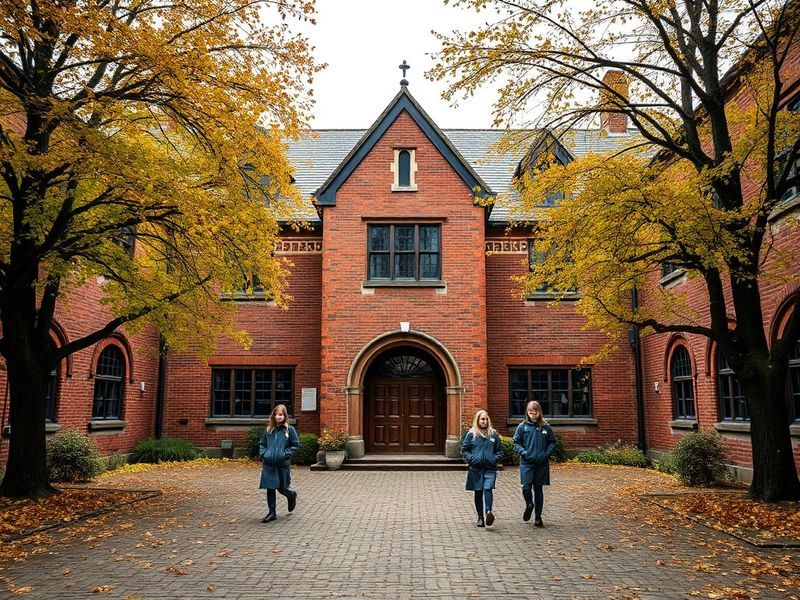
Thetford Grammar School: A Legacy of Excellence in East Anglia
Thetford Grammar School stands as one of the oldest educational institutions in England, with roots stretching back over nine centuries. Founded in 600 AD, it has evolved from a medieval monastic school into a modern independent institution known for its academic rigor and cultural contributions. Today, it serves as a bridge between tradition and innovation, offering a curriculum that balances classical studies with contemporary disciplines.
Unlike many grammar schools established during the Victorian era, Thetford Grammar School has maintained its independence, resisting the wave of state consolidation that affected similar institutions in the 20th century. This autonomy has allowed it to preserve unique traditions while adapting to the needs of a globalized world. Its alumni include explorers, artists, and leaders who have left their mark on British history.
The Historical Foundations of Thetford Grammar School
The school’s origins are intertwined with the history of Thetford itself, a town once of significant political importance in medieval England. By the 12th century, it operated under the patronage of the powerful Bishop of Norwich, reflecting the close ties between education and the church during that period. The school’s early curriculum focused on Latin, rhetoric, and theology—subjects deemed essential for clerical and administrative roles.
Surviving records from the 16th century reveal that Thetford Grammar School began awarding scholarships to local boys, a practice that laid the groundwork for its reputation as an institution committed to accessibility. The school’s survival through centuries of political upheaval, including the Dissolution of the Monasteries and the English Civil War, speaks to its resilience. By the Victorian era, it had re-established itself as a grammar school under the 1868 Endowed Schools Act, formalizing its role in England’s educational landscape.
Academic Excellence and Modern Adaptations
Thetford Grammar School today enrolls students from ages 4 to 18, offering a blend of traditional and forward-thinking education. Its academic results consistently place it among the top-performing schools in Norfolk, with students regularly securing places at prestigious universities, including Oxford and Cambridge. The school’s emphasis on small class sizes fosters an environment where individual attention is prioritized.
The curriculum extends beyond core subjects to include modern languages, computer science, and environmental studies. In response to global challenges, Thetford Grammar School has integrated sustainability into its programs, reflecting a broader shift in British education toward environmental responsibility. Students participate in international exchange programs, particularly with schools in Europe and Asia, preparing them for careers in an interconnected world.
The school’s extracurricular offerings are equally diverse. Music, drama, and sports form the backbone of its enrichment program, with ensembles regularly performing at venues across East Anglia. The sports teams, including those in football and cricket, compete at regional and national levels, underscoring the school’s commitment to holistic development.
A Global Perspective: Thetford’s Alumni and Cultural Impact
The influence of Thetford Grammar School extends far beyond its campus. Notable alumni include Thomas Paine, the Enlightenment thinker whose writings inspired the American Revolution, and Thomas Howard, the 3rd Duke of Norfolk, a key figure in Tudor England. These figures highlight the school’s historical role in shaping political and intellectual thought.
In the 20th and 21st centuries, the school’s graduates have continued to make their mark. Alumni include scientists, artists, and entrepreneurs who have contributed to fields ranging from aerospace engineering to contemporary literature. The school’s global network of former students remains active, fostering mentorship and collaboration across continents.
The school’s cultural contributions are equally significant. Its annual drama productions and art exhibitions attract audiences from across East Anglia, serving as a cultural hub in a region often overshadowed by larger urban centers. Thetford Grammar School’s commitment to the arts reflects a broader trend in British education, where creativity is increasingly valued alongside academic achievement.
Challenges and the Path Forward
Like many independent schools, Thetford Grammar School faces challenges in balancing tradition with innovation. Rising costs and competition from state-funded academies have forced the school to rethink its financial strategies. In response, it has expanded its scholarship programs, ensuring that talented students from diverse backgrounds can access its education.
The school has also embraced digital transformation. Its investment in technology, including interactive learning platforms and coding initiatives, prepares students for a workforce increasingly shaped by automation and artificial intelligence. These adaptations reflect a broader shift in global education, where digital literacy is as critical as traditional academic skills.
Looking ahead, Thetford Grammar School is positioned to continue its legacy of excellence. Its ability to adapt while preserving its core values will determine its relevance in an ever-changing world. For students and alumni alike, the school remains a symbol of intellectual curiosity and cultural pride.
Why Thetford Grammar School Matters Today
Thetford Grammar School is more than an educational institution; it is a living testament to the enduring power of learning. In an era where education is often reduced to metrics and rankings, the school’s history reminds us of the deeper purpose of schooling: to inspire, challenge, and empower. Its alumni network, academic rigor, and cultural contributions ensure that its influence will persist for generations to come.
For prospective students and families, Thetford Grammar School offers more than just academic credentials. It provides a community where tradition and innovation coexist, where students are encouraged to think critically and act boldly. In a world often divided by borders and ideologies, the school stands as a reminder of what can be achieved when curiosity and discipline intersect.