USS Gerald R. Ford: The Next Era of Naval Dominance
The USS Gerald R. Ford, the lead ship of the United States Navy’s newest class of aircraft carriers, represents more than just military innovation—it embodies the shifting tides of global power dynamics. Commissioned in 2017 after over a decade of development, this vessel is not just a floating runway but a symbol of America’s enduring commitment to projecting force across the world’s oceans. With advanced technology, reduced crew requirements, and unparalleled operational flexibility, the Ford-class carriers are redefining what it means to command the seas in the 21st century.
From the shipyards of Newport News, Virginia, to the contested waters of the South China Sea, the Gerald R. Ford has become a focal point of both military strategy and geopolitical symbolism. Its arrival coincides with a period of heightened tensions, where traditional naval supremacy is being challenged by rising powers and evolving threats. Understanding the Ford’s role requires looking beyond its sheer size—it’s about how it fits into a broader narrative of technological advancement, strategic deterrence, and the evolving nature of warfare.
The Evolution of Aircraft Carriers: A Global Perspective
Aircraft carriers have long been the crown jewels of naval fleets, serving as mobile airbases that extend a nation’s reach far beyond its shores. The USS Gerald R. Ford follows in the footsteps of legendary carriers like the USS Enterprise and USS Nimitz, but it introduces innovations that set it apart. The Ford-class carriers are the first to incorporate electromagnetic aircraft launch systems (EMALS), replacing the older steam catapults with a system that is more efficient, requires less maintenance, and can launch a wider variety of aircraft. This technology alone marks a significant leap forward, reducing operational costs and increasing sortie rates.
The Ford also features advanced radar systems, including the AN/SPY-3 and AN/SPY-4, which provide unparalleled situational awareness. These systems allow the carrier to detect and track multiple threats simultaneously, from anti-ship missiles to hypersonic weapons. Such capabilities are particularly relevant in regions like the Pacific, where the U.S. faces competition from China’s rapidly expanding navy. The Ford’s ability to integrate with allied forces, including those from Japan and Australia, underscores its role as a cornerstone of regional security.
The global implications of the Ford-class extend beyond its immediate military applications. As nations like China and Russia invest in their own carrier programs, the USS Gerald R. Ford serves as a reminder of America’s ability to maintain technological superiority. It’s not just about having the biggest ship—it’s about having the most advanced one, capable of adapting to future threats in ways older carriers simply cannot.
Operational Capabilities: Power Projection in the 21st Century
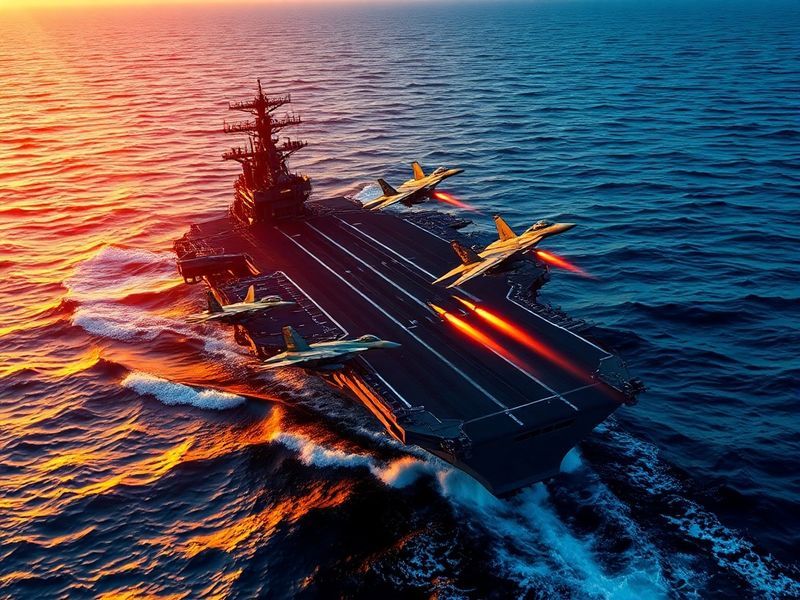
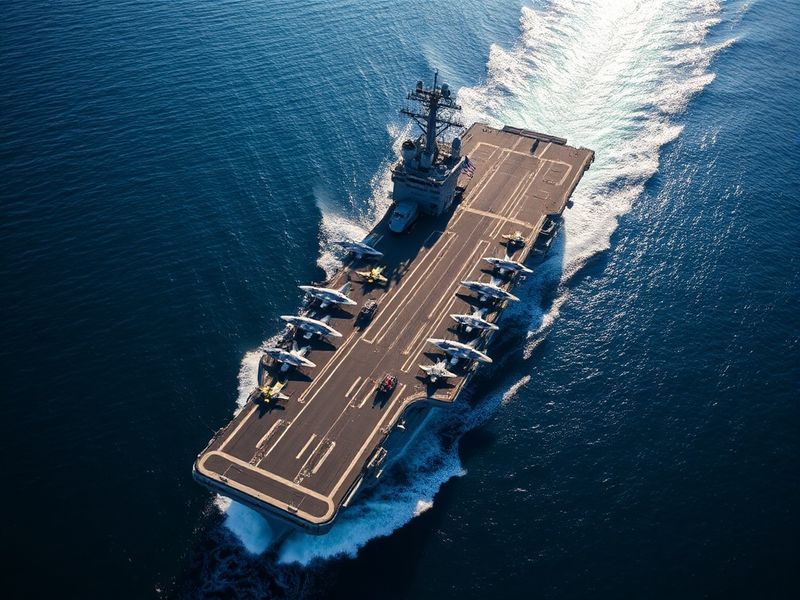
The USS Gerald R. Ford is designed to operate at the heart of a carrier strike group, providing air support, surveillance, and command-and-control functions. With a displacement of over 100,000 tons and a length of 1,106 feet, it is the largest warship ever built. But its true power lies in its ability to project force without relying on forward-deployed bases—a critical advantage in an era where access to overseas facilities is increasingly contested.
One of the Ford’s most notable features is its reduced crew requirement. Thanks to automation and advanced systems, the carrier can operate with roughly 600 fewer sailors than its Nimitz-class predecessors. This not only lowers operational costs but also allows for greater flexibility in deployment. The ship’s propulsion system, based on two Bechtel Marine Propulsion A1B nuclear reactors, provides nearly unlimited range and endurance, enabling it to remain on station for years if necessary.
The Ford-class carriers are also designed with modularity in mind. Their internal spaces can be reconfigured to accommodate different mission sets, from humanitarian assistance to full-scale combat operations. This adaptability is crucial in a world where threats are increasingly unpredictable. Whether responding to a natural disaster or deterring aggression in the Taiwan Strait, the Gerald R. Ford is built to handle the full spectrum of naval operations.
Another key innovation is the Ford’s advanced weapons elevators, which use electromagnetic systems to move ordnance from storage to the flight deck. These elevators are faster, more reliable, and safer than the hydraulic systems used on older carriers. Such improvements may seem minor, but in the high-stakes environment of naval warfare, every second counts.
Geopolitical Symbolism: The Carrier as a Tool of Influence
The USS Gerald R. Ford is more than a weapon of war—it is a tool of diplomacy and deterrence. Its presence in a region serves as a tangible demonstration of American commitment, reassuring allies and giving pause to adversaries. In the South China Sea, where territorial disputes have flared into open conflict, the Ford’s deployment sends a clear message: the U.S. will not cede dominance of the maritime domain.
This symbolic role is not lost on global observers. In Europe, where tensions with Russia remain high, the Ford’s capabilities are closely watched. The carrier’s advanced radar and integrated air defense systems make it a critical asset in countering threats like hypersonic missiles. Meanwhile, in the Middle East, where the U.S. Navy has long maintained a presence, the Ford’s arrival could shift the balance of power in favor of American interests.
The Ford’s global engagements also serve as a reminder of the U.S. Navy’s reach. In 2023, the carrier participated in NATO exercises in the North Atlantic, demonstrating its ability to operate alongside allied forces. Such collaborations are essential in an era where no single nation can shoulder the burden of global security alone. The Ford’s presence in these exercises reinforces the idea that naval power is not just about individual ships—it’s about the networks they enable.
Yet, the carrier’s symbolism cuts both ways. For some nations, the Ford represents a provocation—an unwelcome reminder of American military dominance. This duality highlights the complex role of aircraft carriers in modern geopolitics, where power projection is as much about perception as it is about capability.
A Look Ahead: The Future of the Ford-Class
The USS Gerald R. Ford is the first of at least ten Ford-class carriers planned for the U.S. Navy. While the initial years of its service have been marked by testing and minor setbacks, the long-term vision is clear: these carriers will form the backbone of the Navy’s fleet for decades to come. The next ship in the class, the USS John F. Kennedy, is already under construction, with further vessels like the USS Enterprise and USS Doris Miller following in its wake.
The future of the Ford-class will likely be shaped by several key factors:
- Technological Upgrades: As new threats emerge, the Ford-class carriers will need to adapt. This could include integrating directed-energy weapons, hypersonic missile defenses, or even unmanned aerial systems (UAS) that operate alongside traditional aircraft.
- Allied Integration: The U.S. Navy’s ability to work seamlessly with allied forces will be critical. The Ford-class is designed with interoperability in mind, but future conflicts may demand even closer coordination.
- Budget Constraints: Maintaining and upgrading the Ford-class will require significant investment. As the U.S. grapples with competing priorities, securing funding for these carriers could become a political challenge.
- Environmental Considerations: The Navy is exploring ways to reduce the environmental impact of its operations, including quieter propulsion systems and more efficient energy use. The Ford-class will need to align with these goals.
The Gerald R. Ford’s legacy will ultimately be defined by how well it adapts to these challenges. As the first of its kind, it sets the standard for naval innovation, but the true test lies in its ability to remain relevant in an ever-changing world.
Conclusion: The Carrier in the Modern Age
The USS Gerald R. Ford is more than just a ship—it is a statement. In an era where global power is increasingly contested, the Ford-class carriers represent America’s determination to maintain its naval supremacy. Their advanced technology, operational flexibility, and symbolic presence make them indispensable tools of both war and diplomacy.
As the world watches China’s naval expansion and Russia’s military maneuvers, the Gerald R. Ford stands as a reminder of the enduring strength of the U.S. Navy. Yet, its true impact will be measured not just in tonnage or speed, but in how effectively it deters conflict, reassures allies, and adapts to the unknown challenges of the future. In the end, the Ford-class carriers are not just about dominating the seas—they are about shaping the world that lies beyond them.