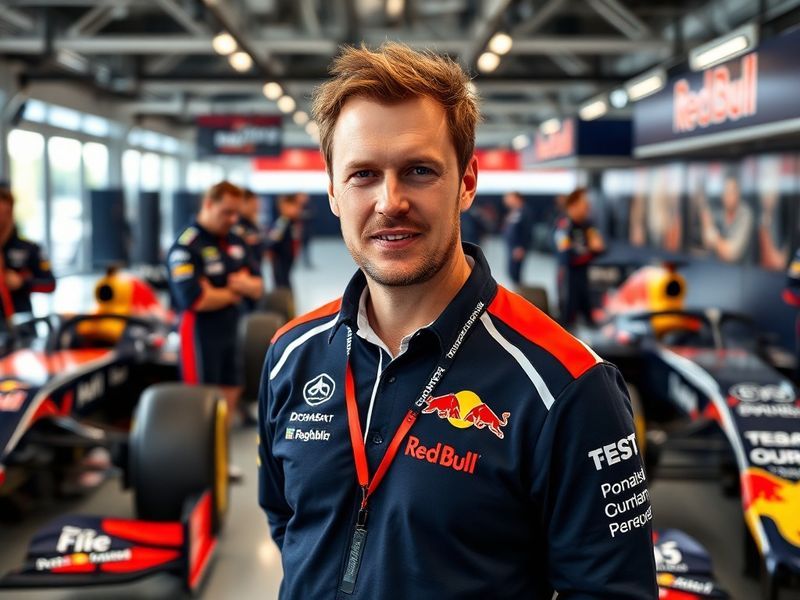
Christian Horner has reshaped Formula 1 since taking the reins at Red Bull Racing in 2005. Under his leadership, the team evolved from an ambitious newcomer to a championship-winning juggernaut that now challenges the sport’s traditional powerhouses. His blend of strategic foresight, team management, and relentless drive has cemented his status not just as a team principal, but as one of motorsport’s most influential figures.
From Racer to Leader: Horner’s Early Career and Rise to the Top
Born in 1973 in Leamington Spa, England, Horner began his motorsport journey as a racing driver. Competing in Formula 3000 in the early 1990s, he showed promise but ultimately found greater success off the track. By 1997, he founded the Arden International racing team, which quickly rose through the ranks in Formula 3000 and Formula 3. His early ventures taught him the business of motorsport—budgeting, sponsorship, and talent development—skills he would later apply at Red Bull.
Horner’s big break came in 2005 when Red Bull, already a major sponsor in F1, purchased the struggling Jaguar Racing team. At just 31 years old, Horner became the youngest team principal in F1 history. The move was bold, even risky. But it signaled the beginning of a transformation. Within a decade, Red Bull would not only compete with Ferrari and McLaren but surpass them, thanks in large part to Horner’s vision.
Building a Winning Culture
Horner’s leadership style is often described as hands-on yet collaborative. He surrounds himself with experts—engineers, designers, and strategists—and empowers them to innovate. Unlike some traditional team principals who operate from a distance, Horner is deeply involved in technical discussions, race strategy, and even driver psychology.
This approach has been key to Red Bull’s success. The team’s 2010 and 2011 double world championship wins with Sebastian Vettel marked a turning point. Those victories weren’t just about car performance; they were the result of a cohesive team culture built on trust, adaptability, and a refusal to accept limits. Horner fostered that environment early on, and it has endured through multiple driver changes and regulatory shifts.
Red Bull’s Evolution: From Challenger to Title Contender
Red Bull’s rise under Horner has mirrored the broader evolution of F1. Early in his tenure, the team relied on aggressive driving and strong pit stops. But as regulations tightened and hybrid engines entered the sport, Horner pivoted toward technical innovation. He invested heavily in aerodynamics, energy recovery systems, and driver development programs.
One of his most critical decisions came in 2019 when he backed the recruitment of Max Verstappen from Toro Rosso. Initially met with skepticism, Verstappen became the team’s cornerstone. His combination of raw speed, resilience, and Horner’s tactical guidance led to multiple race wins and a dramatic championship challenge in 2021—a season that ended in controversy but underscored Red Bull’s competitive edge.
Mastering the Mind Game
Horner is also known for his psychological acumen. He understands that F1 is as much about mental endurance as physical performance. He has cultivated a team culture that thrives under pressure, where mistakes are treated as learning opportunities rather than failures. This mindset was evident during the 2022 season, when Red Bull’s RB18 car dominated from the start, winning 17 of 22 races.
His relationship with Verstappen is a case study in modern driver management. Unlike the more formal dynamics of the Schumacher era or the distant relationships of earlier decades, Horner and Verstappen share a direct, often blunt communication style. This candor has helped Verstappen channel his intensity into performance rather than conflict.
The Broader Impact: Redefining F1 Leadership
Horner’s influence extends beyond Red Bull. He has redefined what it means to be a team principal in F1. His success has inspired a new generation of leaders—young, tech-savvy, and unafraid to challenge convention. Teams like Mercedes and Ferrari have had to adapt their structures to compete with Red Bull’s agility and innovation.
Moreover, Horner has played a role in shaping F1’s commercial and regulatory landscape. His vocal advocacy for cost caps, sustainable fuels, and closer competition has aligned with broader industry trends. In an era where financial disparity often dictated success, Horner’s Red Bull proved that smart spending, not just big budgets, could yield results.
Legacy in the Making
As of 2024, Horner remains at the helm of Red Bull Racing, now operating under the Red Bull Powertrains banner with a fully in-house power unit. The team’s dominance in both the Constructors’ and Drivers’ Championships shows no signs of waning. With Verstappen entering his prime and a new generation of talent rising through the ranks, Horner’s legacy is still being written.
But beyond trophies and titles, his true impact may be in how he redefined team leadership in F1. He proved that success isn’t just about having the fastest car or the most resources—it’s about vision, culture, and adaptability. Those are lessons that resonate far beyond the racetrack.
Key Takeaways: What Makes Christian Horner Different
- Early Entrepreneurship: Founded Arden International before turning 25, gaining hands-on experience in team ownership and management.
- Age and Ambition: Became F1’s youngest team principal at 31, taking over a struggling team and transforming it into a champion.
- Technical Acumen: Balanced driver psychology with deep involvement in aerodynamics and powertrain development.
- Cultural Architect: Built a team ethos centered on trust, accountability, and innovation—key to Red Bull’s consistency.
- Strategic Risk-Taker: Made bold decisions, from signing Max Verstappen to investing in in-house engine development.
Horner’s journey is a testament to the power of leadership rooted in both passion and pragmatism. In an era where motorsport is increasingly shaped by data and capital, his story reminds us that human intuition and teamwork still drive the greatest successes.
As Red Bull continues to push boundaries, one thing is clear: Christian Horner isn’t just a team principal. He’s a blueprint for what it takes to win in modern Formula 1.
For more on motorsport leadership and team dynamics, explore our Sports and Analysis sections on Dave’s Locker.