Colorado Springs Switchbacks FC and the Evolution of U.S. Soccer’s Lower Divisions
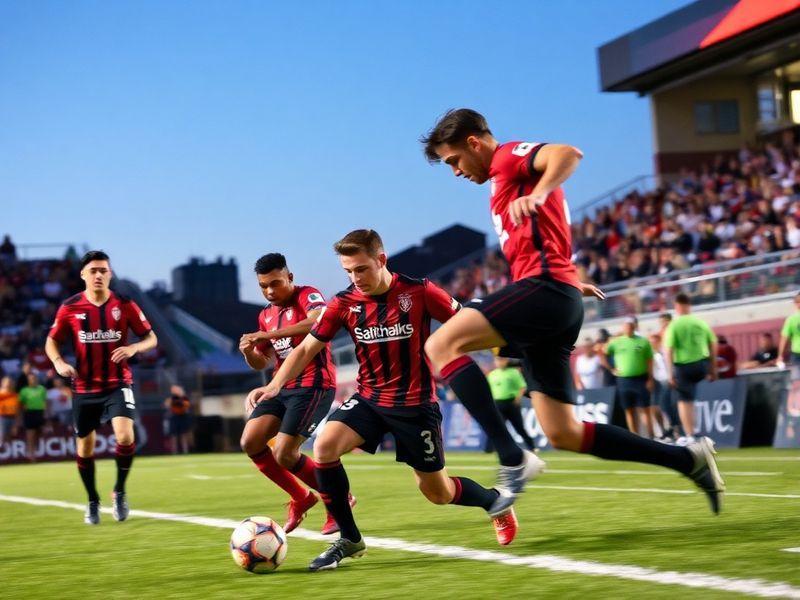
The matchup between Colorado Springs Switchbacks FC and their in-state rivals from Denver often flies under the radar in the broader landscape of American soccer. While Major League Soccer (MLS) dominates headlines with star-studded lineups and global marquee players, the United Soccer League (USL) Championship serves as a critical proving ground for talent, tactics, and community engagement. Colorado Springs’ return to professional soccer in 2015 marked a turning point for the city’s sporting identity, blending local passion with broader trends reshaping lower-tier football in North America.
This rivalry isn’t just about three points on the table. It reflects how U.S. soccer is gradually shedding its perception as a secondary sport. The Switchbacks, founded in 2014 after the dissolution of the Colorado Springs Blizzard of the PDL, represent a modern model of sports entrepreneurship. Their stadium, Weidner Field, is a compact, intimate venue designed to foster fan intimacy—a deliberate choice in a country where soccer culture has historically struggled to match the communal atmosphere of European or Latin American football.
The Global Context: How U.S. Lower-League Soccer Mirrors Worldwide Trends
Across the globe, football thrives not only at the elite level but also in regional leagues where community identity and youth development take center stage. Germany’s 3. Liga, England’s League Two, and Japan’s J3 League all operate with similar philosophies: accessibility, affordability, and local ownership. Colorado Springs’ model aligns with this global shift toward decentralized, fan-centric clubs.
In Europe, clubs like FC Barcelona and Bayern Munich began as grassroots organizations before ascending to global prominence. While U.S. leagues lack the same historical depth, they are beginning to mirror this organic growth. The Switchbacks, owned by local investors and supported by a dedicated fan base, embody this philosophy. Their fan culture, though smaller in scale, mirrors the passionate supporter groups found in lower leagues worldwide—groups that sing, chant, and travel together, not for trophies, but for the love of the game.
Key Factors Shaping the Switchbacks’ Identity and Rivalry with Colorado
Several elements define the Switchbacks’ role in U.S. soccer and their rivalry with Colorado’s other professional sides:
- Ownership and Vision: The club is privately owned by a group of local business leaders, emphasizing sustainability over quick profits. This approach contrasts with some MLS teams backed by billionaires seeking global branding.
- Fan Engagement: The club prioritizes supporter culture, with a supporters’ section that organizes chants, banners, and community events. This mirrors the European “ultras” tradition, albeit on a smaller scale.
- Academy Development: The Switchbacks’ youth academy has become a pipeline for local talent, reflecting a growing trend in U.S. soccer where lower-tier clubs invest in development rather than relying solely on imports.
- Rivalry Dynamics: The matches against Colorado rivals are not just sporting events; they are cultural touchpoints. They help define regional pride and challenge the dominance of larger, more commercialized teams.
This structure positions the Switchbacks as more than a stepping stone for players on their way to MLS or Europe. They are community institutions, much like clubs in Argentina’s Primera B or Italy’s Serie C.
Cultural Impact: Soccer as a Unifier in a Fragmented Landscape
Soccer in the United States has long struggled to carve out a consistent cultural footprint outside of major cities like Los Angeles, New York, or Chicago. Yet in places like Colorado Springs—home to the U.S. Olympic & Paralympic Training Center—the Switchbacks have become a symbol of athletic ambition and local pride.
The rivalry with Colorado’s other professional teams, particularly those from Denver, introduces a subtle but meaningful narrative: the challenge of building identity in a sports market dominated by the NFL, NBA, and MLB. While those leagues thrive on spectacle and star power, the Switchbacks and their USL peers offer something different: authenticity. Their matches are affordable, accessible, and deeply connected to the community.
This mirrors a global phenomenon where football serves as a unifying force in smaller cities. In Japan, clubs like Vegalta Sendai or Zweigen Kanazawa reflect the regional pride of their prefectures. In Canada, teams like Cavalry FC in Calgary play a similar role. These clubs remind us that soccer’s power often lies not in grandeur, but in proximity—being part of a neighborhood, not just a nation.
Looking Ahead: What the Future Holds for the Switchbacks and U.S. Lower-League Soccer
The future of the Switchbacks—and by extension, lower-league soccer in the U.S.—will be shaped by several trends:
- Expansion of the USL: With the USL Championship set to expand to 24 teams by 2025, clubs like Colorado Springs will face both opportunities and challenges in maintaining their unique identities.
- Television and Streaming: As media rights for lower leagues grow, the Switchbacks could gain broader visibility, helping to shift perceptions of USL soccer as a viable alternative to MLS.
- Youth Development Investment: Clubs that invest in academies and community programs will likely see long-term benefits in fan loyalty and player development.
- Rivalry Intensity: As the league matures, rivalries like the one with Colorado’s other teams will become more defined, adding narrative depth and emotional stakes to each match.
For now, the Switchbacks continue to build their legacy one season at a time. Their matches against Colorado rivals are more than just games; they are part of a larger story about soccer in America—not as a global spectacle, but as a local passion.
In a world where sports are increasingly commercialized and broadcast globally, the Switchbacks remind us of soccer’s original spirit: a game played for the love of the sport, by the people, and for the community. That’s a narrative worth following.